Latest News
- Quick Links
- Gender Desk
- Business
- Africa hub
The Ghana Tourism Authority (GTA) has officially commenced activities marking Emancipation Month 2026 with a successful Fitness Walk held on Saturday, 18th July 2026, from Ayi Mensah Police Station to Peduase. The event, organised to promote healthy living while commemorating the courage, resilience and enduring legacy of the ancestors who fought for freedom, brought together staff of the Ghana Tourism…
African leaders have reaffirmed their commitment to building stronger, self-reliant health systems, with a renewed focus on domestic financing, accountability and innovation at the African Union Extraordinary Summit on Health in Accra. Representing Vice President H.E. Prof. Naana Jane Opoku-Agyemang, Ghana's Minister for Health, Kwabena Mintah Akandoh, joined Heads of State, Ministers of Health, development partners and civil society leaders…
UNESCO has underscored the critical role of journalism in advancing peace, security and sustainable development across Africa, calling for greater investment in information integrity and the protection of journalists as the continent navigates an increasingly complex digital and artificial intelligence-driven information environment. Speaking at the African Union's Second Policy Conference on the Nexus between Peace, Security and Development (Tangier Process)…
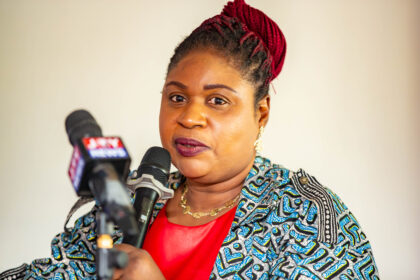
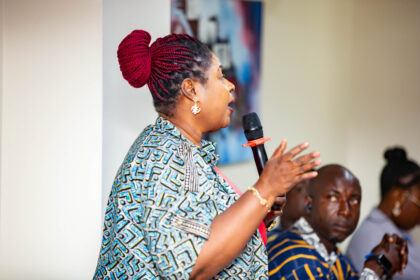
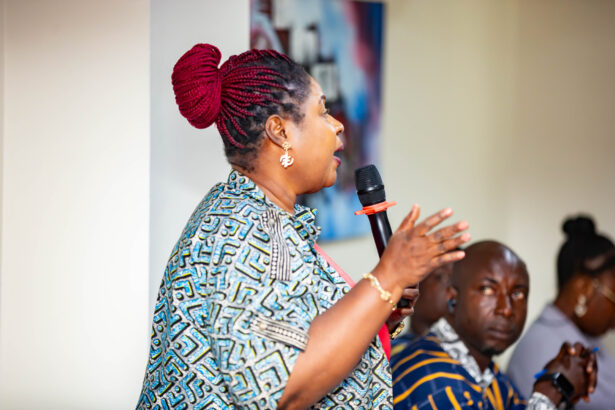
A compelling call for women to pursue leadership with purpose, resilience and a commitment to serving others took centre stage at the Women in Diplomacy Fireside Chat, where four distinguished female ambassadors from France, Canada, Barbados and Italy shared their personal and professional journeys in diplomacy. Ambassador Laura Ranelli speaking at the forum for female diplomats, with other panelists and…
By Vivian Amoah Ghanaian actress and producer Joselyn Dumas has called for increased investment and stronger distribution channels to unlock the full potential of Ghana’s creative industry. Ghanaian actress and producer Joselyn Dumas with other creators. Speaking during a panel discussion organized by the US Embassy in Accra, at the AI Community Centre, Standard Chartered Head Office in Accra, on…
The paradox of African infrastructure today is stark. While the “funding gap” continues to dominate policy discourse, it is the “execution gap”, or more precisely, the challenge of translating capital into delivery, that is increasingly shaping development outcomes in Africa. Across the continent, governments are becoming increasingly sophisticated at raising capital. Investment conferences are attracting global attention, new financing vehicles are emerging, and ambitious infrastructure programmes are being announced with growing frequency. While this progress reflects growing ambition across the continent, it should not obscure the scale of Africa’s remaining infrastructure gap. The African Development Bank estimates the continent’s infrastructure financing needs at approximately US$400 billion per year. The challenge is no longer solely about raising capital but also about ensuring that investment commitments translate into well-prepared, execution-ready, and bankable projects. Recent data illustrates this disconnect clearly. South Africa, the continent’s most industrialized economy, has secured over $91 billion (R1.5 trillion) in investment pledges through the South Africa Investment Conferences since 2018. However, only $38.6 billion (R634 billion), just under 42%, had flowed into the economy by March 2026. While investment announcements rarely translate fully into projects, South Africa’s conversion rates remain below global norms, highlighting persistent delivery challenges. McKinsey estimates that 60–80% of announced FDI is typically realised worldwide. This reveals a critical constraint, a limited pipeline of bankable projects. Many infrastructure projects strugg le not because financing is unavailable, but because they fail to progress through the complex preparation and development processes required to attract investment and move toward implementation. As Tidjane Thiam, the former Swiss Credit CEO, recently argued, global investors are actively seeking greater exposure to Africa, drawn by its long-term growth potential. The real bottleneck lies in connecting that capital with bankable opportunities through stronger project preparation, advisory support, and financial intermediation. These upstream stages involve far more than feasibility studies. They require technical and engineering assessments, environmental, social, and judicial reviews, financial and commercial structuring, regulatory alignment, stakeholder coordination, risk allocation, permitting, and implementation planning. In many cases, infrastructure projects lose momentum at these early stages, long before construction begins or financing is fully deployed. As a McKinsey report highlights, fewer than 10% of Africa’s infrastructure projects reach financial close, with nearly 80% failing at the feasibility or business-planning stage. The implication is significant: the success of infrastructure projects is often determined long before capital is spent on the ground. Strengthening upstream project capability is therefore critical to Africa’s ability to deliver infrastructure at scale. Too many projects fall into the “lack-of-project-management-capacity trap”, where weak preparation and execution undermine otherwise promising initiatives. This challenge is already visible across major continental infrastructure initiatives. The first phase of the Programme for Infrastructure Development in Africa (PIDA) delivered significant gains, including over 16,000 kilometres of roads and expanded digital and energy connectivity across Africa. Yet one of the most persistent constraints identified was limited capacity for early-stage project preparation, from feasibility studies to structuring investable proposals. The lesson is clear: without stronger upstream capacity, even well-funded infrastructure ambitions struggle to move from commitment to implementation. Globally, the construction industry is projected to face a shortfall of almost 2.5 million project professionals by 2035, according to Project Management Institute (PMI) research, with Sub-Saharan Africa among the regions experiencing the fastest growth in demand for these skills. This deficit is not merely a labour market issue; it is a structural constraint on development. As infrastructure programmes grow in scale and complexity, the demand for project expertise will likely rise faster than supply. What is often missing in current policy responses is the recognition that financing alone cannot deliver infrastructure outcomes. Too often, skills development is treated as a secondary concern, an add-on to infrastructure programmes rather than a core component of them. Training remains underfunded, career pathways are unclear, and institutional capacity remains uneven. If Africa is to fully realise its infrastructure ambitions, this must change. Every dollar raised for infrastructure should be matched by a commitment to build the capabilities required to deliver it. This means embedding skills transfer into infrastructure programmes, strengthening project preparation institutions, expanding university and professional education in project management, and building a pipeline of practitioners equipped to manage projects across the full lifecycle, supported by globally recognised certifications that standardise competence and signal readiness for complex delivery. Africa’s infrastructure story remains one of enormous opportunity and potential. The continent is mobilising capital, partnerships, and ambition at unprecedented levels. The next step is ensuring that equal attention is given to the institutions, systems, and skills required to turn that momentum into tangible infrastructure outcomes. Unless investment in project capability moves from rhetoric to reality, Africa risks slowing the pace at which infrastructure can unlock growth, competitiveness, and improved quality of life across the continent.
The Minister of Health, Kwabena Mintah Akandoh, has called on African countries to increase domestic investment in healthcare to achieve Universal Health Coverage and strengthen the continent's preparedness and response to public health emergencies. Speaking at the opening of the Extraordinary African Union Health Summit in Accra, Mr. Akandoh stressed that Africa must move away from excessive dependence on external…
The African Union Summit on Health has opened in Accra with a renewed call for increased investment, stronger political commitment and efficient management of resources to transform healthcare delivery across the continent. The high-level meeting has brought together Heads of State and Government, Health Ministers, development partners, health experts and representatives of international organisations, including the United Nations, to deliberate…
The Ghana Journalists Association, GJA, has begun a comprehensive review of its annual Media Awards Scheme ahead of the landmark 30th GJA Media Awards. The Association is inviting members to submit proposals and recommendations to strengthen the awards and make the 30th edition a memorable celebration of excellence in journalism. The National Executive of the Ghana Journalists Association says the…
The AU Extraordinary Summit on Universal Health Coverage (UHC) is not only a diplomatic gathering, it is a strategic platform where African leaders make commitments that can shape health policies, financing, and healthcare delivery across the continent for years to come. By hosting the summit, Ghana is positioned at the centre of Africa's conversation on building stronger, more resilient and…
Sign in to your account