
On the International Day of the Girl Child, UNESCO highlights the power of inclusive education to help girls remain in school, prevent early pregnancy and take control of their futures.
UNESCO has called for renewed global commitment to protecting the rights of girls to education, personal development and freedom of choice, warning that child marriage continues to limit opportunities for millions of girls worldwide.
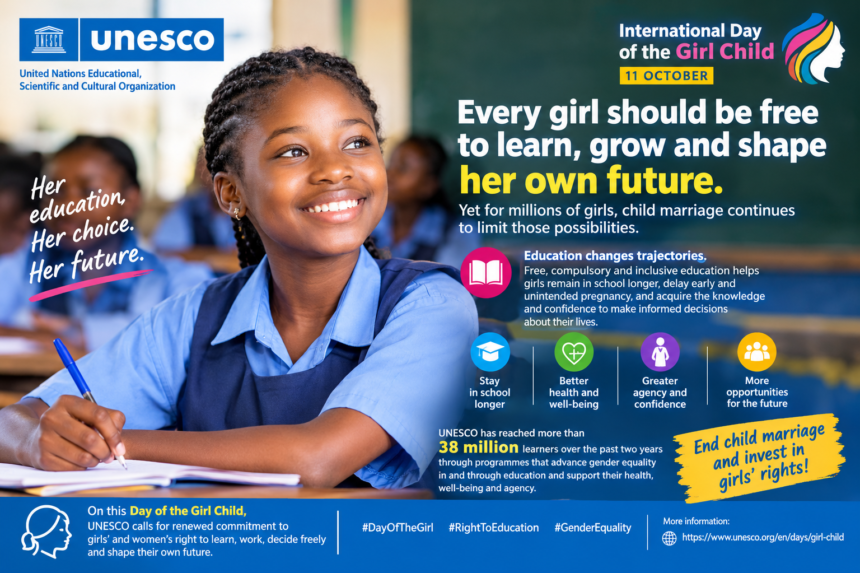
In a message marking the International Day of the Girl Child, observed annually on October 11, the United Nations Educational, Scientific and Cultural Organization (UNESCO) stressed that every girl should have the opportunity to learn, grow and shape her own future.
Related Stories

The organisation noted that child marriage remains a major barrier to girls’ education and development, depriving many of the opportunity to complete their schooling and make informed decisions about their lives.
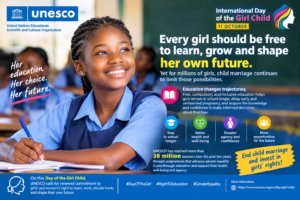
UNESCO emphasised that free, compulsory and inclusive education is critical to changing this trajectory, helping girls remain in school longer, reduce their vulnerability to early and unintended pregnancy, and develop the knowledge and confidence needed to make decisions about their futures.
The message also highlighted UNESCO’s work to advance gender equality in and through education, revealing that the organisation has reached more than 38 million learners over the past two years through programmes supporting education, health, well-being and personal agency.
The 2026 observance, under the theme “End Child Marriage and Invest in Girls’ Rights!”, places the spotlight on the need to protect girls from early marriage and expand their opportunities to learn, grow and participate in decisions affecting their lives.
According to UNESCO’s latest gender report, published ahead of this year’s observance, the proportion of girls married before the age of 18 declined globally from 25 per cent in 2000 to 18 per cent in 2025. However, the figure remains significantly higher in sub-Saharan Africa, at 31 per cent.
The report further estimates that six million pregnant girls and young mothers aged 10 to 19 were out of school in sub-Saharan Africa in 2024, with fewer than five per cent of pregnant and parenting girls in the region returning to school.
These figures underscore the need for sustained investment in education, stronger protection systems and policies that enable girls who become pregnant or marry early to continue or resume their education.
Call for collective action
UNESCO called on governments, communities and partners to renew their commitment to the rights of girls and women to learn, work, make decisions freely and shape their own futures.
The organisation’s message reinforces the importance of addressing social and cultural practices that deny girls their childhood, restrict their choices and interrupt their education.
It also calls for greater recognition of girls as active participants in their own development, with the right to express their views and influence decisions that affect their lives.
As the world marks the International Day of the Girl Child, the central message is clear: ending child marriage and investing in girls’ education are essential to advancing gender equality and building more inclusive societies.
UNESCO maintains that when girls are given access to quality education and the freedom to make informed choices, they are better positioned to realise their potential and contribute meaningfully to their communities and national development.
More information: UNESCO — International Day of the Girl