
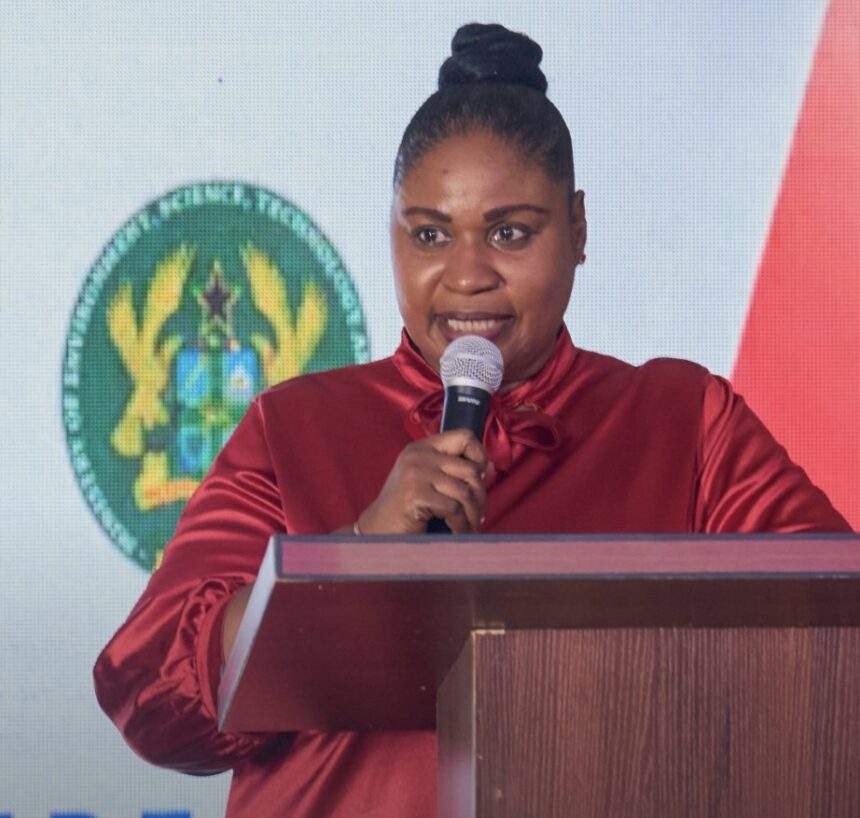
The Vice President of the Ghana Journalists Association (GJA), Rebecca Ekpe, has called for sustained investment in professional development, international collaboration and media innovation to strengthen journalism and enhance public trust.
She said continuous training and knowledge exchange were essential to equipping journalists with the skills needed to navigate an evolving media landscape shaped by artificial intelligence (AI), misinformation, disinformation and emerging digital threats.
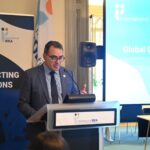
Madam Ekpe made the call when she represented the GJA President, Mr Albert Kwabena Dwumfour, at the closing ceremony of the United Kingdom Media Excellence for Emerging Technologies (UK MEET) programme at the residence of the British High Commissioner in Cantonments, Accra, on Friday, October 16, 2026.
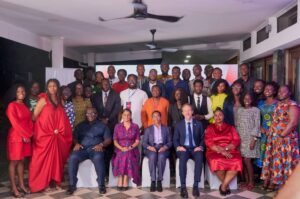
The programme, funded by the British High Commission and implemented by Imperial Global Ghana, brought together approximately 30 Ghanaian journalists and content creators for a week-long training programme focused on reporting on science, innovation and technology.
Addressing dignitaries, media practitioners and programme participants, Madam Ekpe underscored the importance of strengthening the capacity of journalists to produce accurate, fair, ethical and responsible stories that serve the public interest.
She identified three key areas through which initiatives such as UK MEET could contribute to the development of journalism: strengthening professional capacity, building international partnerships and enhancing public trust and democratic accountability.
On professional development, she said journalists must continuously upgrade their knowledge and skills to keep pace with technological advancements and the changing expectations of audiences.
She stressed that as new technologies transformed the production and distribution of news, journalists needed the capacity to verify information, uphold ethical standards and report complex scientific and technological developments in ways that were accurate, accessible and relevant to the public.
According to her, investment in journalism training was critical to ensuring that media practitioners could respond effectively to emerging challenges without compromising the fundamental principles of the profession.
International collaboration and media development
Madam Ekpe also highlighted the importance of partnerships between Ghanaian media institutions and international organisations in advancing journalism development.
She said collaboration between Ghanaian stakeholders, the British High Commission and other international partners provided opportunities for knowledge exchange, innovation and the sharing of professional experiences.
However, she emphasised that such partnerships should go beyond short-term training initiatives to create practical opportunities for continued professional development, journalist safety, media innovation and the sustainability of media organisations.
She called for stronger cooperation among media institutions, training organisations and international partners to build a resilient media sector capable of responding to the demands of the digital age.
Media’s role in democracy and public accountability
On the role of journalism in democratic governance, Mrs Ekpe said a strong, independent and responsible media remained indispensable to democracy and national development.
She noted that journalists played a critical role in informing citizens, holding public institutions accountable and amplifying the voices of individuals and communities that might otherwise be excluded from public discourse.
She said the success of the UK MEET programme should ultimately be measured by how participants applied the knowledge and skills acquired to improve reporting standards, strengthen public engagement and promote informed debate in their respective newsrooms and communities.
“The real impact of this programme will be measured not only by what participants have learned, but by how they apply that knowledge in their newsrooms and communities to improve the quality of public discourse,” she said.
Mrs Ekpe reaffirmed the GJA’s commitment to promoting professionalism, press freedom, media development, and the welfare and safety of journalists in Ghana.
She said investing in journalists was an investment in democracy, accountable governance and national development.
Emerging journalists encouraged to turn learning into action
The UK MEET programme featured a pitch competition in which 16 shortlisted fellows presented proposed science, innovation and technology stories.
Each participant was given five minutes to pitch a story, outlining its scientific basis, potential sources, intended audiences and proposed approach to reaching them.
The pitches were assessed against six criteria: originality of angle, journalistic rigour, scientific accuracy, public and commercial relevance, feasibility and reach.
Ten fellows were selected to participate in a UK Knowledge Exchange visit scheduled for the week of November 30, 2026.
The initiative sought to encourage innovative storytelling and equip emerging journalists and content creators with the skills to report on scientific and technological developments in ways that engage audiences and contribute to public understanding.
Congratulating the successful participants, Mrs Ekpe encouraged all fellows to translate the lessons and professional relationships developed during the programme into meaningful contributions to journalism in Ghana.
She also expressed appreciation to the British High Commissioner and all programme partners for their commitment to strengthening media professionalism and development.
She expressed the hope that the closing ceremony would mark the beginning of deeper collaboration between Ghanaian and British media stakeholders, rather than the end of their engagement.
The UK MEET initiative forms part of broader efforts to strengthen the capacity of journalists to report on emerging technologies and make complex scientific issues more accessible and relevant to the public.
Through such initiatives, stakeholders seek to promote a more knowledgeable, innovative and professionally equipped media sector capable of supporting informed citizenship, democratic accountability and sustainable national development.