
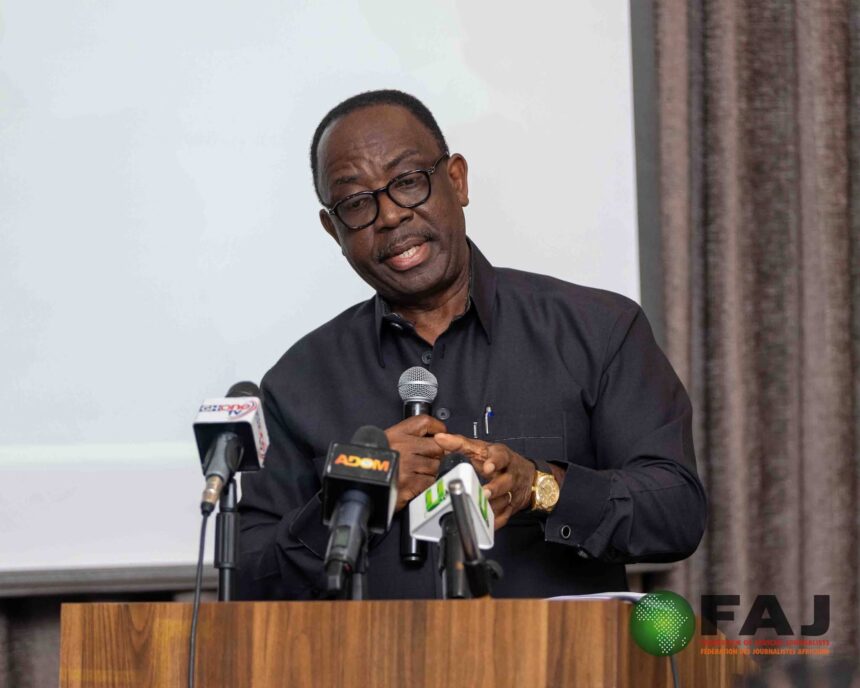
Executive Chairman of KGL Group, Alex Apau Dadey, has challenged African media organisations to rethink their role in the continent’s development, arguing that journalism must go beyond scrutinizing power to also help create the conditions for African businesses to grow, compete and scale globally.
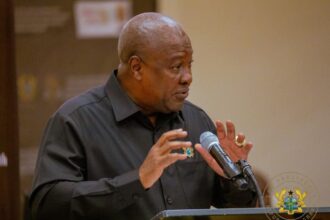
Delivering the keynote address at the Federation of African Journalists (FAJ) Steering Committee Meeting in Accra, Mr Dadey said Africa’s development challenge requires closer interaction between the media, the private sector and other institutions working to transform the continent.
From watchdogs to partners in development
Traditionally, journalism has been defined by its watchdog role—holding governments, institutions and powerful individuals accountable. Mr Dadey argued that this responsibility remains important, but said the changing economic realities of Africa require the media to consider a broader developmental role.
Related Stories
He challenged journalists and media organisations to become partners in innovation, enterprise development and knowledge creation, particularly by identifying and amplifying African businesses capable of creating jobs, developing local industries and competing internationally.
His message was captured in a central declaration:
“The mission before us is greater than corporate Ghana, corporate Africa, and the media. It is to build African champions.”
The proposition is not that the media should abandon its independence or accountability function. Rather, it points to journalism playing a stronger role in telling the stories of African enterprise, innovation and investment, while continuing to scrutinise corporate and political power.
Africa has entrepreneurs—but needs scale
Mr Dadey’s argument is consistent with a broader position he has advanced throughout 2026: Africa does not lack entrepreneurs or ideas; the difficulty is turning those ideas into large, resilient and globally competitive institutions.
Speaking at the Africa Prosperity Dialogues earlier in the year, he argued that sustainable transformation requires African-owned companies capable of expanding beyond domestic markets, attracting capital, meeting international standards and competing on quality and governance.
At the 10th Ghana CEO Summit, he similarly argued that Africa must move beyond being described as a continent of “potential” and deliberately create institutions and enterprises capable of shaping global economic outcomes. His argument was that natural resources and population size alone do not transform economies; strong institutions and productive enterprises do.
Why the media matters
For African media, this raises an important question: What stories are being told about African businesses?
Mr Dadey’s position suggests that media coverage should not focus exclusively on corporate controversies, political connections or individual wealth. There is also value in investigating and documenting:
- African companies creating jobs and local supply chains;
- innovations emerging from African markets;
- businesses expanding across national borders;
- African entrepreneurs attracting international investment;
- companies investing in research, technology and skills;
- indigenous enterprises competing with multinational corporations;
- African businesses participating in the African Continental Free Trade Area (AfCFTA);
- succession and governance of family-owned businesses; and
- the economic impact of African-owned companies on communities.
This could help create a more sophisticated African business journalism ecosystem, where reporting informs investors and citizens while also documenting the continent’s industrial and entrepreneurial transformation.
His warning about narratives
Mr Dadey has also repeatedly raised concerns about the power of narratives to influence the fortunes of African enterprises.
At the Africa Prosperity Dialogues, he argued that successful African companies can face reputational and regulatory pressures as they grow, warning that businesses can be weakened through negative narratives and sustained scrutiny.
For journalists, this presents a delicate balance.
The media must scrutinise business power—but it must also scrutinise the narratives surrounding business.
That means asking whether allegations are properly evidenced, whether regulatory action is proportionate, whether corporate success is being fairly reported, and whether public-interest concerns are being distinguished from commercial or political interests.
In other words, supporting African enterprise should not mean becoming a public-relations arm for African companies. Independent journalism remains essential.
A personal connection to Ghanaian journalism
Mr Dadey’s message also carried a personal historical dimension.
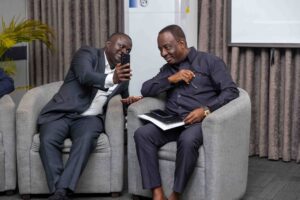
He disclosed that his late father-in-law was the first Director of the Ghana Institute of Journalism and served as Press Secretary to Ghana’s first President, Osagyefo Dr Kwame Nkrumah. He said that background shaped his relationship with journalism and contributed to his commitment to supporting the media.
The connection is particularly significant given Ghana’s history of using journalism not only as a vehicle for information but also as an instrument for national development and public education.
It places Mr Dadey’s current call for a more development-oriented media within a longer Ghanaian tradition of thinking about the relationship between journalism, nation-building and economic transformation.
KGL and the African business narrative
The argument is also reflected in KGL Group’s recent initiatives.
In May 2026, KGL announced a strategic partnership with CNBC Africa to establish a Ghana country office hosted by KGL. The partnership is intended to strengthen coverage of African businesses, investment opportunities, entrepreneurs and economic developments.
Mr Dadey described the initiative as part of a broader effort to give African enterprise greater visibility and strengthen Africa’s voice in global business conversations.
This provides a practical example of the philosophy he presented to the African journalists: African businesses need capital and markets, but they also need visibility, credible information and narratives that allow their achievements and challenges to be understood.
The bigger message for African journalism
Mr Dadey’s intervention ultimately presents African journalists with a broader development question:
Can the African media remain a watchdog while also becoming an enabler of knowledge, innovation and economic transformation?
The answer does not require abandoning journalism’s independence. Rather, it could mean expanding the scope of journalism to include solutions-oriented reporting, investigative business journalism, innovation journalism, data journalism and deeper coverage of African enterprise.
For a continent seeking greater economic integration and global competitiveness, the media has a role in documenting not only who holds political power, but also who is creating productive capacity, jobs, technology, investment and institutions.
And that is the significance of Mr Dadey’s central message:
Africa should not remain merely a market for the ambitions of others. It should deliberately build enterprises capable of shaping global economic outcomes.
The challenge to the media, therefore, is to ensure that Africa’s entrepreneurs, innovators, businesses and institutions are reported with the same depth, scrutiny and seriousness with which political power is covered.