
What if the sea were not a boundary separating people, countries and continents, but instead a shared continent connecting humanity?
That provocative question lies at the heart of “Tides of Humanity,” a cross-cultural exhibition bringing together Italian documentary photographer Francesco Bellina and Ghanaian textile artist Emmanuel Aggrey Tieku, curated by Rosa Cascone.
The exhibition, promoted by the Embassy of Italy in Ghana with support from Zenith Bank Ghana, opened at the Nubuke Foundation in Accra on September 11, 2026, and runs until September 26.
Related Stories

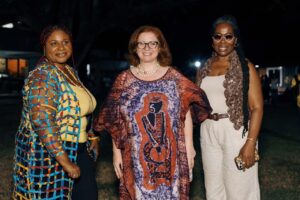
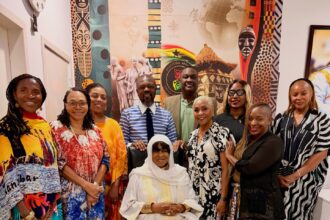
 Her Excellency, Italian Ambassador to Ghana, Laura Ranelli engages Art Enthusiasts at the Exhibition at East Legon, Accra. Ghana.
A sea without borders
The central idea of Tides of Humanity is deceptively simple: if the world’s seas and oceans were regarded as a common land, then the communities living along their shores could be understood as inhabitants of one enormous, shared territory.
It is a perspective that shifts attention away from political borders and toward the connections created by the ocean — connections involving people, migration, trade, fishing, culture, consumption and the environment.
For Bellina and Tieku, those connections are particularly meaningful because their artistic journeys are rooted in two coastal worlds: Sicily in Italy and Accra in Ghana.
Bellina was born in Trapani, Sicily, a city with a long fishing tradition, while Tieku is based in Accra. The exhibition draws parallels between coastal communities thousands of kilometres apart and examines how their lives are being affected by changes to the marine environment.
From the fishing boats of Sicily to Ghana’s coastline
Bellina’s contribution includes photographs from his “Pray for Seamen” series, documenting small-scale fishing communities and their relationship with the sea.
His images capture fishermen whose livelihoods depend on traditional practices, while also revealing an increasingly threatened marine environment.
The photographer’s relationship with Ghana began before his first visit in 2019, through Ghanaian communities in Palermo. Since then, he has travelled around Ghana, including visits to places such as Kumasi, Takoradi and Koforidua, and has spent time engaging with coastal communities, including fishermen and residents of Jamestown. He now works between Accra and Palermo.
His photographs therefore do more than document people at sea. They ask what happens when traditional livelihoods encounter climate change, environmental degradation, changing marine ecosystems and global economic pressures.
When waste travels across oceans
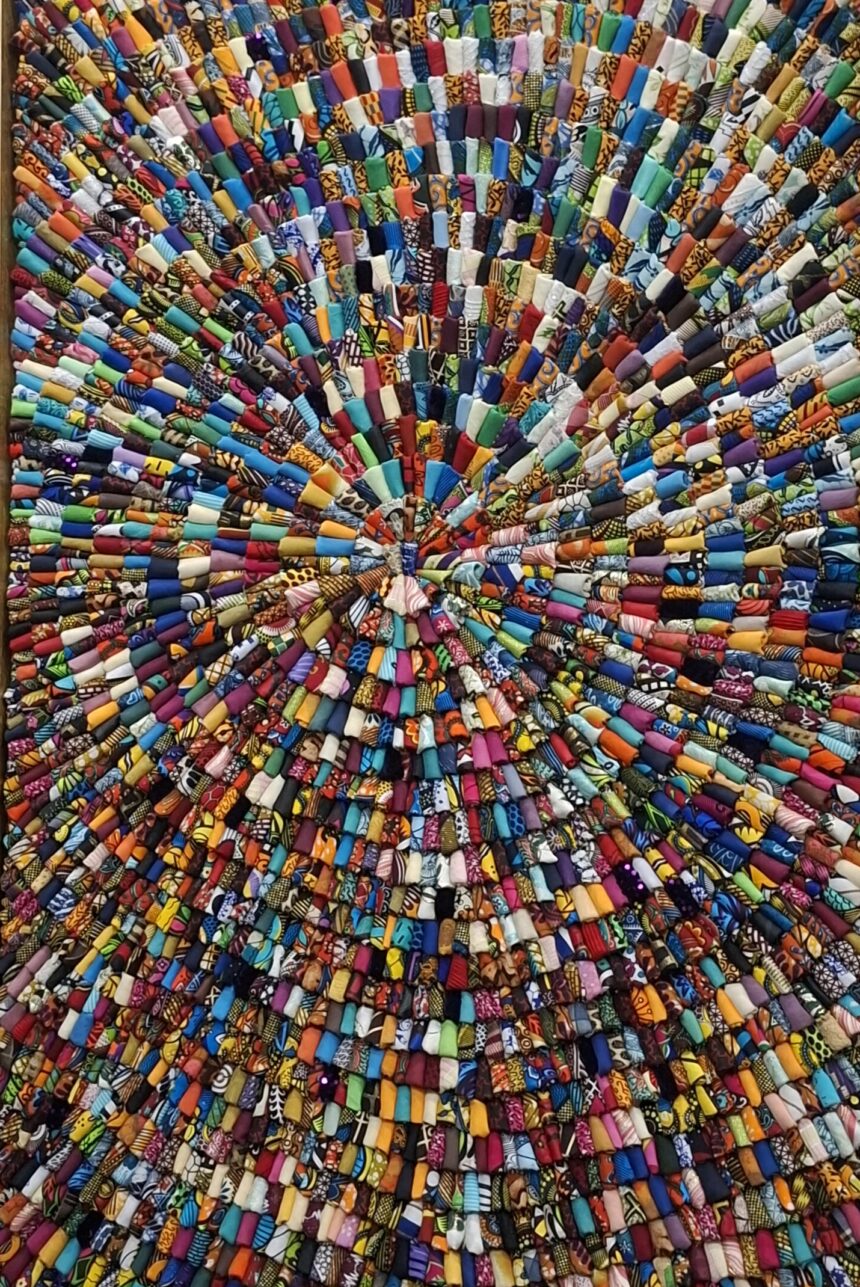
One of the most striking elements of the exhibition is the use of discarded clothing and textiles.
Tieku’s textile installations transform materials that have been thrown away into works that raise questions about consumption, waste and the unequal environmental consequences of global trade.
Clothes that end up on Ghanaian beaches become evidence of a much larger global system — one in which what is considered waste in one part of the world can become an environmental burden somewhere else.
Reports on the exhibition describe Tieku’s work as engaging with the movement of second-hand clothing to Ghana and its implications for consumption, waste and historical relationships between Africa and the wider world.
Tieku works extensively with upcycled textile waste, combining textiles with painting and sculpture. His artistic practice explores how discarded materials can be transformed into new forms of expression.
Climate change meets human stories
Tides of Humanity is therefore not simply an exhibition about the ocean.
It brings together several interconnected issues:
- Climate change and rising temperatures
- Marine degradation
- Plastic and textile waste
- The sustainability of coastal communities
- Traditional fishing practices
- Global consumption
- Migration and human mobility
- The relationship between Africa and Europe
- Cultural exchange between Ghana and Italy
The exhibition’s organisers present these issues through artistic rather than purely scientific or political language — allowing photographs, textiles, fishing nets, discarded materials, hands and water to tell stories about the ways human activity is changing the natural world.
Art as a bridge between Ghana and Italy
There is also an important diplomatic and cultural dimension to the exhibition.
By bringing together a Ghanaian artist and an Italian photographer, Tides of Humanity creates a platform for Ghana–Italy cultural exchange.
The collaboration reflects connections that already exist between the two countries, particularly through migration and the Ghanaian community in Sicily.
Bellina has expressed an interest in strengthening cultural links between Ghana and Sicily, including creating opportunities for Ghanaian artists to exhibit their work in Sicily. He has also spoken about continuing environmental education programmes for young people.
In this sense, the exhibition itself becomes a kind of cultural bridge — much like the sea that provides its central metaphor.
A question for the visitor
Perhaps the most powerful question raised by Tides of Humanity is not simply what is happening to our oceans?
It is:
What happens when we recognise that the environmental choices made on one shore can affect lives on another shore thousands of kilometres away?
A discarded garment, a fishing net, a polluted beach or a changing marine ecosystem may appear local. Yet the exhibition encourages viewers to see these as parts of a much larger global story.
The sea connects the shores.
And if the sea is imagined as one vast continent, then environmental damage, human vulnerability and responsibility also become shared concerns.
Beyond the exhibition
For Bellina, the work in Ghana is expected to continue beyond Tides of Humanity. He has expressed interest in further environmental projects, including work on the effects of illegal mining, as well as programmes for young people and stronger artistic exchanges between Ghana and Sicily.
For Tieku, the exhibition forms part of his broader exploration of discarded textiles and their social and environmental meanings.
Together, their work makes Tides of Humanity a conversation between photography and textile art, Sicily and Ghana, the individual and the global, the human being and the sea.
And perhaps that is the exhibition’s most enduring message:
The ocean may separate our shores, but it also connects our stories.
Tides of Humanity is on view at the Nubuke Foundation, Accra, through September 26, 2026