
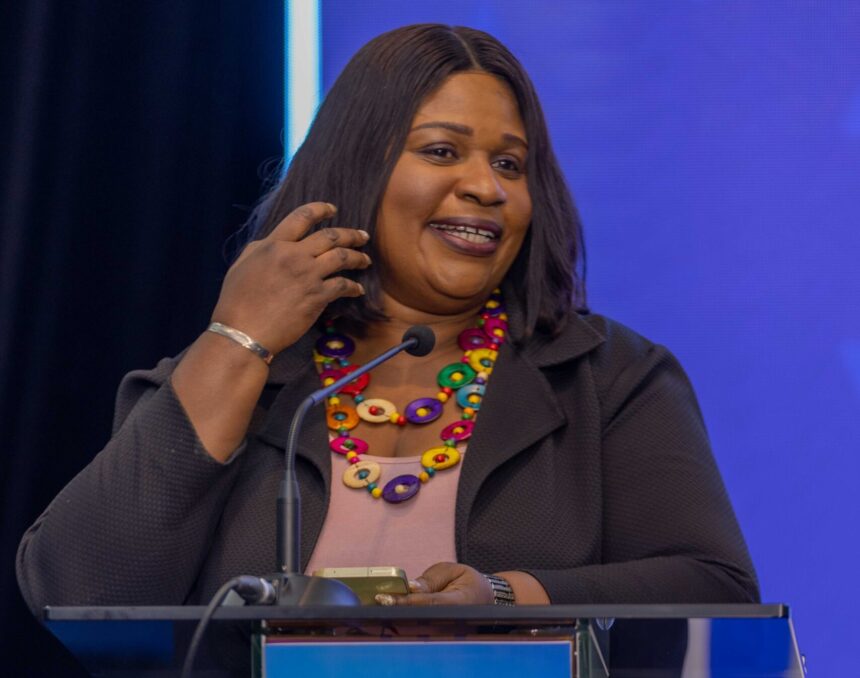
Ghanaian media leader and gender advocate, Rebecca Ekpe, has called on young African women to move beyond conversations about empowerment and actively position themselves to influence decision-making, shape public discourse and lead transformation in their communities.
She made the call while speaking at the SHE LEADS AFRICA – Ghana 2027 platform, organised by the Young Women of Africa (YWOA), on Saturday, November 14, 2026.
Speaking on the theme, “Empowering Young African Women to Lead, Inspire and Transform Communities through Justice, Media and Influence,” Ms. Ekpe emphasised the need to create opportunities for young women to develop their leadership potential, build confidence and contribute meaningfully to Africa’s development.
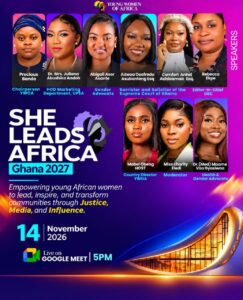
She described the establishment of the Young Women of Africa Ghana Chapter as a significant step towards building a generation of informed, confident and influential African women capable of driving positive change.
According to her, Africa’s development agenda cannot be fully achieved without the active participation of women in leadership, governance and decision-making.
She stressed that women must not only be represented in leadership spaces but must also have the opportunity to influence policies, shape conversations and participate in decisions that affect their lives and communities.
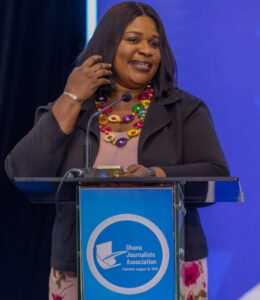
GJA @77 Anniversary.
Justice, Media and Influence: The Pillars of Transformation
Focusing on the three pillars of the SHE LEADS AFRICA initiative, Ms. Ekpe highlighted justice, media and influence as critical instruments for advancing women’s empowerment and social transformation.
On justice, she urged young women to understand their rights and develop the courage to speak against discrimination, abuse and other forms of injustice.
She encouraged greater female participation in human rights advocacy, legal activism and policy discussions, noting that a fair and inclusive society must guarantee equal opportunities for all.
Addressing the role of the media, Ms. Ekpe, who is Editor-in-Chief of the Ghana Broadcasting Corporation (GBC) and Vice President of the Ghana Journalists Association (GJA), underscored the media’s power in shaping public opinion, influencing national conversations and determining how women are represented in society.
She called on young African women to occupy strategic positions within the media industry, not only as reporters and presenters but also as editors, producers, media entrepreneurs and decision-makers.
She further emphasised the importance of women telling their own stories and controlling their narratives rather than allowing others to define their experiences.
Ms. Ekpe also encouraged young women to use digital and traditional media responsibly to combat misinformation, promote accountability and amplify issues affecting women and other vulnerable groups.
She identified online harassment, gender stereotypes, limited professional opportunities and unequal representation as some of the persistent challenges confronting women’s participation in public life.
On influence, she explained that it should not be measured solely by positions held or social media following, but by the ability to use one’s knowledge, voice, skills and opportunities to create meaningful change.
She noted that every young woman has the potential to influence her family, workplace, community and society, regardless of her professional standing.
Mentorship and Collaboration for Women’s Advancement
Ms. Ekpe called for deliberate investments in mentorship, skills development, networking and professional growth to prepare young women for leadership.
She challenged the Young Women of Africa Ghana Chapter to build a platform that goes beyond membership and creates practical opportunities for its members.
She identified mentorship programmes, leadership training, communication and advocacy skills, entrepreneurship development and community engagement as key interventions that could strengthen the chapter’s impact.
She also encouraged members to cultivate a culture of collaboration and mutual support, stressing that women must create opportunities for one another rather than compete unnecessarily.
Drawing on her professional experience in journalism and media leadership, Ms. Ekpe expressed interest in contributing her knowledge and expertise to initiatives that promote communication, storytelling, accountability and positive social change.
She also highlighted the importance of connecting emerging female leaders with experienced professionals who can provide guidance, share opportunities and support their professional development.
Building the Next Generation of African Women Leaders
In her closing remarks, Ms. Ekpe reminded participants that empowerment should go beyond occupying positions to creating opportunities for others to rise.
She urged young women to be courageous in challenging injustice, confident in expressing their ideas and intentional about using their platforms to transform their communities.
She encouraged the chapter to build a strong network of women who share knowledge, support one another and collectively pursue opportunities for growth and development.
The SHE LEADS AFRICA – Ghana 2027 initiative brings together women from different professional backgrounds to advance conversations on leadership, justice, media and influence.
The programme featured Precious Banda, Chairperson of YWOA; Dr. Mrs. Julianga Akushika Andoh, Head of the Marketing Department at the University of Professional Studies, Accra (UPSA); Abigail Asor Asante, Gender Advocate; and Barrister Adwoa Osafredu Asubonteng, among other speakers.
Other speakers included Comfort Antwi Achiaama, while Mabel Obeng, Country Director, Young Women of Africa served as host, with Miss Charity Eledi as moderator and Dr. (Med) Maame Vaa Gyasiwaa contributing from a health and gender advocacy perspective.
The initiative seeks to empower young African women to lead, inspire and transform communities through justice, media and influence.
Ms. Ekpe’s central message was clear: African women must not wait for permission to lead, speak or make an impact. They must recognise the power of their voices, take up spaces of influence and create pathways for the next generation.