
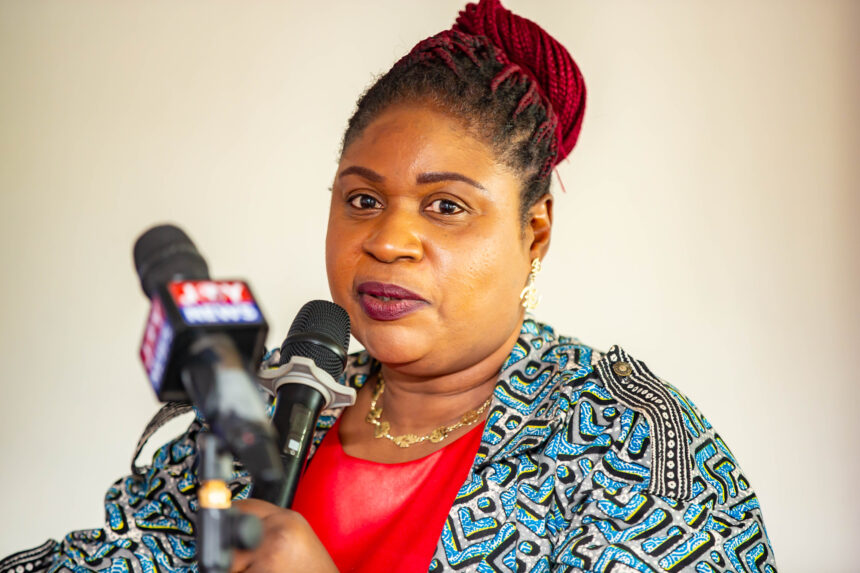
Vice President of the Ghana Journalists Association (GJA), Rebecca Ekpe, has urged journalists across the country to prioritise information integrity, accuracy and inclusive public education in their coverage of Ghana’s ongoing constitutional reform process.
She said the media had a critical constitutional responsibility to ensure that citizens understood the proposed reforms, their implications and the processes required to translate recommendations into law.
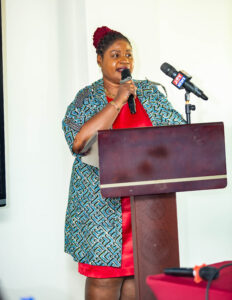
Speaking at a media engagement on Ghana’s constitutional reform process, organised by the Citizens’ Platform on Constitutional Reform at Alisa Hotel in Accra on Thursday, October 1, 2026, Madam Ekpe emphasised that constitutional reform should not be left exclusively to politicians, lawyers, academics and civil society organisations.
Related Stories

According to her, journalists must help translate complex legal and constitutional provisions into clear, accessible information that enables ordinary Ghanaians to participate meaningfully in decisions about the country’s democratic future.
She noted that market women, teachers, farmers, young people, persons with disabilities, public servants and residents of rural communities must all have access to reliable information about the proposed changes.
“Constitutional reform is ultimately about people. It is about how power is exercised, the institutions that govern us, citizens’ rights and responsibilities, accountability and representation,” she said.
Media has a constitutional responsibility
Madam Ekpe reminded journalists that their role in Ghana’s democracy extends beyond professional obligations, pointing to Article 162 of the 1992 Constitution, which guarantees the freedom and independence of the media.
She particularly highlighted Article 162(5), which requires the mass media to uphold the principles, provisions and objectives of the Constitution and promote government accountability to the people.
She said these provisions gave journalists both the freedom and the responsibility to scrutinise public power, provide platforms for divergent views and ensure that citizens received accurate, fair and balanced information in the public interest.
She also referred to Article 163, which requires state-owned media to provide fair opportunities and facilities for the presentation of divergent views and dissenting opinions.
Madam Ekpe stressed that constitutional reform was one of the most important national issues requiring responsible, independent and public-interest journalism.
Journalists urged to understand reform proposals
Providing context on the reform process, the GJA Vice President noted that the Constitution Review Committee had submitted a comprehensive report containing 206 proposals for constitutional amendments and new provisions.
She further observed that the government published its position on the recommendations on July 30, 2026, accepting some proposals, modifying others and rejecting certain recommendations.
She added that the inauguration of an 11-member Constitution Review Implementation Committee in August marked an important stage in the process, as attention shifted towards determining how the proposals could be implemented.
Against this background, Ms Ekpe challenged journalists to familiarise themselves with the Constitution Review Committee’s report, the Government Position Paper and other relevant documents instead of relying on political statements, social media posts or incomplete interpretations.
She urged media practitioners to clearly distinguish between existing constitutional provisions, recommendations made by the review committee, the government’s position and proposals that may eventually become law.
“Those are not the same thing,” she cautioned, emphasising the need for precision and context in reporting.
She said journalists must go beyond reporting statements by public officials to examine the rationale behind proposed changes, the people likely to be affected and the potential legal, political and social implications.
Inclusion must be central to constitutional reform coverage
Madam Ekpe also called for more inclusive reporting, urging journalists to deliberately amplify the voices of groups that are often underrepresented in national conversations.
These, she said, include women, young people, persons with disabilities, rural communities, minority groups, workers, traditional authorities, businesses and other relevant stakeholders.
She maintained that the media’s responsibility was not simply to provide platforms for people who already had access to power, but also to create opportunities for those whose voices were frequently excluded from decision-making.
According to her, meaningful public participation would depend on whether citizens across different communities and social backgrounds could understand the proposed reforms and express their views.
Information integrity critical to public trust
The GJA Vice President identified information integrity as a major factor that could influence the success of the constitutional reform process.
She warned that misinformation, unverified claims and politically motivated narratives could distort public understanding, weaken trust and undermine informed participation.
She observed that the changing digital information landscape, particularly the widespread use of WhatsApp, Facebook, TikTok, X and YouTube, had created new opportunities for public education while also making it easier for false claims and misleading interpretations to circulate rapidly.
Madam Ekpe urged journalists to verify claims before publication, consult primary documents, identify the sources of information, correct errors promptly, distinguish facts from opinions and offer affected parties the opportunity to respond.
She further cautioned against sensational headlines that misrepresent constitutional proposals or the pressure to publish unverified information simply because it is trending online.
“Journalists must be prepared to meet misinformation with facts, disinformation with verification and confusion with explanation,” she said.
Call for sustained media engagement
Madam Ekpe challenged media organisations to treat constitutional reform as a sustained public-interest journalism project rather than an issue to be covered only when government, Parliament or political parties make announcements.
She encouraged journalists to produce explanatory reports, interviews, investigative stories, fact-checks and public discussions that would deepen citizens’ understanding of the process.
She also called on media practitioners to extend coverage beyond Accra by using their regional networks to assess public awareness, identify citizens’ concerns and bring community perspectives into the national debate.
The GJA Vice President welcomed stronger collaboration between the Association, civil society organisations, constitutional experts and media houses to build journalists’ capacity for effective constitutional reporting.
However, she stressed that such partnerships must respect editorial independence, noting that collaboration to strengthen professional knowledge did not mean compromising the media’s independence.
“ Our independence is not negotiable. But independence does not mean isolation,” she said.

GJA reaffirms commitment to public education
Madam Ekpe reaffirmed the Ghana Journalists Association’s commitment to supporting initiatives that strengthen professional journalism and promote informed public participation in national affairs.
She said the media must consistently return to the Constitution and official documents to ensure that reporting on the reform process remained accurate, credible and accessible.
She concluded that constitutional reform was fundamentally about the relationship between citizens and the state, including how power was acquired, exercised and restrained.
She urged journalists to remain committed to informing without misleading, questioning without prejudice, explaining without oversimplifying, giving voices without discrimination and placing the public interest at the centre of their work.
“If the constitutional reform process is to succeed, Ghanaians must have access to credible, accurate and understandable information,” she said.
She added that information integrity was not separate from constitutional reform but formed part of its foundation, as an informed citizenry was better positioned to participate meaningfully in shaping Ghana’s constitutional future.