
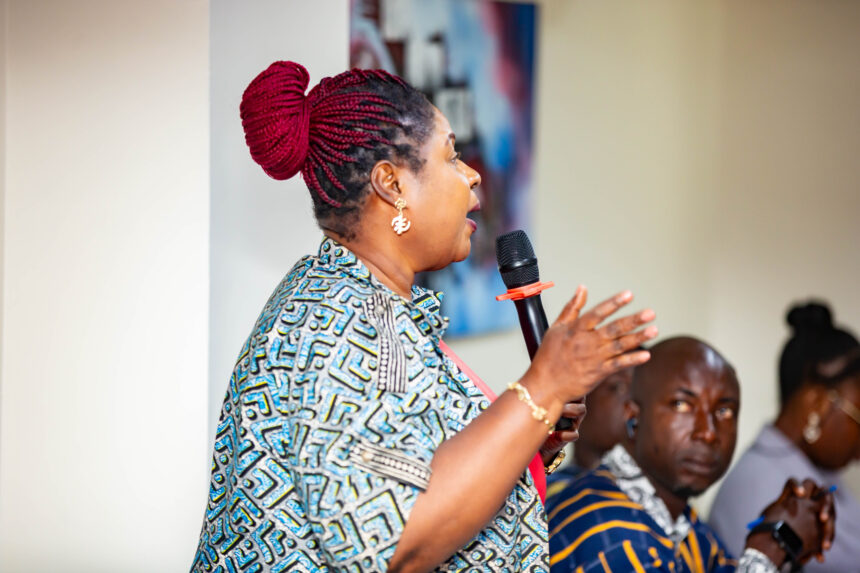
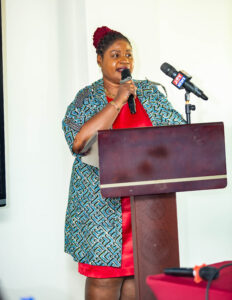
OPENING SPEECH BY REBECCA EKPE
VICE PRESIDENT, GHANA JOURNALISTS ASSOCIATION (GJA)
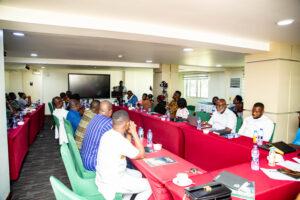
AT THE MEDIA ENGAGEMENT ON GHANA’S CONSTITUTIONAL REFORM PROCESS
ALISA HOTEL, ACCRA – 1 OCTOBER 2026
Chairperson,
Representatives of the Citizens’ Platform on Constitutional Reform,
Distinguished guests,
Colleague journalists and media practitioners,
Ladies and gentlemen,
Good morning.
Related Stories
It is a pleasure to join you this morning on behalf of the Ghana Journalists Association for this important engagement on Ghana’s constitutional reform process.
(Greetings from President Dumfour-Introduce Executive Present)
Let me first commend the Citizens’ Platform on Constitutional Reform for bringing journalists and civil society together at this critical stage of the process.
This is not simply another media engagement.
It is an opportunity for us, as journalists, to reflect on our constitutional responsibility, understand where the reform process has reached, and consider how the media can contribute meaningfully to a process that ultimately belongs to the people of Ghana.
THE MEDIA’S CONSTITUTIONAL MANDATE
The role of the media in Ghana’s democracy is not merely a professional responsibility. It is a constitutional responsibility.
Article 162 of the 1992 Constitution guarantees the freedom and independence of the media.
But the Constitution goes beyond guaranteeing press freedom.
Article 162(5) states that the mass media shall, at all times, be free to uphold the principles, provisions and objectives of the Constitution and shall uphold the responsibility and accountability of government to the people of Ghana.
That provision is particularly important to our discussion today.
It means that press freedom comes with responsibility.
The media is expected to inform citizens, scrutinise the exercise of public power, provide space for divergent views and help citizens understand issues that affect their lives and their democracy.
Article 163 further provides that state-owned media shall afford fair opportunities and facilities for the presentation of divergent views and dissenting opinions.
These constitutional provisions give us both freedom and responsibility.
They give us the space to ask difficult questions.
They also require us to ensure that the information we provide to the public is accurate, fair, balanced and in the public interest.
And few issues demand this responsibility more than constitutional reform.
WHY THE MEDIA MATTERS TO CONSTITUTIONAL REFORM
A Constitution may be a legal document, but constitutional reform is ultimately about people.
It is about how power is exercised.
It is about the institutions that govern us.
It is about citizens’ rights and responsibilities.
It is about accountability.
It is about representation.
And ultimately, it is about the kind of democratic society Ghanaians want to build for themselves and future generations.
The media therefore have a crucial role in translating what may sometimes appear to be complex legal and constitutional language into information that ordinary citizens can understand.
The constitutional reform process cannot become a conversation limited to lawyers, politicians, academics and civil society organisations.
The market woman must understand it./ The teacher must understand it.
The young person using social media must understand it.
The farmer, trader, student, public servant and person with disability must understand what is being proposed and what it could mean for them.
And this is where the media becomes indispensable.
WHERE WE ARE IN THE REFORM PROCESS
Colleagues,
Ghana has now moved beyond the initial stage of reviewing the Constitution.
The Constitution Review Committee undertook extensive consultations and produced a comprehensive report containing 206 proposals, comprising amendments to existing constitutional provisions as well as proposals for new provisions.
Government subsequently considered the recommendations and, on 30 July 2026, published its position on the proposals. Government accepted some recommendations, proposed modifications to others and rejected some.
We have also moved into the implementation phase.
An 11-member Constitution Review Implementation Committee was inaugurated in August to examine the Government’s position together with the CRC recommendations and develop a framework for implementation.
This is therefore a particularly important moment.
We are moving from recommendations to decisions, from discussion to implementation.
And as the process progresses, the media must be present—not as a cheerleader for any particular proposal, but as an independent platform through which citizens can understand the issues and hear the different perspectives.
WHAT SHOULD THE MEDIA BE DOING?
The first expectation is accuracy. 1
Constitutional reform is too important for journalists to rely on headlines, social-media posts, political soundbites or incomplete interpretations.
We must go to the documents.
We must read the CRC report.
We must examine the Government Position Paper.
We must engage the CSO perspectives.
We must consult constitutional lawyers, academics, civil society, political parties and other relevant stakeholders.
And most importantly, we must distinguish between what the Constitution currently provides, what the CRC recommended, what Government has accepted or rejected, and what may eventually become law.
Those are not the same thing.
The second expectation is context. 2
A constitutional proposal should not be reported simply as a statement made by a politician or a government official.
Journalists must ask:
What does the proposal change?
Why has the change been proposed?
Who will be affected?
What are the possible implications?
What are the arguments for and against it?
What does the Constitution currently say?
And what legal process must the proposal go through before it can take effect?
This is the kind of journalism citizens need.
THE MEDIA MUST MAKE THE REFORM PROCESS INCLUSIVE
The third expectation is inclusion. 3
Constitutional reform should not become a conversation among the political and intellectual elite alone.
The media must deliberately seek out voices that are often absent from national conversations.
Women.
Young people.
Persons with disabilities.
People in rural communities.
Traditional authorities.
Minority groups.
Workers.
Businesses.
Academics.
Religious and civil society organisations.
And ordinary citizens.
Our responsibility is not simply to give the microphone to those who already have access to power.
Our responsibility is also to help those without power to participate in the national conversation.
THE MEDIA MUST QUESTION — BUT ALSO EXPLAIN——
There is another responsibility I want to emphasise.
Journalism must not only report the reform process; it must explain it.
There is a difference between reporting that Government has accepted a particular recommendation and explaining what that recommendation means.
There is a difference between announcing that a constitutional amendment may require a referendum and explaining to citizens why certain provisions require a referendum while others follow a different parliamentary process.
For example, the Constitution provides specific procedures for amendments to entrenched provisions, including publication requirements and a referendum with specified participation and approval thresholds.
These are matters that journalists must explain clearly to the public.
We must move beyond the journalism of “who said what” to journalism that answers the more important question:
“What does this mean for the citizens?”
INFORMATION INTEGRITY
Ladies and gentlemen,
This brings me to what I consider one of the most important issues for the success of constitutional reform:
Information integrity.
The success of this process will depend not only on the quality of the proposals.
It will also depend on the quality of information available to the Ghanaian public.
If citizens are misinformed, the quality of public participation suffers.
If false claims are allowed to spread unchecked, public trust suffers.
If complex constitutional proposals are reduced to political slogans, citizens may be denied the opportunity to properly understand the choices before them.
And if journalists themselves reproduce unverified information, the media can unintentionally become part of the problem.
We therefore have a collective responsibility to protect the information environment.
That means verification before publication.
It means checking documents.
It means identifying the source of claims.
It means correcting errors promptly.
It means clearly distinguishing fact from opinion.
It means giving people the opportunity to respond.
It means avoiding sensational headlines that distort the substance of constitutional proposals.
And it means resisting the pressure to publish simply because something is trending online.
SOCIAL MEDIA AND THE INFORMATION CHALLENGE
The information environment has changed dramatically.
Today, citizens do not receive information only from newspapers, radio and television.
They receive it through WhatsApp, Facebook, TikTok, X, YouTube and countless other digital platforms.
This presents enormous opportunities for public education.
But it also presents serious challenges.
A misleading thirty-second video can travel faster than a carefully researched constitutional analysis.
A false quotation can be shared thousands of times before the original source is even located.
A complex constitutional issue can be reduced to a provocative headline designed primarily to generate clicks.
This is why information integrity must become central to our coverage of constitutional reform.
Journalists must be prepared to meet misinformation with facts, disinformation with verification and confusion with explanation.
A CALL TO JOURNALISTS
So, as we leave this engagement, I would like to challenge every journalist here.
Let us make constitutional reform a sustained journalism project—not a story we cover only when Parliament, Government or a political party makes an announcement.
Let us develop explainers.
Let us produce interviews.
Let us undertake investigative pieces.
Let us organise public discussions.
Let us take the conversation beyond Accra.
Let us use our regional networks to find out what ordinary Ghanaians understand about the proposed reforms.
Let us ask citizens what concerns them.
Let us give experts the opportunity to explain.
Let us fact-check claims.
And let us continuously return to the Constitution and the official documents.
A PARTNERSHIP FOR PUBLIC EDUCATION
The Ghana Journalists Association welcomes partnerships that strengthen the capacity of journalists to undertake this responsibility.
This engagement should therefore not be viewed as a one-off event.
It should be the beginning of a sustained conversation among the GJA, civil society, constitutional experts, media organisations and other stakeholders on how best to support informed public participation.
As journalists, we must remain independent.
Our independence is not negotiable.
But independence does not mean isolation.
We can work with stakeholders to build knowledge and capacity while maintaining our professional and editorial independence.
CONCLUSION
Chairperson, distinguished guests, colleagues,
Constitutional reform is ultimately about the relationship between the citizen and the State.
It is about how power is acquired, exercised and restrained.
It is about institutions.
It is about rights.
It is about accountability.
And it is about the future of Ghana’s democracy.
The media HAVE a constitutional mandate to help citizens understand and participate in this national conversation.
Our task is therefore clear:
Inform without misleading.
Question without prejudice.
Explain without oversimplifying.
Give voice without discrimination.
Verify before publishing.
And always put the public interest at the centre of our journalism.
If the constitutional reform process is to succeed, Ghanaians must have access to credible, accurate and understandable information.
That is why information integrity is not separate from constitutional reform—it is part of its foundation.
A well-informed citizenry is better positioned to participate meaningfully in decisions about the country’s constitutional future.
And a media that protects the integrity of information strengthens public trust in the democratic process.
Let us therefore commit ourselves to journalism that does not merely tell Ghanaians what is happening, but helps them understand why it matters.
The Ghana Journalists Association stands ready to play its part.
Thank you very much, and I wish us all a productive engagement.