
Former Vice President and presidential candidate of the New Patriotic Party, Mahamudu Bawumia, has called on Ghanaians to rise above partisan politics and work together to find lasting solutions to the country’s persistent flooding challenges.
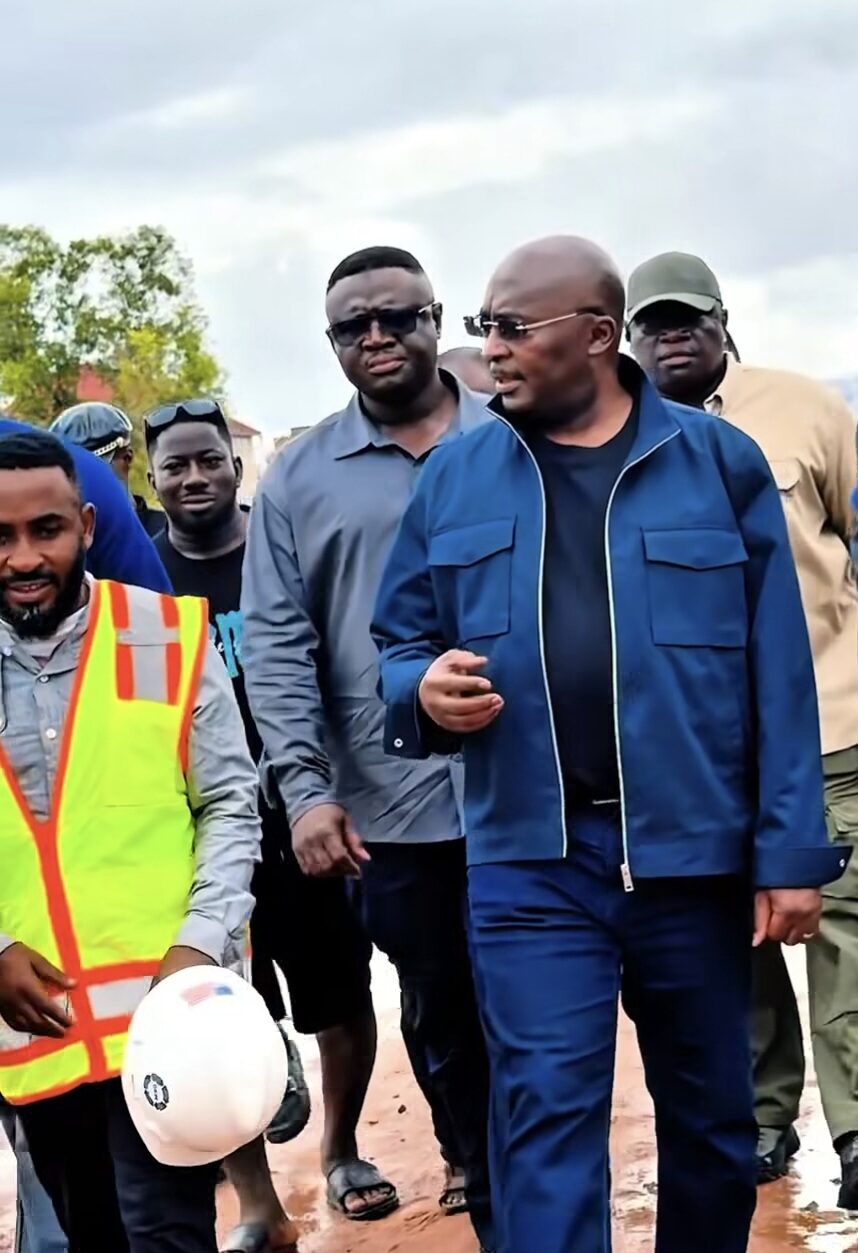
The appeal follows his visit to several communities severely affected by last Monday’s torrential rains, which left homes submerged, displaced families, damaged businesses and disrupted economic activity in parts of the country.
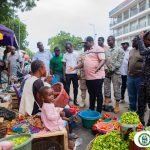
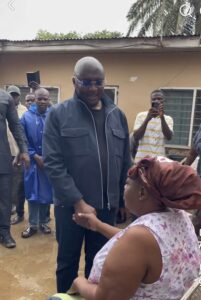 Dr. Bawumia visits with flood victims in Accra.
Related Stories

Addressing residents, the media and party supporters after inspecting the flood-hit areas, Dr. Bawumia said flooding had become a national emergency that should unite rather than divide Ghanaians.
“Flooding does not discriminate between political parties, ethnic groups or religious beliefs. When disaster strikes, it affects us all. This is the time for national unity, not political division.”
The former Vice President expressed sympathy for families who lost relatives, property and livelihoods, describing the destruction as heartbreaking.
“My thoughts and prayers are with every family that has been affected by these devastating floods. Many have lost everything they worked for, and our immediate priority must be to provide relief and support to those in need.”
Immediate Relief Must Be Prioritised
Dr. Bawumia called on government agencies, local authorities, humanitarian organisations and private citizens to intensify efforts to provide emergency assistance to affected communities.
He said displaced families urgently require shelter, food, clean drinking water, medical care and sanitation facilities to prevent further hardship.
“In moments like these, compassion must guide our actions. Every institution that can help should do so quickly because many families are facing extremely difficult conditions.”
He also commended emergency responders, security personnel, health workers and volunteers who have been assisting flood victims under challenging circumstances.
A Long-Term Solution Is Needed
While acknowledging the importance of emergency interventions, Dr. Bawumia stressed that Ghana must move beyond responding to disasters and instead focus on preventing them.
According to him, annual flooding should no longer be accepted as an unavoidable occurrence.
“Year after year, we witness the same destruction, the same suffering and the same economic losses. It is time for Ghana to adopt bold and sustainable solutions that permanently reduce the risk of flooding.”
He said addressing the problem requires coordinated national planning involving central government, metropolitan, municipal and district assemblies, engineers, environmental experts and local communities.
Tackling the Root Causes
Dr. Bawumia identified several factors contributing to the recurring floods, including poor drainage systems, rapid urbanisation, indiscriminate disposal of waste, encroachment on waterways and weak enforcement of planning regulations.
He stressed that solving the problem demands both government action and responsible behaviour from citizens.
“Government has a responsibility to invest in resilient infrastructure, but citizens also have a responsibility to keep drains clean, respect planning laws and protect our environment.”
He noted that constructing modern drainage systems alone would not eliminate flooding if waterways continue to be blocked by refuse or occupied by unauthorised structures.
Investing in Climate Resilience
The former Vice President also urged Ghana to strengthen its climate adaptation measures, warning that increasingly intense rainfall linked to climate change requires more resilient infrastructure.
He advocated investments in improved drainage networks, flood retention systems, early warning technologies and better urban planning.
“Climate patterns are changing, and our infrastructure must adapt accordingly. We need long-term investments that prepare our cities and communities for extreme weather events.”
Economic Cost of Flooding
Dr. Bawumia observed that beyond the loss of lives and property, recurring floods impose a heavy burden on the national economy.
He said businesses suffer significant losses, roads and bridges require costly repairs, schools and hospitals are disrupted, and government resources are repeatedly diverted to emergency response.
“Every year we spend enormous resources responding to disasters that could be significantly reduced through proper planning and preventive investment.”
A Shared National Responsibility
The former Vice President concluded by urging all political parties, civil society organisations, traditional authorities, religious leaders and ordinary citizens to work together to build safer and more resilient communities.
“This is not an NPP issue or an NDC issue. It is a Ghanaian issue. We must put politics aside and unite behind practical solutions that will protect lives, preserve livelihoods and secure the future of our country.”
As recovery efforts continue in affected communities, Dr. Bawumia maintained that while immediate relief remains essential, Ghana’s long-term success in addressing flooding will depend on sustained investment, effective urban planning, environmental protection and a collective national commitment to preventing future disasters.