
By Rebecca Ekpe
The struggle for inclusive leadership is not fought only in parliaments, political parties or boardrooms. It is also fought every day in newsrooms, television studios, radio programmes and digital platforms.
The media has enormous power to shape how society understands who is qualified to lead, whose voice deserves attention and whose experiences matter.
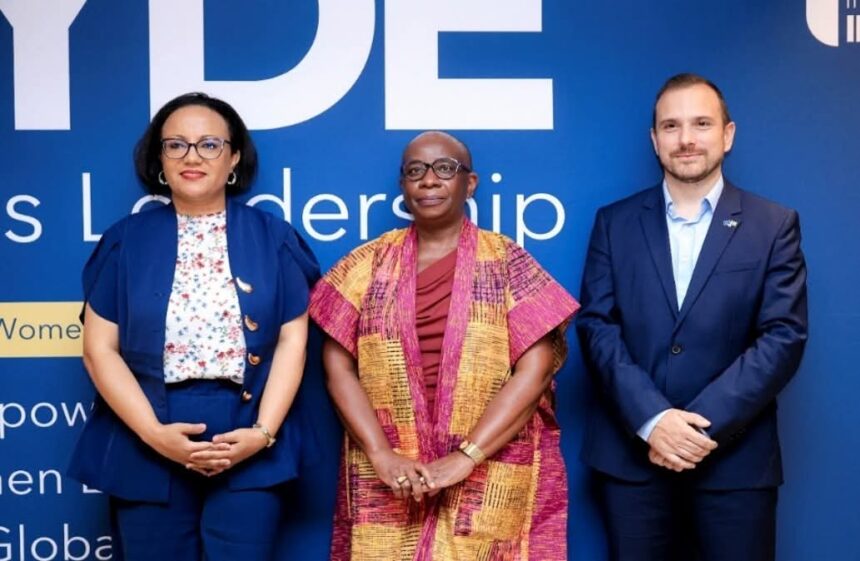
This was at the heart of a recent gathering in Kigali, where International IDEA brought together 39 journalists and media professionals from 23 countries across Africa and Asia under the EU-funded WYDE Women’s Leadership Initiative.
The discussions highlighted a fundamental truth: media representation is not neutral. It can either reinforce existing gender inequalities or help dismantle them.
Changing the leadership narrative
For generations, women and young people have often been judged against stereotypes that question their authority, competence, experience or suitability for leadership.
Women leaders may find themselves scrutinised for their appearance, personality or family responsibilities in ways their male counterparts are not. Young leaders may be dismissed because of their age rather than assessed on the strength of their ideas.
Such patterns are not merely editorial choices. Repeated representation can influence public perceptions of leadership.
When women are consistently presented as political actors, experts, decision-makers and agents of change, society gradually becomes more comfortable with the idea of women exercising authority.
Whose voice is missing?
Inclusive journalism must also ask a simple question:
Who is not being heard?
A television panel discussing the economy without a woman economist. A political debate featuring only male voices. A story about youth development without young people themselves contributing to the conversation.
These omissions can become invisible forms of exclusion.
Journalists therefore have a responsibility to deliberately broaden the range of voices appearing in public discourse—not by lowering professional standards, but by recognising that expertise exists across gender, age, geography, disability and social background.
Beyond putting women in the story
Gender-responsive journalism goes beyond simply increasing the number of women quoted in stories.
It requires journalists to examine how women are portrayed.
Are women leaders being described primarily through their personal lives while men’s achievements receive greater attention?
Are female politicians asked questions about their families while male politicians are questioned about policy?
Are women presented as victims more often than as decision-makers?
These questions matter because representation is not only about visibility. It is about the frame through which society sees that visibility.
The responsibility of the newsroom
The Kigali engagement is particularly relevant to African media organisations because newsrooms have the opportunity to become powerful drivers of social change.
This requires practical measures—from gender-sensitive editorial policies and diverse newsroom leadership to stronger sourcing practices and deliberate efforts to identify women and young people as experts.
It also requires journalists to challenge language that normalises discrimination, sensationalises women’s personal lives or reduces female leaders to stereotypes.
Participants at the Kigali gathering co-created a Media Guide containing practical tools for gender-responsive journalism and committed to supporting the Right Her Story initiative.
This is important because transforming media narratives requires more than good intentions. Journalists need practical tools, institutional commitment and editorial leadership.
The media can widen the leadership pipeline
There is also a deeper democratic dimension.
When girls and young women see people like themselves occupying positions of influence, leadership becomes more imaginable.
When communities hear women speaking authoritatively about economics, technology, governance, security, climate change or foreign policy, traditional assumptions about expertise begin to weaken.
And when young people are treated not merely as beneficiaries of development but as legitimate voices in public affairs, the democratic space becomes broader.
The media can therefore contribute to changing not only how leaders are portrayed, but who society considers capable of becoming one.
From representation to transformation
The challenge before the media is no longer simply to ask whether women and young people are visible.
We must ask whether they are heard, respected, taken seriously and given space to shape public conversations.
That is the real test of inclusive journalism.
A more inclusive media environment will not by itself eliminate gender inequality. But it can challenge the social norms that sustain it.
When journalists question stereotypes, editors diversify their sources, broadcasters create space for different perspectives and news organisations tell stories that challenge traditional ideas about leadership, the media becomes more than an observer of social change.
It becomes an agent of change.

The lesson from Kigali is therefore clear:
When the media changes the narrative, it can help change who gets seen, who gets heard and ultimately who gets supported to lead.
For Africa’s democracies to become more inclusive and resilient, everyone must have the opportunity not only to participate in public life, but to lead.