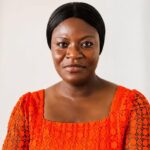


Vice President of the Ghana Journalists Association, Rebecca Ekpe, has underscored the critical role of the media in driving grassroots awareness and social transformation across communities in Africa.
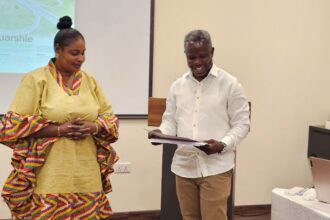
She made the remarks during the 2026 edition of the Merck Foundation Health Media Training organized virtually by the Merck Foundation in partnership with the Ghana Journalists Association.
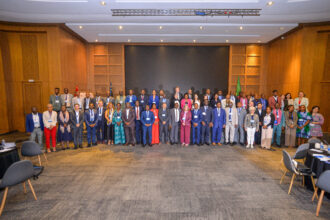
The online training brought together journalists, media students, health experts, and communication professionals to strengthen reporting on sensitive social and health issues including infertility stigma, girls’ education, child marriage, gender-based violence (GBV), female genital mutilation (FGM), diabetes, and hypertension.
Related Stories

In her presentation on the role of the media in reaching grassroots communities, Ms. Ekpe stressed that journalists must go beyond headlines and become agents of awareness, advocacy, and social change.
“The media has the power to break silence, challenge stigma, educate communities, and amplify the voices of vulnerable people who are often ignored,” she stated.
According to her, responsible journalism can influence public attitudes, shape policy conversations, and encourage communities to confront harmful cultural practices affecting women and children.
She urged journalists to report on social and health issues with empathy, context, and solution-oriented storytelling rather than sensationalism.
“Stories about child marriage, teenage pregnancy, infertility stigma, and gender-based violence must not end with statistics. Journalists must ask why these problems persist and what communities, leaders, and institutions are doing to solve them,” she said.
Ms. Ekpe also highlighted the importance of local language broadcasting and radio in reaching underserved populations, especially in rural communities with limited internet access.
“Radio remains one of the strongest tools for grassroots education and awareness in many African communities. Through local language programming, the media can reach people directly and inspire positive behavioural change,” she added.
The training formed part of the Merck Foundation Community Awareness Programme, which seeks to empower media professionals to influence social and cultural change through accurate, impactful, and compassionate reporting.
In a message to the Ghana Journalists Association, Community Awareness Program Manager at Merck Foundation, Harsh Sharma, noted that the media plays an essential role in “breaking the silence and being the voice of the voiceless.”
The foundation said more than 3,700 media representatives from over 35 countries have been trained through its programmes to improve awareness on health and social challenges across Africa and developing regions.
As part of the event, the Merck Foundation also announced the Call for Applications for its 2026 Media Awards, including the “More Than a Mother” and “Diabetes & Hypertension” awards, aimed at encouraging journalists to produce impactful stories that address critical social and health issues.
The foundation further highlighted its broader interventions, including scholarships for underprivileged African schoolgirls, awareness campaigns through music and film, children’s storybooks, and television programmes promoting education, women’s empowerment, and healthy lifestyles.
Participants at the training praised the collaboration between the Ghana Journalists Association and the Merck Foundation, describing it as an important step toward strengthening development journalism and empowering media practitioners to drive meaningful change within communities.