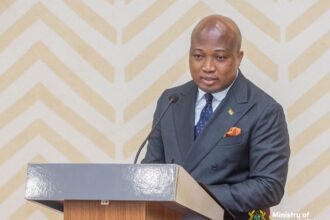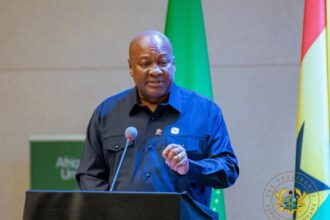


In a moment defined by purpose and urgency, World Vision Ghana has unveiled an ambitious five-year strategy aimed at transforming the lives of 2.8 million children across the country—an initiative that places hope, equity, and opportunity at the heart of national development.
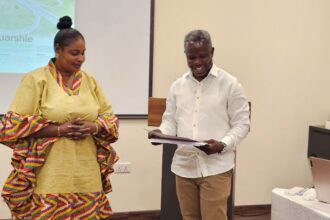
The launch ceremony, marked by strong institutional representation and renewed commitments, drew the presence of key stakeholders, including the Vice President of the Ghana Journalists Association, Rebecca Ekpe, whose participation underscored the critical role of the media in safeguarding the rights and welfare of children.
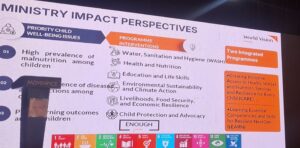
The strategy outlines a comprehensive framework focused on education, child protection, health, and economic empowerment—areas that remain pivotal to breaking cycles of poverty and vulnerability. With millions of children still facing barriers to quality education, nutrition, and protection, the initiative signals a decisive shift toward long-term, sustainable impact.
Commenting on the event on the sidelines, Ms. Ekpe emphasized that the media must move beyond reportage to become active advocates for children’s rights.
“The stories we tell must not only inform but transform. Every child denied opportunity is a national loss, and the media has a responsibility to amplify these realities until change becomes inevitable,” she noted.
Her remarks resonated with a broader call to action: that journalism, when anchored in truth and empathy, can influence policy, mobilize communities, and hold institutions accountable. In a landscape where children’s voices are often unheard, the media serves as a powerful bridge between vulnerability and visibility.

Officials of World Vision reiterated their commitment to working collaboratively with government, civil society, and the media to ensure that no child is left behind.
“This strategy is not just a document—it is a promise to Ghana’s children. A promise that their futures matter, that their dreams are valid, and that together, we will build systems that protect and empower them,” a representative stated.
The significance of the ceremony extended beyond policy announcements. It was a reaffirmation that national progress is inseparable from the well-being of children. By aligning development goals with human stories, the initiative recognizes that statistics alone cannot drive change—people must be moved to act.
For the media, the moment serves as both an opportunity and a responsibility. Through sustained coverage, investigative reporting, and human-centered storytelling, journalists are positioned to keep the spotlight on issues affecting children, ensuring that commitments translate into measurable outcomes.
As Ghana charts its path forward, the convergence of advocacy, policy, and storytelling offers a powerful blueprint. The launch of this strategy is not merely the beginning of a five-year plan—it is the strengthening of a national conscience.
And at its core lies a simple but profound truth: when a nation invests in its children, it secures its future.