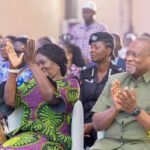

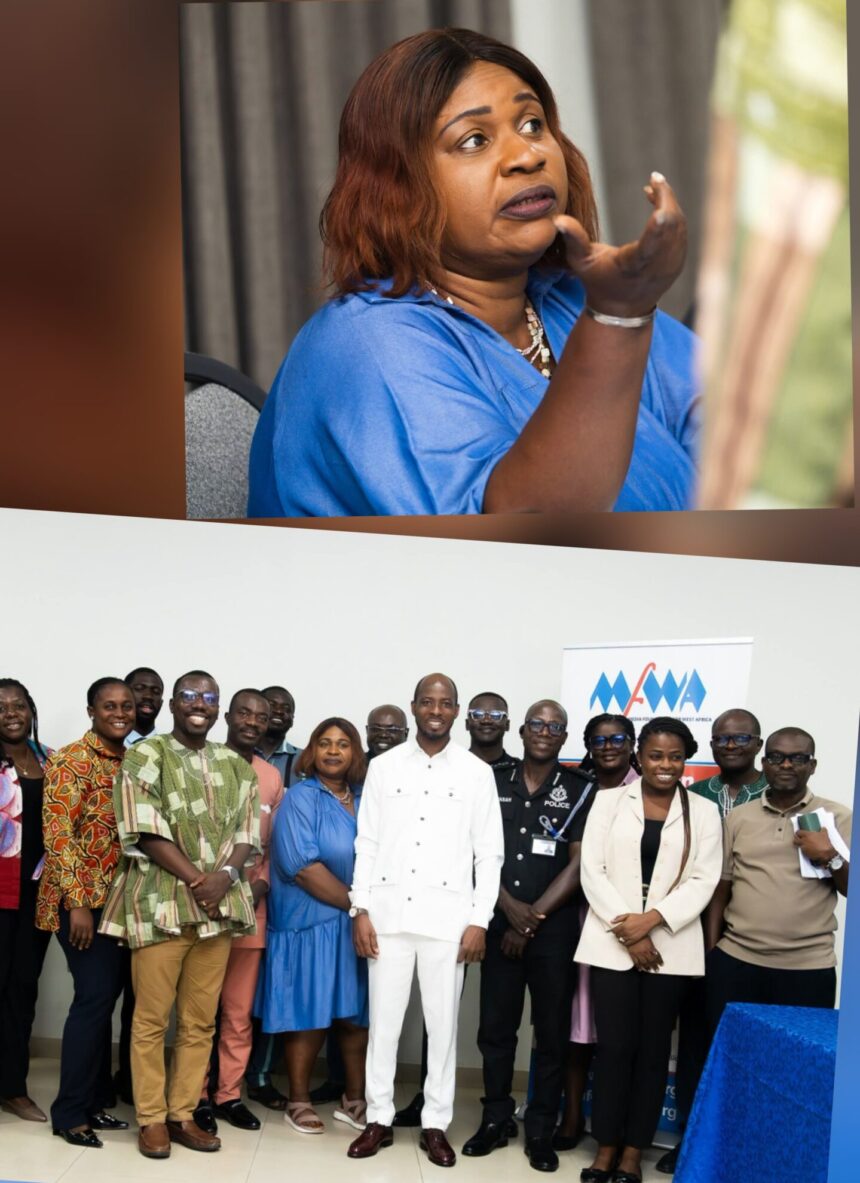
Vice President of the Ghana Journalists Association (GJA), Rebecca Ekpe, has joined media stakeholders in a brainstorming and validation session aimed at strengthening the safety of journalists and improving newsroom practices in Ghana.
The engagement brought together representatives and stakeholders from across the media landscape to review and provide inputs into a Draft Model Safety Policy for adoption and implementation by media organisations in Ghana.
The initiative, led by the Media Foundation for West Africa (MFWA), is designed to provide media organisations with a practical framework for addressing the safety and security of journalists in the course of their professional duties.
Related Stories
The development of the draft policy was informed by a comprehensive study of existing safety policies, mechanisms and practices within Ghanaian news media organisations. The brainstorming session therefore provided an opportunity for stakeholders to assess the proposed framework, identify gaps and make recommendations to ensure that the final policy responds to the realities confronting journalists and media organisations.
Rebecca Ekpe’s role
Rebecca Ekpe’s participation brought the perspective of the GJA leadership to an initiative directly connected to the protection and welfare of journalists.
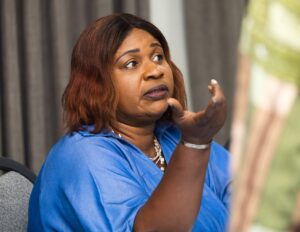
As Vice President of the GJA, her involvement underscores the importance of ensuring that journalists and their representative institutions contribute meaningfully to the development of mechanisms intended to safeguard media practitioners.
The engagement also aligns with the broader responsibility of the GJA to promote a professional, safe and enabling environment for journalists to perform their constitutional role of informing the public and holding institutions accountable.
Strengthening journalist safety
The proposed model policy comes at a time when journalist safety remains an important concern for Ghana’s media industry.
Beyond physical safety, effective newsroom safety frameworks can help media organisations anticipate risks, establish appropriate procedures and provide institutional support to journalists who encounter threats or other forms of professional danger.
A standardised policy could also help individual newsrooms move from ad hoc responses to a more structured and preventive approach to journalist safety.
Part of the PAIReD Programme
The initiative forms part of the MFWA’s project on “Countering Corruption through Accountability Journalism and an Improved Freedom of Expression Environment in Ghana.”
The project is being implemented under the Participation, Accountability, Integrity for a Resilient Democracy (PAIReD) Programme, which seeks to contribute to accountable governance and an improved environment for freedom of expression.
PAIReD is commissioned by the German Federal Ministry for Economic Cooperation and Development (BMZ), co-financed by the European Union in Ghana and the Swiss State Secretariat for Economic Affairs (SECO), and implemented by GIZ Ghana in partnership with Ghana’s Ministry of Finance.
The MFWA had earlier formally invited Rebecca Ekpe, in her capacity as Vice President of the GJA, to participate in the validation process for the draft policy. The invitation specifically described the meeting as an opportunity to review the Draft Model Safety of Journalists’ Policy for Adoption by Newsrooms in Ghana.
From consultation to implementation
The August 26 engagement represents an important step in moving the proposed framework from research and consultation towards practical implementation.
For Ghana’s media community, the ultimate goal is to ensure that every newsroom has systems that recognise, prevent and respond to risks confronting journalists.
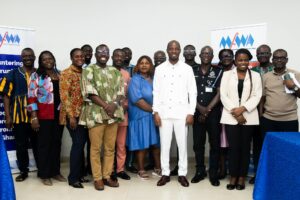
For Rebecca Ekpe and the GJA, participation in the process provides an opportunity to ensure that the voices and experiences of journalists are reflected in the final policy.
The emerging model safety policy is therefore not simply about protecting journalists from harm; it is about strengthening the conditions necessary for a free, independent and responsible Ghanaian media to thrive.