

As humanitarian crises become increasingly complex in the digital age, media practitioners are being challenged not only to report events but also to protect public trust, combat misinformation and support life-saving interventions.
From natural disasters and disease outbreaks to conflict situations and emergency relief operations, the media has emerged as a central actor in humanitarian work, shaping public understanding and influencing responses at both community and national levels.
Communication experts say the role of the media in humanitarian action extends far beyond headlines. It involves information dissemination, risk communication, resource mobilization, advocacy and accountability, as well as public trust building.
Related Stories

During emergencies, timely and accurate information can save lives. Radio, television and digital platforms often become the first point of contact for affected populations seeking guidance, updates and reassurance.
In Ghana, studies show that nearly 80 percent of citizens rely on radio as their primary source of information, while 71 percent depend on television and 43 percent use social media platforms for news and updates. However, concerns remain over the growing spread of misinformation and disinformation, especially during crises.
Media analysts warn that misinformation — false information shared without harmful intent — and disinformation — deliberately fabricated falsehoods — continue to undermine humanitarian efforts. Hate speech and harmful narratives targeting vulnerable groups have also become major threats to social cohesion and emergency response systems.
A recent Ghana media case study further revealed that one in three journalists admitted to sharing unverified information at some point, highlighting the urgent need for stronger ethical standards and verification processes in newsrooms.
Experts say the media therefore has a critical responsibility to combat false narratives through fact-checking, ethical journalism, counter-narratives and community engagement.
“Journalists must become first responders of truth,” a humanitarian communication expert noted. “In moments of crisis, accuracy is more important than speed because misinformation can create panic, fear and even loss of life.”
Media houses are being encouraged to invest in dedicated fact-checking desks, strengthen editorial verification systems and avoid sensational reporting that could inflame tensions or spread fear.
Journalists are also being reminded to prioritize human dignity over dramatic headlines, particularly when reporting on vulnerable populations affected by disasters, displacement or conflict.
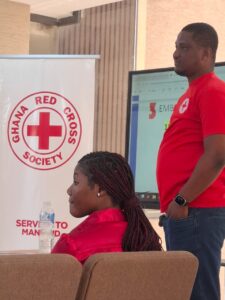
For humanitarian organizations such as the Ghana Red Cross Society, collaboration with the media has become increasingly important in addressing misinformation and improving emergency communication.
Stakeholders are calling for stronger partnerships between humanitarian agencies and journalists, including the development of real-time rumor tracking systems and proactive community engagement strategies.
These discussions are expected to feature prominently during the upcoming World Red Cross and Red Crescent Day 2026 celebration scheduled for May 8 in Accra, themed, United for Humanity”, Dr. Edward Donkoh,
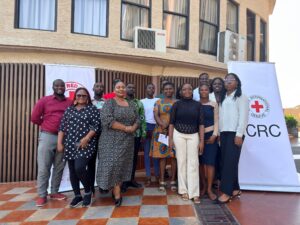
President, Ghana Red Cross Society, said to Journalists at a Press Conference, ahead of Red Cross Day.

The event is expected to bring together humanitarian actors, media professionals, policymakers and civil society organizations to reflect on the importance of accurate information and responsible journalism in humanitarian response.
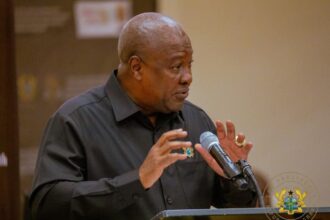
President John Dramani Mahama is expected to attend the event as special guest, underscoring the growing recognition of the media’s role in national development, crisis response and humanitarian action.
Observers say the gathering will serve as a timely reminder that in an era dominated by digital communication and viral information, the fight for truth has become an essential part of humanitarian work.