
By Rebecca Ekpe
The death of 15-year-old Ghanaian teenager Badu Nkansah Frimpong, popularly known as Javits, is a painful reminder that the search for better opportunities can sometimes expose children and young people to risks that families may never have anticipated.
Javits left Ghana for the United States in 2025 to reunite with his father and pursue his education. Like thousands of other young people whose families migrate in search of better opportunities, he carried dreams of a promising future. He wanted to become a medical doctor and had aspirations of serving in the United States military.
Related Stories

His parents imagined a future filled with educational achievements, professional success and the fulfilment of a young boy’s ambitions.
Instead, on October 29, 2026, that future was violently cut short.
Javits was shot and killed while walking to school in the Bronx, New York. His death has since become a matter of profound grief for his family, the Ghanaian community in the United States and people across Ghana.
A 17-year-old suspect has been arrested and charged in connection with the killing, while authorities continue investigations and the search for other suspects. However, an arrest, important as it is, does not answer every question surrounding the tragedy.
The central questions remain: Why was Javits killed? What circumstances led to this violence? Could anything have been done to protect him? And what lessons must families, schools, communities and governments learn from his death?
These are questions that must not disappear with the funeral.
A funeral that became a call to confront hate
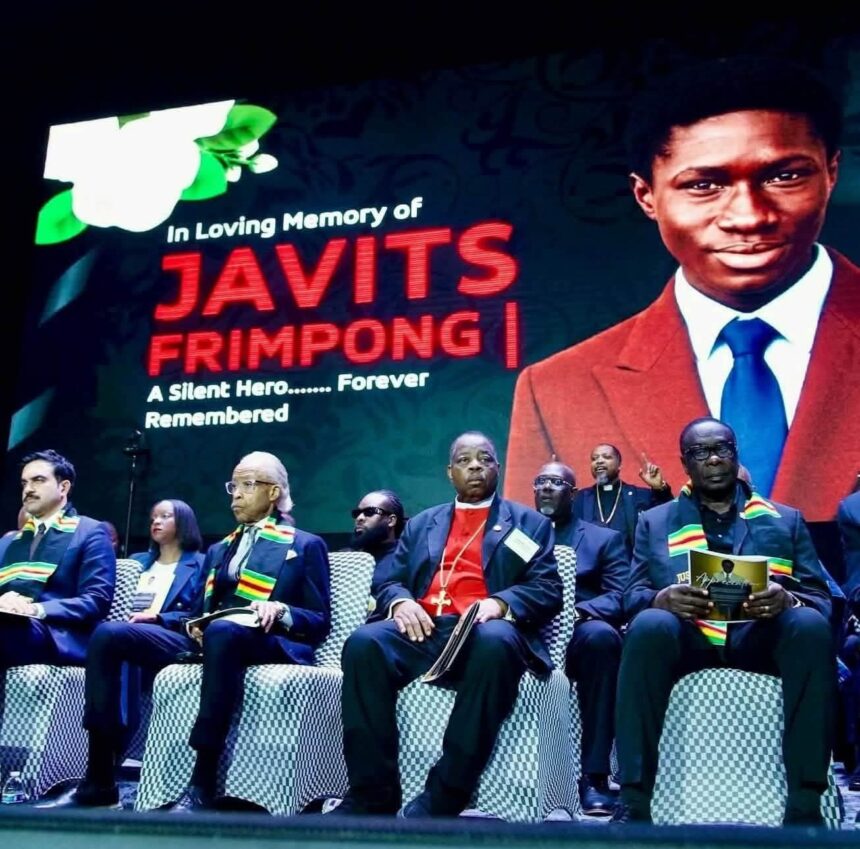
At Javits’ funeral on November 20 in the Bronx, the atmosphere was one of deep sorrow. Family members, friends, classmates, Ghanaian community members and public officials gathered to say goodbye to a teenager whose life had barely begun.
Among those present was prominent American civil rights activist Reverend Al Sharpton, who delivered the eulogy.
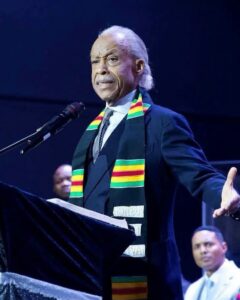
But his message went beyond mourning a young life lost to gun violence. He used the occasion to confront a troubling issue: hostility among people who share racial, cultural and historical connections, particularly prejudice directed at immigrants and those perceived as different because of their accents, origins or places of birth.
Drawing on the biblical story of Joseph and his brothers, Sharpton warned that divisions and hostility among adults were finding their way into the attitudes of younger generations.
His message was particularly significant because it challenged communities to examine not only the violence itself but also the attitudes, prejudices and social divisions that can create environments in which young people become hostile towards one another.
Sharpton’s appeal was that people must recognise their shared humanity and reject the poison of hatred.
One of his most striking messages was that people of African descent, whether on the continent or in the diaspora, share a common heritage. Differences in nationality, accent, birthplace and migration history should never become reasons for discrimination.
The question his message raises is uncomfortable but necessary: How can communities speak about solidarity, racial equality and shared identity while tolerating hostility towards people who are perceived as outsiders?
Javits’ funeral therefore became more than a farewell. It became an opportunity for a difficult conversation about identity, belonging, prejudice and the responsibility adults have in shaping the values of children.
Thanksgiving: A turkey must not become a symbol of hate
Sharpton’s appeal took on particular significance as the United States approached Thanksgiving, a holiday traditionally associated with family gatherings, gratitude, sharing and togetherness.
He challenged parents to use the Thanksgiving celebration as an opportunity to teach their children tolerance, acceptance and respect for people from different backgrounds.
The symbolism of his message was powerful.
As families prepare their meals, gather around tables and share food, they must also examine what values they are feeding their children.
It is not enough to teach children how to celebrate Thanksgiving. They must also be taught how to live with people who look different, speak differently, come from different countries or practise different cultures.
The turkey on the Thanksgiving table should not become the only thing families think about cutting. They must also make a conscious decision to cut out hatred, prejudice, bullying and intolerance.
They must cut out the language that humiliates immigrants, the stereotypes that dehumanise people from other countries and the discriminatory attitudes that make children feel unwelcome in their schools and communities.
The message is simple: Let Thanksgiving become a moment to remove hate from the family conversation and replace it with empathy, respect and acceptance.
Because children do not develop their attitudes in isolation. They observe how adults speak about other nationalities, how parents respond to people with different accents and how communities treat those they consider outsiders.
When prejudice is normalised in homes and public spaces, children can absorb those attitudes and reproduce them in their relationships with others.
Sharpton’s message was therefore a call to parents to recognise that the fight against hatred must begin at home.
And perhaps that is one of the most important lessons to emerge from Javits’ death: We cannot demand a peaceful society while allowing intolerance to take root in the minds of the next generation.
The parents’ smile: A painful picture of courage
Perhaps one of the most touching aspects of this tragedy came after the burial.
On Sunday, November 22, 2026, family members and members of the Ghanaian community gathered at the Church of Pentecost’s COP New York Central assembly for a Thanksgiving service in memory of Javits.
The occasion was supposed to be one of gratitude, fellowship and thanksgiving. Yet, for Thomas Frimpong and Doris Adu Gyamfi, it was a gathering taking place under the shadow of an unimaginable loss.
They had just buried their son.
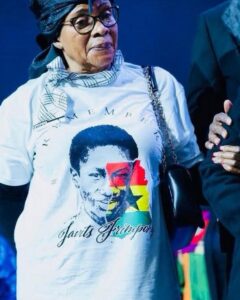
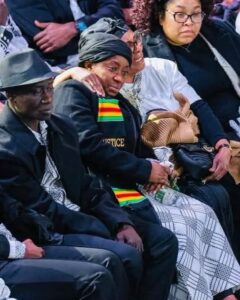
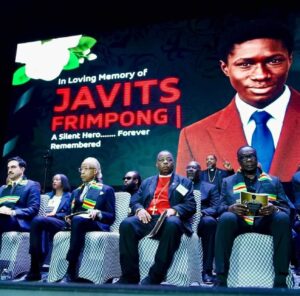
The young boy whose future they had invested in, whose education they had hoped would open doors and whose achievements they had looked forward to celebrating was no longer with them.
His father’s funeral tribute captured the depth of that pain. He had hoped to celebrate his son’s accomplishments, not stand beside his grave.
His mother, who described Javits as her only son, spoke of the beautiful life she had imagined for him and her dream of one day proudly calling him a doctor.
And yet, amid the grief, the prayers, the embraces and the overwhelming support of the community, there were moments when the parents found the strength to smile.
That smile should not be mistaken for an absence of pain. Neither should it be interpreted as an indication that the family has overcome its grief.
Sometimes, a smile is simply an expression of courage. Sometimes, it is faith holding a broken heart together. And sometimes, it is the human spirit finding a reason to continue living even when life has taken away something irreplaceable.
Their ability to participate in Thanksgiving despite their loss is a powerful reminder that gratitude and grief can exist in the same heart.
They can give thanks for the life Javits lived while continuing to mourn the years he will never experience.
They can appreciate the support of friends and sympathisers while demanding answers from those responsible for his death.
Above all, they can smile without surrendering their demand for justice.
The community must continue to stand with them long after the funeral flowers have faded and public attention has moved elsewhere.
The migration question: Are we adequately preparing our children?
Javits’ death raises a much bigger question for Ghanaian families: What happens to our children when they migrate?
Migration has become an important part of the aspirations of many Ghanaian families. Parents work hard, make sacrifices and sometimes spend years arranging opportunities for their children to study, live or reunite with family members abroad.
For many, migration represents hope.
It offers the possibility of quality education, better healthcare, improved living standards, professional development and exposure to opportunities that may not be readily available at home.
Parents send their children to the United States, the United Kingdom, Canada, Germany and other destinations, believing that a different environment may provide a better foundation for their future.
But the conversation about migration must go beyond the opportunities.
We must also examine the vulnerabilities.
A child who relocates to another country is not simply changing geographical location. That child is entering a different social, cultural, educational and sometimes racial environment.
There may be new languages, accents, social expectations, school systems and unfamiliar ways of relating to people.
For children who arrive without a strong support network, adjusting can be particularly challenging.
Some struggle to make friends. Others experience isolation, discrimination, bullying, cultural exclusion or pressure to abandon aspects of their identity to fit in.
A child may be academically gifted but emotionally unprepared for the demands of a new environment.
Another may find it difficult to report harassment because of fear, language barriers, uncertainty about whom to trust or concern about disappointing parents.
This is why migration planning for children must not end with securing admission, arranging accommodation, paying school fees or obtaining travel documents.
We must prepare children for life in the new environment, not merely prepare them to arrive there.
Parents need to understand the schools their children will attend, the neighbourhoods in which they will live, the support systems available and the challenges associated with growing up as immigrants.
They must also maintain open communication with their children, paying attention to changes in behaviour, friendships, emotional wellbeing and academic performance.
A child who suddenly becomes withdrawn, fearful, unusually anxious or reluctant to attend school may be communicating a problem that requires attention.
We cannot assume that because a child is physically safe in a house, that child is necessarily safe in the wider community.
And we cannot assume that because a child attends a reputable school, every aspect of that child’s experience is free from discrimination, intimidation or violence.
The hidden dangers: Bullying, identity and the immigrant experience
One of the most important issues raised by Javits’ death is the relationship between bullying, identity and the experiences of immigrant children.
Bullying is often dismissed as ordinary childhood behaviour. Children are told to toughen up, ignore their classmates or learn to defend themselves.
But bullying can have serious consequences for a child’s emotional wellbeing, confidence, sense of belonging and ability to participate fully in school life.
For immigrant children, the experience can become more complicated when bullying is connected to nationality, race, culture, religion, accent or socioeconomic background.
A Ghanaian child may be mocked for speaking with a Ghanaian accent. Another may be ridiculed because of a name, traditional clothing or unfamiliar cultural practices.
In some environments, young immigrants may encounter resentment from other young people who see them as outsiders or believe they do not belong.
These experiences should never be normalised.
Schools must recognise that bullying is not always physical. It can take the form of verbal humiliation, exclusion, online harassment, threats, intimidation and repeated discriminatory behaviour.
Parents must also understand that children do not always disclose what they are experiencing.
Some fear retaliation. Others are embarrassed. Some believe reporting will make the situation worse.
This makes the responsibility of schools, teachers, counsellors and parents even more important.
However, an important distinction must be made in Javits’ case.
Although his family had previously raised concerns about bullying, the Bronx District Attorney publicly stated that the killing was not a school-bullying incident and that those responsible did not attend his school. Authorities have not established a motive for the killing.
It would therefore be premature to conclude that anti-immigrant hostility or school bullying caused his death.
Nevertheless, the broader concerns raised by Sharpton deserve serious attention. The fact that the precise motive remains under investigation does not make the conversation about discrimination, youth hostility and the protection of immigrant children any less important.
Anti-immigrant hostility and the crisis of belonging
There is a wider social dimension to this conversation.
Across different societies, migration has become a subject of political, economic and cultural debate. Immigrants are sometimes portrayed as competitors for jobs, educational opportunities, public resources or social privileges.
Such debates can create environments in which nationality and place of birth become grounds for suspicion and hostility.
But children should never become casualties of adult prejudices.
A child does not choose the circumstances of migration. A child does not determine the economic or political conditions of the country into which the family moves.
Children simply want to learn, make friends, play, grow and feel accepted.
When a young person is made to feel inferior because of where their parents come from, the damage goes beyond an individual disagreement. It affects the child’s understanding of identity, dignity and belonging.
Sharpton’s intervention at Javits’ funeral was particularly significant because he challenged both African American and African immigrant communities to examine divisions within their own communities.
His argument was that shared African heritage should unite people rather than become another source of division.
The African diaspora is diverse. People may have different histories, nationalities, accents, migration experiences and cultural identities.
But those differences should not become instruments of hostility.
His warning about anti-immigrant hatred and divisions among Black communities deserves reflection far beyond the United States.
Ghanaian communities abroad must also examine how they receive and support newcomers, how they resolve internal divisions and how they protect vulnerable children.
Solidarity must be demonstrated through action, not merely expressed during funerals.
The responsibility of parents: Migration must come with preparation
Javits’ story should encourage Ghanaian parents to rethink how they prepare children for migration.
The desire to give children a better future is understandable. Indeed, it is one of the strongest motivations behind parental sacrifice.
However, the responsibility of parents does not end when a child boards an aircraft.
Before migration, families should pay attention to several important areas:
1. Emotional and psychological preparation
Children should be helped to understand that adjusting to a new country takes time. They should be encouraged to discuss their fears, expectations and concerns without feeling judged.
2. School and community assessment
Parents should research schools, neighbourhoods, student-support systems, safeguarding policies and the availability of counselling services.
3. Anti-bullying awareness
Children must know what bullying looks like, how to recognise discrimination, how to report incidents and where to seek help.
4. Digital and physical safety
Young people need guidance on online harassment, social media relationships, personal security, peer pressure and potentially dangerous situations.
5. Cultural confidence
Children should be encouraged to embrace their Ghanaian identity while learning to appreciate the cultures and traditions of their new environment.
There is nothing wrong with having a Ghanaian accent. There is nothing inferior about an African name. And there is no reason a child should feel compelled to abandon their cultural identity to earn acceptance.
6. Continuous parental engagement
Parents must maintain regular conversations with their children and establish trusted relationships with teachers, school administrators and other responsible adults.
Migration should expand a child’s opportunities, not leave that child without adequate protection.
The responsibility of schools and host communities
Schools are not simply institutions for academic instruction. They are environments in which children develop their identities, relationships, values and understanding of society.
They must therefore take safeguarding seriously.
School administrators should have effective systems for identifying bullying, reporting discrimination, responding to threats and providing support to affected students.
They should also create environments where immigrant children are welcomed and where cultural diversity is respected.
Teachers must be trained to recognise subtle forms of discrimination and understand how exclusion can affect students.
Parents should have confidence that when they report concerns, those concerns will be treated seriously.
Where there are credible threats to a child’s safety, appropriate action must be taken promptly.
The wider community also has a responsibility.
Religious organisations, African associations, Ghanaian diaspora groups, youth organisations and community leaders must develop support systems for newly arrived families.
A child who has migrated should not have to navigate an unfamiliar society alone.
Communities must become places where young people can find guidance, friendship, mentorship and protection.
Ghana’s responsibility: Protecting citizens beyond our borders
Javits’ death also raises important questions about the role of the Ghanaian government in protecting citizens abroad.
The government’s presence at his funeral, led by Deputy Foreign Affairs Minister James Gyakye Quayson, was an important demonstration of solidarity with the bereaved family.
But diplomatic engagement must go beyond attendance at funeral ceremonies.
The Ministry of Foreign Affairs and Ghana’s diplomatic mission in the United States must sustain appropriate engagement with the relevant authorities as the criminal proceedings continue.
This includes:
-
Maintaining communication with the bereaved family.
-
Monitoring the progress of the criminal investigation and court proceedings.
-
Facilitating access to appropriate consular and legal assistance.
-
Engaging relevant authorities where necessary to ensure the family’s concerns are heard.
-
Supporting the family in navigating the criminal justice process.
-
Strengthening engagement with Ghanaian associations and community organisations to improve child protection awareness.
Ghana must also consider a more comprehensive policy conversation about the welfare of Ghanaian children and young people living abroad.
Our diplomatic missions should be better equipped to understand the challenges confronting Ghanaian families, particularly those involving children, education, discrimination, exploitation, violence and access to support services.
We must recognise that the protection of citizens abroad is not limited to adults travelling for business, work or tourism.
Children are also part of Ghana’s international community.
Their safety, dignity and welfare matter.
Justice for Javits: An arrest is not the end of the journey
The arrest of a 17-year-old suspect represents an important development in the investigation into Javits’ death.
However, the family deserves a full and transparent judicial process.
Authorities have indicated that other suspects are being sought. The investigation must establish the circumstances surrounding the killing, the roles of all those involved and the evidence required to bring the case to a lawful conclusion.
It is equally important that public discussion does not prejudge the guilt of anyone who has not been convicted.
Justice must be pursued through evidence, due process and accountability.
For Javits’ mother, the demand is deeply personal.
She wants to understand why her son was killed. She wants those responsible to be held accountable.
No arrest can restore the child she lost. No court judgment can return the years she hoped to spend watching him grow.
But a credible investigation and a fair judicial process can provide an important measure of accountability.
Ghana must not allow the passage of time to diminish its attention to the case.
The family should not be left to navigate this painful journey without support.
Beyond Javits: What must change?
There are several important lessons Ghana must draw from this tragedy.
First, we must strengthen public education on child migration and the risks associated with relocation.
Second, parents must be encouraged to consider the emotional, social and safety implications of migration alongside its educational and economic benefits.
Third, Ghanaian diaspora organisations must be empowered to support children and families who are adjusting to life abroad.
Fourth, schools and communities must confront bullying, racism, xenophobia and other forms of discrimination wherever they occur.
Fifth, governments must strengthen cooperation on the protection of children and the investigation of crimes involving citizens abroad.
Finally, we must raise a generation of young people who understand that differences in nationality, culture, race, accent or birthplace do not make another human being less deserving of dignity and respect.
The final message: Let us cut out hate
Perhaps the most enduring message from Javits’ funeral is that the fight against hatred must begin with the values we teach our children.
Sharpton’s Thanksgiving appeal should not be treated as a momentary speech delivered at a funeral. It should become a continuing conversation in homes, schools, churches, community centers and public institutions.
As families gather around their Thanksgiving tables, let them teach their children to respect others.
Let them challenge discriminatory jokes, hostile language and prejudices that are often dismissed as harmless.
Let them teach that being born in Ghana, Nigeria, Jamaica, America or anywhere else does not determine a person’s worth.
Let them teach that an accent is not an offence, a foreign name is not a weakness and an immigrant child is not an outsider to humanity.
And let them understand that the fight against hate cannot be left to civil rights activists, politicians or law enforcement agencies alone.
It is a responsibility shared by every parent, teacher, religious leader, community organisation and individual.
The parents of Javits demonstrated something profound at their Sunday Thanksgiving gathering. Even in the midst of unimaginable pain, they found the strength to stand with their community, receive prayers and share moments of hope.
Their smiles did not erase their tears. Their thanksgiving did not cancel their demand for justice.
They simply reminded us that life must continue, even when the heart is broken.
But life must continue with lessons learned.
Javits should not become just another tragic headline, another funeral photograph or another case that gradually disappears from public conversation.
His story must compel us to examine how we prepare our children for migration, how we protect them in unfamiliar environments, how we confront hatred and how seriously we take the safety of young people.
We must demand justice for Javits. We must protect Ghanaian children wherever they live. And we must teach our children that no one should be hated, bullied, excluded or harmed because of where they come from.
The turkey may be the centerpiece of Thanksgiving, but the greater task is to remove hatred from our homes, our schools and our communities.
Let us cut out hate.
Let us protect our children.
Let us make belonging a shared human right.
And above all, let justice for Javits become a lasting commitment to the safety and dignity of every child.
Rebecca Ekpe is a journalist, media leader and gender advocate. She is Vice President of the Ghana Journalists Association (GJA) and Editor-in-Chief of the Ghana Broadcasting Corporation (GBC).