
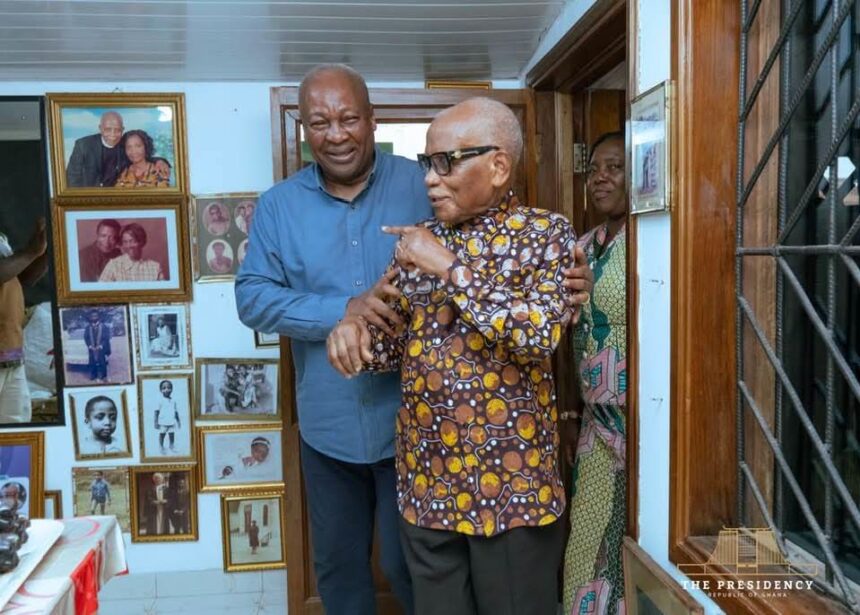
A visit to Rev. Dr. Chris Tsui Hesse, the legendary photographer who documented Ghana’s first President, Dr. Kwame Nkrumah, is more than a courtesy call. It is a moment of reconnection with Ghana’s history, a tribute to the power of photography, and an acknowledgement of the men and women whose lenses preserved the defining moments of the nation’s political journey.
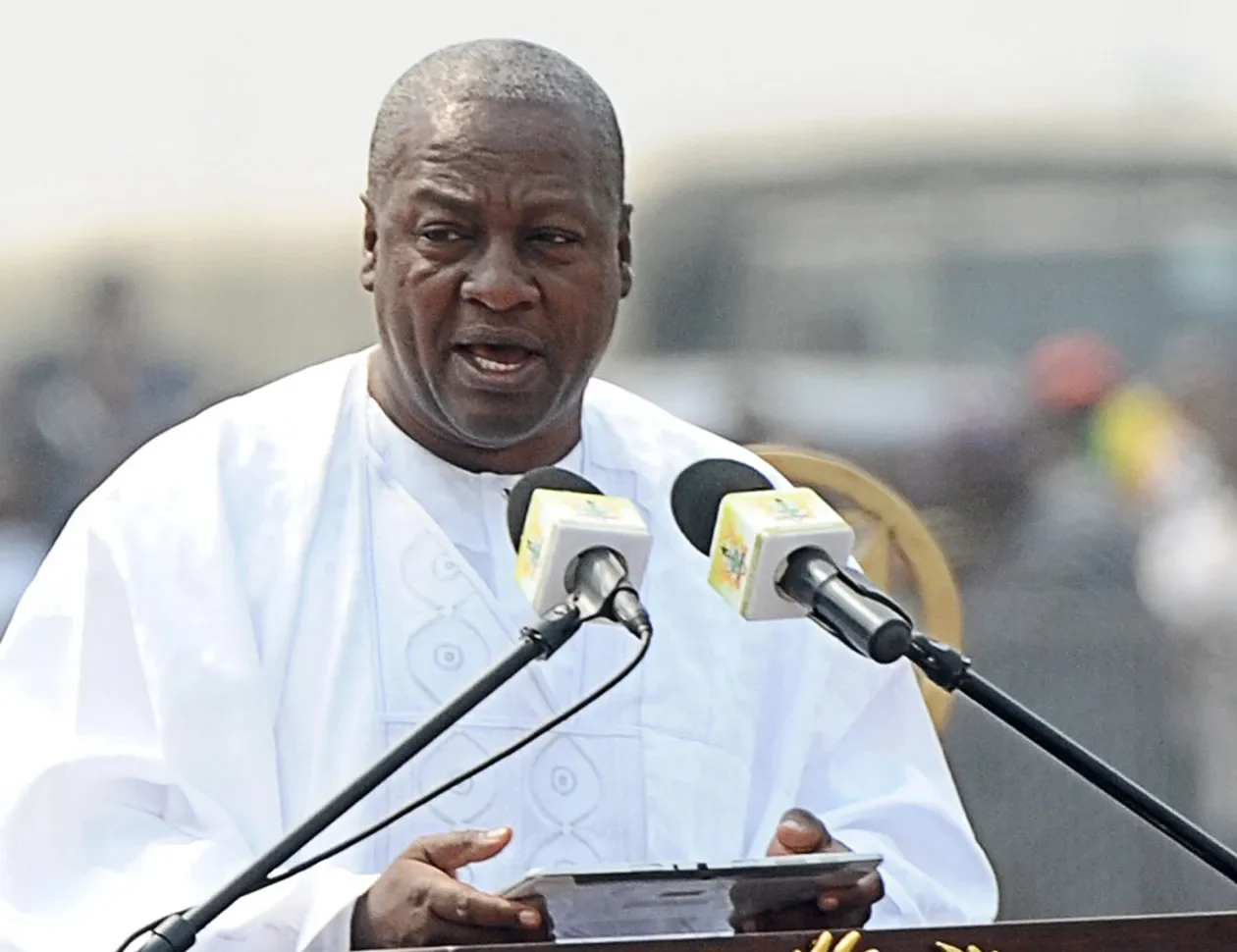
President John Dramani Mahama’s visit to the celebrated photographer carries profound historical and cultural significance, bringing together Ghana’s present leadership and one of the custodians of its past.
A photographer whose camera helped tell the story of Ghana
Rev. Dr. Chris Tsui Hesse occupies a unique place in Ghana’s history. As the personal cinematographer of Dr. Kwame Nkrumah, he was entrusted with documenting the life, leadership and historic activities of the man who led Ghana to independence on March 6, 1957.
Related Stories

His camera followed Nkrumah through state ceremonies, national celebrations, diplomatic engagements, international travels and moments that shaped Ghana’s emergence as an independent nation.
He was not merely taking pictures or recording events. He was preserving history as it unfolded.
Hesse’s work also extended beyond Ghana, capturing important moments associated with Africa’s liberation struggles and the continent’s political transformation during the 1950s and 1960s.
The significance of his work lies in the fact that generations of Ghanaians can now see, rather than simply read about, the country’s formative years.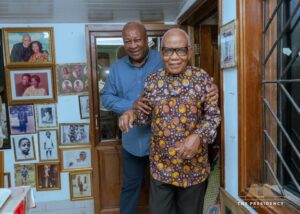
Mahama recalls the battle to save Ghana’s historical archives
During the visit, President Mahama reflected on his own longstanding relationship with Rev. Dr. Hesse and the efforts they made to rescue Ghana’s historical film archives from deterioration and possible destruction.
The President recalled that their collaboration became more pronounced when he served as Deputy Minister of Communications.
He said Hesse took him to the Information Services Department, where they encountered old film reels that were deteriorating, with some affected by mould and severe damage.
The two made efforts to salvage the material, but some reels were already beyond recovery.
The situation became more urgent when Hesse informed him that preserved copies of some of the films were being held at a Rank Xerox laboratory in London, but were at risk of being discarded because Ghana had outstanding payments.
President Mahama recalled intervening to ensure that the outstanding amount, estimated at about £10,000 at the time, was paid to protect the films.
He said the government continued making payments for some time, but following the change of government in 2000, the payments stopped. The films were eventually delivered to Ghana’s High Commission in London and stored in its basement.
It was a difficult chapter in Ghana’s efforts to protect its national heritage, but Hesse would not abandon the mission.
He subsequently took up the painstaking work of retrieving, preserving and digitising the footage to ensure that the country’s history would not disappear with time.
President Mahama credited Hesse for the preservation work, describing the restored footage as the result of his dedication and commitment.
‘The Eyes of Ghana’ and a renewed appreciation of his legacy
The recent international attention surrounding Rev. Dr. Hesse’s life and work has further elevated his contribution to Ghana’s history.
The documentary The Eyes of Ghana, directed by filmmaker Ben Proudfoot, tells the story of Hesse’s remarkable journey to preserve more than 1,000 reels of historic footage documenting Ghana’s independence, Nkrumah’s presidency and the African liberation movement.
The documentary has brought his story to international audiences and renewed conversations about Ghana’s responsibility to preserve its historical and audiovisual heritage.
The film also highlights the extraordinary dedication of a man who understood, decades ago, that images would become invaluable records of history.
His archive is a priceless resource for researchers, historians, filmmakers, students, journalists and future generations seeking to understand Ghana’s political, cultural and historical journey.
Honouring national icons while they are alive
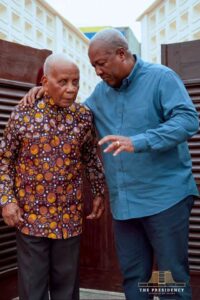
One of the most poignant moments of President Mahama’s visit was his insistence that Ghana must honour its heroes while they are alive.
“We must honour you, not posthumously. When you die, then we will start crying. We must do it while you are alive.”
The President said the visit was intended to celebrate Hesse’s contribution in his lifetime rather than wait until his passing to acknowledge his achievements.
He expressed happiness at seeing the veteran filmmaker in good health and paid tribute to his service to the country.
The sentiment speaks to a broader national conversation about recognition, gratitude and the responsibility to celebrate individuals whose contributions have shaped Ghana.
Too often, the country mourns its distinguished sons and daughters, only to subsequently discover, celebrate and extensively document the greatness of their lives.
President Mahama’s visit sends a powerful message: national heroes deserve recognition, appreciation and honour while they can still experience the gratitude of the nation they served.
More than a courtesy visit
The meeting between President Mahama and Rev. Dr. Chris Tsui Hesse was more than a presidential courtesy call. It was a symbolic encounter between political leadership and historical memory.
Hesse’s photographs and films have helped preserve the image of Nkrumah, the independence movement and the birth of modern Ghana. His camera became an instrument of national memory.
At a time when misinformation, historical distortion and the loss of archival materials threaten the integrity of public memory, his work reminds Ghana of the importance of protecting authentic historical records.
His story also raises an important question about the country’s investment in archives, museums, film preservation, historical documentation and the creative arts.
Ghana’s history must not depend solely on the memories of individuals. It must be systematically preserved, digitised, protected and made accessible to the public.
Rev. Dr. Chris Tsui Hesse has spent a lifetime doing precisely that.
And as President Mahama’s visit demonstrates, Ghana is being reminded that some of its greatest treasures are not monuments, buildings or institutions, but the people who devoted their lives to preserving the soul and story of the nation.
Today, Ghana celebrates the man behind the lens — the man who helped the country see, remember and understand its own history.