
IShowSpeed, The Eyes of Ghana and the Power of Global Influence: Is Ghana Ready to Tell Its Own Story?
Ghana has a remarkable opportunity to turn an international entertainment moment into a significant cultural and historical milestone.
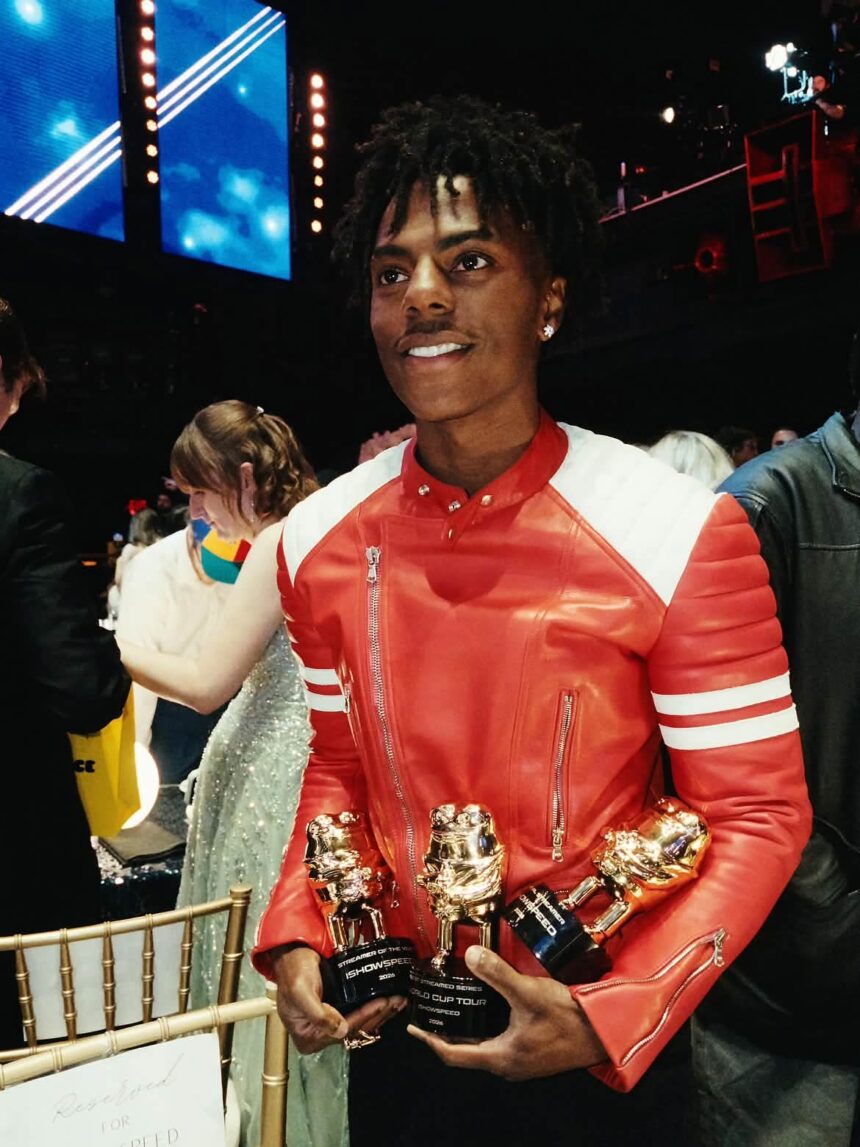
The story of American internet sensation IShowSpeed, his growing connection with Ghana and his involvement in the documentary The Eyes of Ghana is much bigger than celebrity popularity. It brings together history, technology, entertainment, cultural identity, international partnerships and the future of storytelling.
And perhaps, most importantly, it raises a question about how Ghana presents itself to the world.
From livestreaming to preserving African history
What makes this development particularly fascinating is the transition of IShowSpeed from an energetic internet entertainer to a producer of a serious historical documentary.
Known for his spontaneous livestreams, unpredictable public appearances and enormous online following, IShowSpeed represents a new generation of digital influencers whose reach extends across geographical and cultural boundaries.
His involvement in The Eyes of Ghana demonstrates that the creator economy can serve purposes beyond entertainment.
The documentary focuses on Rev. Dr Chris Tsui Hesse, the veteran Ghanaian cinematographer who served as personal cameraman to Dr Kwame Nkrumah.
For decades, Hesse captured significant moments in Ghana’s history, including the country’s independence and the wider African liberation movement.
He preserved more than 1,000 reels of historical footage, much of which remained unseen for years following the overthrow of Nkrumah in 1966.
Now, at 93, Hesse is working to ensure that this priceless collection is preserved and made accessible to future generations, with younger Ghanaian filmmakers, including Anita Afonu, involved in the effort.
This is not simply the story of a man and his camera. It is the story of a nation, a continent and the struggle to preserve collective memory.
A remarkable distribution decision: Making Ghana’s history accessible worldwide
An important development came on November 16, 2026, when IShowSpeed announced during a livestream, with former US President Barack Obama participating, his intention to make The Eyes of Ghana available free on his YouTube channel.
The proposal received Obama’s support, and the documentary was released on November 17.
This decision is significant because it removes the cost barrier for millions of potential viewers. IShowSpeed’s YouTube audience provides an alternative distribution channel that reaches people who might never visit a cinema or subscribe to a documentary streaming service.
Ghana Broadcasting Corporation also reported that the film had attracted approximately 830,000 views shortly after its release.
Think about that for a moment: a documentary about Ghana’s independence history is being introduced to a worldwide youth audience through a platform traditionally associated with gaming, entertainment and internet culture.
That is the power of digital storytelling.

The Nkrumah connection: Why this history matters today
His vision extended beyond Ghana’s territorial boundaries. He believed that political independence must be accompanied by economic emancipation, African solidarity and control over the continent’s destiny.
The footage preserved by Chris Hesse offers an opportunity for today’s generation to see history rather than simply read about it.
For young Ghanaians who may know Nkrumah primarily through textbooks, monuments and public holidays, these images provide a more intimate connection with the people, events and political atmosphere of that era.
They also invite important conversations about Ghana’s post-independence journey, military interventions, political leadership and the unfinished business of African development.
The documentary therefore has educational value beyond entertainment.
The role of the Obamas and international collaboration
The involvement of Barack and Michelle Obama’s Higher Ground Productions adds another important dimension.
Their participation as executive producers brings international production experience, networks and visibility to a story rooted in Ghanaian history.
The documentary was directed by two-time Academy Award-winning filmmaker Ben Proudfoot, with a production team that includes Ghanaian creatives.
It is particularly encouraging that Ghanaian filmmaker Anita Afonu and producer Nana Adwoa Frimpong are part of the project.
This is the kind of international collaboration Ghana’s creative industry should pursue: partnerships that create opportunities for local talent while taking African stories to international audiences.
What should Ghana do with this opportunity?
I believe the country must move beyond celebrating the international attention and develop a deliberate strategy.
1. Establish a stronger national audiovisual archive.
Ghana must invest in the digitisation, preservation and accessibility of historical films, photographs, radio recordings and television documentaries. Our national memory should not depend on the personal efforts of individuals alone.
2. Invest in young Ghanaian filmmakers.
The story of Chris Hesse should inspire a new generation of documentary filmmakers, cinematographers, archivists and digital storytellers. We need training, funding, equipment and international exposure.
3. Integrate our history into digital education.
Imagine young people accessing short, engaging documentaries about Nkrumah, Ghana’s independence, the Pan-African movement, our traditional institutions and national development through YouTube and other digital platforms.
4. Develop heritage tourism.
The Kwame Nkrumah Memorial Park, the National Museum, historic independence sites and other cultural landmarks should become part of a coordinated heritage tourism programme.
5. Build stronger media partnerships.
GBC, the National Film Authority, the National Archives, universities, independent filmmakers and other cultural institutions should explore opportunities to collaborate on historical documentaries and digital distribution.
6. Protect Ghanaian creative ownership.
International exposure must go hand in hand with fair recognition, intellectual property protection, proper attribution and opportunities for Ghanaian creatives to benefit commercially.
A lesson for Ghana’s traditional media industry
There is another important lesson here, particularly for Ghanaian journalism and broadcasting.
The traditional media industry must recognise that the competition for public attention has changed.
Young audiences are not necessarily waiting for the evening television bulletin or the next newspaper publication to understand the world. They are consuming information through YouTube, TikTok, livestreams, podcasts and other digital platforms.
IShowSpeed’s influence demonstrates the importance of understanding these new distribution channels.
But reach alone is not journalism, and popularity is not necessarily credibility.
Traditional media organisations must therefore combine the strengths of professional journalism — verification, context, accountability and editorial independence — with the innovation, accessibility and audience engagement of digital platforms.
GBC, in particular, has an opportunity to revisit its historical audiovisual collections and make them more accessible to younger audiences.
Imagine a digital series titled Ghana Through the Lens of History, using archival recordings to tell the stories of our independence, political development, culture, music, sports and national transformation.
That would be an important contribution to public education and national identity.
The bigger question: Who tells Africa’s story?
For generations, much of Africa’s history has been documented, interpreted and distributed through external institutions and international media platforms.
Today, the situation is changing. African filmmakers, journalists, historians, musicians and digital creators have opportunities to reach global audiences directly.
However, we must not confuse international visibility with ownership.
The involvement of IShowSpeed and the Obamas is welcome, but Ghana must build the institutions and capacity to preserve and distribute its own stories.
We must ensure that the next Chris Hesse does not have to struggle alone to preserve the visual history of a nation.
We must also ensure that the next generation of Ghanaian storytellers has the resources and opportunities to compete internationally.
My concluding perspective
There is something profoundly symbolic about this entire development.
Decades ago, Chris Hesse stood behind a camera, documenting a young Ghana emerging from colonial rule and taking its place among independent nations.
Today, a young global digital creator, whose maternal roots connect him to Ghana, is helping to take those same historical images to millions of people around the world.
One generation preserved the images. Another generation is amplifying them.
That is the connection between history and technology, between traditional cinematography and digital streaming, between national identity and global influence.
And as IShowSpeed continues to command international attention, his involvement in The Eyes of Ghana offers a valuable reminder that influence can be used to preserve history, educate generations and reconnect people with their heritage.
Ghana must not simply celebrate being seen by the world. We must invest in ensuring that the world sees us through our own stories, our own history and our own voices.
Because our history is not just our past. It is our identity, our inheritance and our contribution to the future of humanity.