
Journalists, editors and media organisations have been challenged to take a more active role in the fight against gender-based violence, with calls for responsible reporting, investigative journalism, survivor protection and stronger institutional accountability.
As the world marks the 16 Days of Activism Against Gender-Based Violence, attention is being drawn to the critical role of the media in addressing one of the most persistent human rights challenges affecting women and girls.
The campaign, observed annually from November 25, the International Day for the Elimination of Violence Against Women, to December 10, Human Rights Day, provides an opportunity to renew global commitments to ending violence in all its forms.
Related Stories
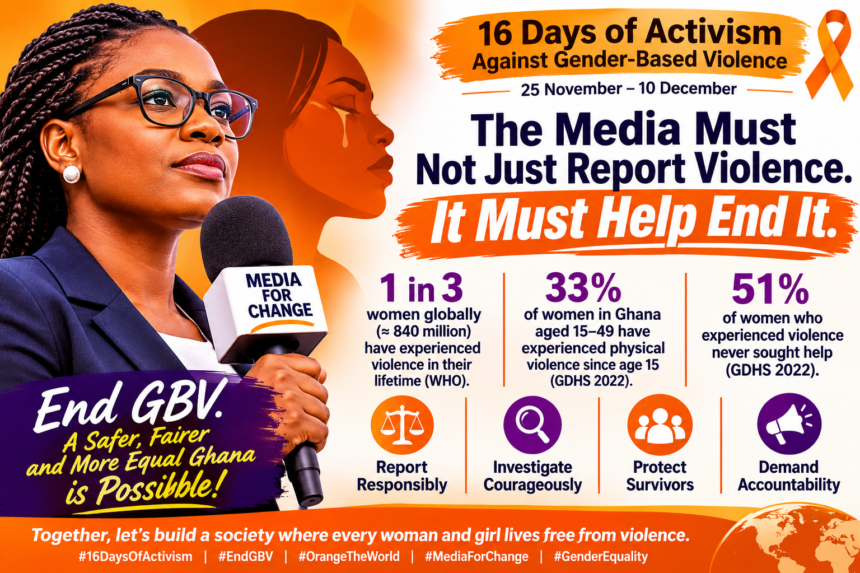
This year’s advocacy message is particularly important for the media: The media must not just report violence. It must help end it.
The message calls for a shift from simply reporting incidents of domestic violence, rape, sexual harassment, defilement, child marriage and other forms of abuse to actively contributing to prevention, public education, accountability and social transformation.
Gender-based violence is not merely a private or family matter. It is a human rights violation that affects public health, education, economic participation, social development and the ability of women and girls to participate fully in society.
The scale of the problem remains alarming.
According to the World Health Organization (WHO), nearly one in three women globally, representing approximately 840 million women and girls, have experienced physical and/or sexual intimate partner violence or non-partner sexual violence during their lifetime. The figure has remained largely unchanged over the past two decades, highlighting the slow pace of global progress.
Ghana’s statistics reveal a disturbing reality
The 2022 Ghana Demographic and Health Survey (GDHS) paints a worrying picture of the situation in Ghana.
The survey found that:
-
33 per cent of women aged 15–49 have experienced physical violence since the age of 15.
-
36 per cent of women who have ever had an intimate partner have experienced emotional, physical or sexual violence by their current or most recent partner.
-
14 per cent of women aged 15–49 have experienced sexual violence.
-
51 per cent of women who have experienced physical or sexual violence have never sought help or told anyone about their experience.
The last statistic is particularly concerning because it exposes the extent of silence surrounding gender-based violence and the barriers that prevent survivors from speaking out or accessing support.
For the media, these figures should not simply become headlines. They should become a basis for sustained investigation, public education and advocacy.
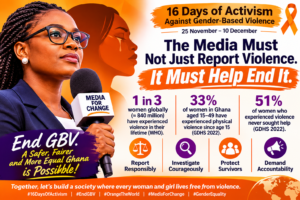
The media’s responsibility: Four areas for action
The 16 Days of Activism campaign presents an opportunity for media organisations to examine their editorial practices and strengthen their contribution to ending violence against women and girls.
1. Responsible reporting and ethical journalism
Journalists must report incidents of violence without sensationalism, victim-blaming or unnecessary exposure of survivors.
The identity, privacy and dignity of survivors, particularly children, must be protected. Headlines should inform rather than stigmatise, while interviews should be conducted with sensitivity and an understanding of trauma.
The media must also avoid language that normalises violence or shifts responsibility from perpetrators to victims.
2. Investigative journalism and accountability
Reporting should go beyond the initial announcement of an incident.
Journalists must investigate the circumstances surrounding cases of abuse, examine institutional failures, follow up on investigations and demand answers from relevant authorities.
Where cases stall, justice is delayed or protection systems fail, the media must ask difficult questions.
Accountability journalism can help expose gaps in enforcement, challenge impunity and encourage institutions to fulfil their responsibilities.
3. Public education and prevention
The media must use its reach and influence to challenge harmful gender stereotypes, discriminatory practices and social norms that perpetuate violence.
Radio discussions, television programmes, documentaries, community engagement and digital campaigns should promote conversations about consent, respect, equality, healthy relationships and the rights of women and girls.
Men and boys must also be actively engaged as partners in prevention.
4. Digital violence and the safety of women
The increasing use of digital platforms has created additional forms of abuse, including cyberstalking, online harassment, threats, image-based abuse and gendered disinformation.
Female journalists, public figures, activists and women participating in public discourse are particularly exposed to online intimidation and attacks.
Media organisations must recognise technology-facilitated gender-based violence as a serious issue, promote digital safety and support measures that protect women’s right to participate freely in public and online spaces.
Protecting the women who tell the stories
An important dimension of this campaign is the safety and welfare of female journalists themselves.
Women journalists who investigate sexual violence, corruption, human rights abuses and other sensitive subjects may face intimidation, harassment, threats and online attacks.
It is therefore important that media organisations develop effective newsroom policies, strengthen safety training and provide appropriate institutional support for journalists facing threats or abuse.
The fight against gender-based violence must also include the protection of women within the journalism profession.
The Ghana Journalists Association and other media stakeholders have an important role to play in promoting gender-sensitive journalism, professional development, journalist safety and improved welfare.
Moving from awareness to action
Ending gender-based violence requires coordinated action from government, law enforcement agencies, the judiciary, civil society organisations, traditional and religious leaders, educational institutions, the private sector and the media.
Ghana has established legal and institutional mechanisms to address domestic and sexual violence. However, the existence of laws and policies must translate into effective protection, accessible support services, timely investigations and justice for survivors.
The media must continue to monitor the implementation of these commitments and ensure that the voices of survivors, advocates and affected communities are not excluded from national conversations.
The 16 Days of Activism should not become another annual exercise dominated by speeches, slogans and symbolic gestures. Its significance must be measured by the conversations it generates, the institutions it challenges, the attitudes it changes and the actions it inspires.
A call to the media
As the world observes the campaign from November 25 to December 10, journalists, editors, broadcasters, producers and digital content creators are being encouraged to reflect on the power and responsibility that come with their platforms.
The media has the ability to shape public opinion, influence policy, expose injustice and mobilise communities. That influence must be exercised responsibly and in the interest of human dignity.
Every story should contribute to a better understanding of the problem. Every investigation should strengthen accountability. Every platform should create room for informed conversations and every newsroom should be a safe and inclusive environment.
The ultimate goal is not simply to report how many women and girls have suffered violence, but to help build a society in which fewer women and girls experience it.
The media must not just report violence. It must help end it.
Because every woman and every girl deserves to live free from violence, fear, discrimination and intimidation.