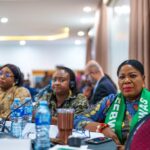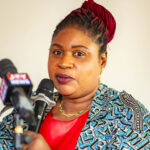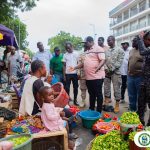

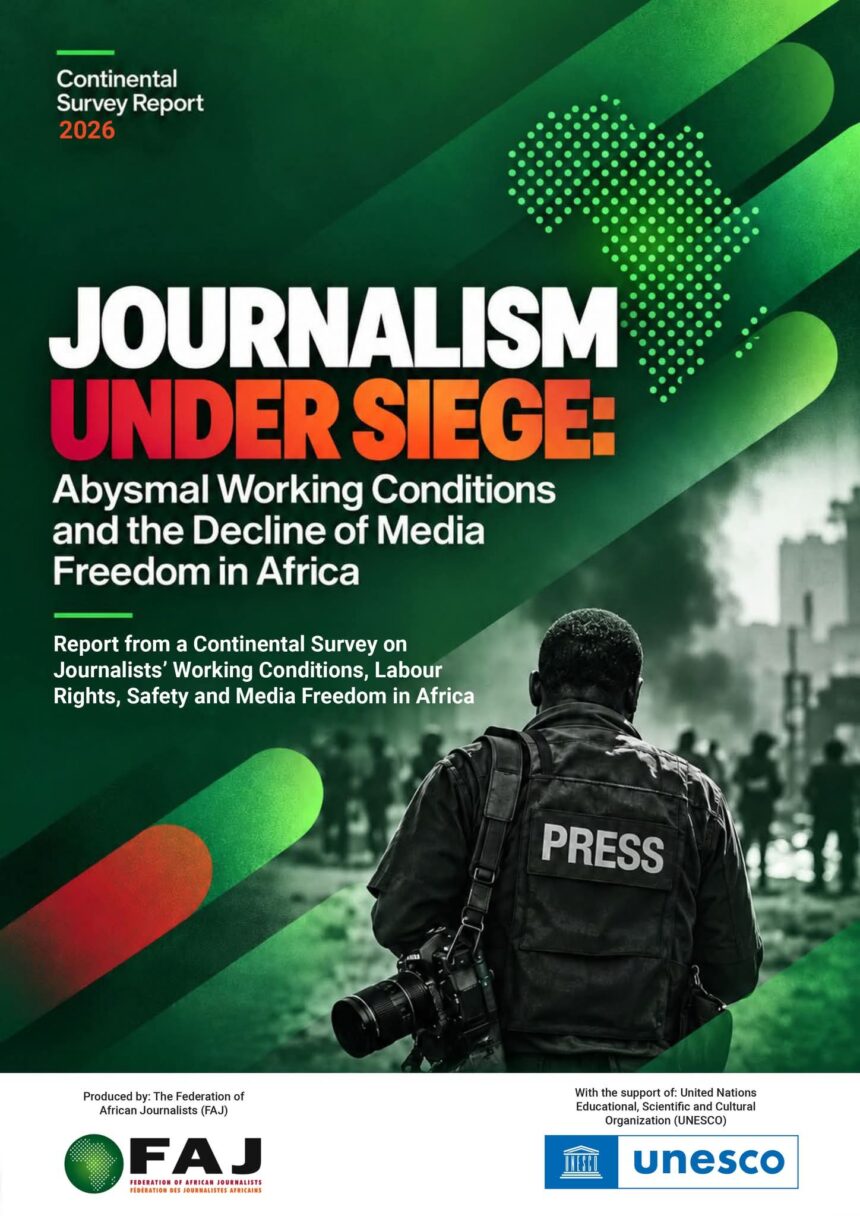
A new report by the Federation of African Journalists (FAJ), based on responses from 𝟏,𝟓𝟖𝟔 𝐣𝐨𝐮𝐫𝐧𝐚𝐥𝐢𝐬𝐭𝐬 𝐢𝐧 𝟒𝟓 𝐜𝐨𝐮𝐧𝐭𝐫𝐢𝐞𝐬, documents how poor working conditions, threats and restrictions on media freedom are weakening journalism across Africa.
𝐓𝐡𝐞 𝐟𝐢𝐧𝐝𝐢𝐧𝐠𝐬 𝐚𝐫𝐞 𝐬𝐭𝐚𝐫𝐤:
 𝟔𝟏% say their income from journalism does not meet their basic living needs.
 𝟔𝟐% work without written contracts and 𝟕𝟏% lack social protection.
 𝟔𝟓% have faced threats or intimidation linked to their work.
 𝟖𝟒% practise self-censorship frequently or occasionally.
 𝟔𝟑% have received no digital safety training.
 𝟒𝟕% have considered leaving journalism.
Women journalists face additional risks, including sexual harassment and online abuse. Journalists also report burnout and a lack of mental health support at work.
“Journalists are expected to inform the public while struggling to survive,” says FAJ President Omar Faruk Osman. “When journalists cannot earn a living, work safely or report freely, media freedom exists only on paper.”
FAJ is calling for fair pay, written contracts, social protection, safe workplaces and stronger protection from attacks and intimidation. Governments and news media organisations must also defend editorial independence, improve access to information and ensure women journalists can work free from discrimination and abuse.
𝐏𝐫𝐨𝐭𝐞𝐜𝐭𝐢𝐧𝐠 𝐣𝐨𝐮𝐫𝐧𝐚𝐥𝐢𝐬𝐭𝐬’ 𝐫𝐢𝐠𝐡𝐭𝐬 𝐚𝐧𝐝 𝐰𝐨𝐫𝐤𝐢𝐧𝐠 𝐜𝐨𝐧𝐝𝐢𝐭𝐢𝐨𝐧𝐬 𝐢𝐬 𝐞𝐬𝐬𝐞𝐧𝐭𝐢𝐚𝐥 𝐭𝐨 𝐦𝐞𝐝𝐢𝐚 𝐟𝐫𝐞𝐞𝐝𝐨𝐦 𝐚𝐧𝐝 𝐭𝐡𝐞 𝐩𝐮𝐛𝐥𝐢𝐜’𝐬 𝐫𝐢𝐠𝐡𝐭 𝐭𝐨 𝐫𝐞𝐥𝐢𝐚𝐛𝐥𝐞 𝐢𝐧𝐟𝐨𝐫𝐦𝐚𝐭𝐢𝐨𝐧.
𝙅𝙤𝙪𝙧𝙣𝙖𝙡𝙞𝙨𝙢 𝙐𝙣𝙙𝙚𝙧 𝙎𝙞𝙚𝙜𝙚: 𝘼𝙗𝙮𝙨𝙢𝙖𝙡 𝙒𝙤𝙧𝙠𝙞𝙣𝙜 𝘾𝙤𝙣𝙙𝙞𝙩𝙞𝙤𝙣𝙨 𝙖𝙣𝙙 𝙩𝙝𝙚 𝘿𝙚𝙘𝙡𝙞𝙣𝙚 𝙤𝙛 𝙈𝙚𝙙𝙞𝙖 𝙁𝙧𝙚𝙚𝙙𝙤𝙢 𝙞𝙣 𝘼𝙛𝙧𝙞𝙘𝙖 was produced by the Federation of African Journalists – FAJ with the support of UNESCO’s Multi-Donor Programme on Freedom of Expression and Safety of Journalists.
The full report is available at this link: http://fajafrica.org/report.