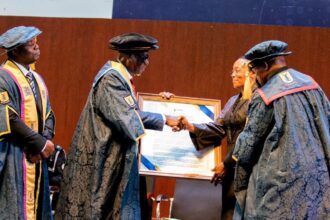

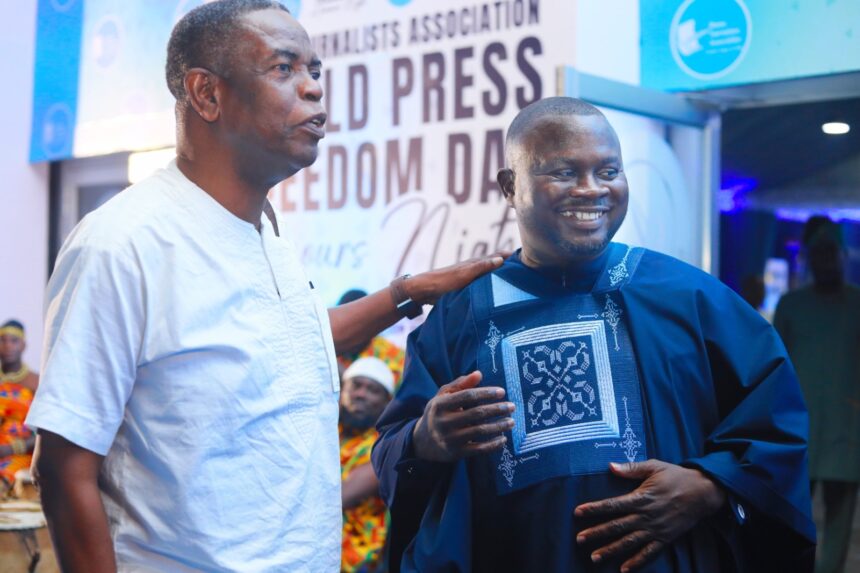
The Alisa Hotel in Accra buzzed on 6 June 2026 as the Ghana Journalists Association hosted its 2nd World Press Freedom Day Honours Night. GJA President Albert Kwabena Dwumfour welcomed dignitaries including Nana Oye Bampoe Addo who represented the Chief of Staff Julius Debrah, Communications Minister Samuel Nartey George, Minority Leader Alexander Afenyo-Markin, and UNESCO Representative Edmond Moukala, alongside veteran journalists and media partners.
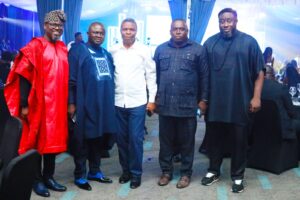
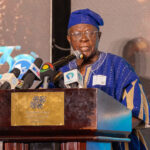
Dwumfour opened by calling the night a celebration of courage, sacrifice, and service to democracy. “Journalism is not merely a profession. Journalism is public service,” he said, noting that journalists inform citizens, hold power accountable, and amplify ordinary voices, often under threat, limited resources, and intimidation.
He tied the event to UNESCO’s 2026 theme, “Shaping a Future at Peace: Promoting Press Freedom for Human Rights, Development and Security,” warning that misinformation, AI, digital manipulation, and attacks on reporters are destabilizing journalism worldwide.
Still, Ghana had good news. The country rose from 52nd to 39th in the 2026 World Press Freedom Index and now ranks 4th in Africa. Dwumfour credited journalists, editors, civil society, regulators, and government for the gain. He especially commended President John Dramani Mahama, a GJA member, for backing a proposed Media Development Fund to strengthen institutions and sustain the industry.
But he urged the President to speak more forcefully against attacks on journalists. “The protection of journalists must remain a national priority if Ghana is to consolidate its democratic gains,” he said.
Dwumfour cautioned that press freedom now faces subtler threats: SLAPP suits, digital surveillance, economic pressure, online harassment, and violence against reporters covering galamsey, corruption, and politics. He cited GH¢21 million and GH¢20 million defamation suits against Manasseh Azure Awuni and Salifu Maase, plus ongoing cases involving True Trust Media, the Media Foundation for West Africa, Dubawa, and sports broadcaster Patrick Osei Agyemang. The message, he said, is clear: litigation is chilling investigative work and weakening accountability.
He commended the Ghana Police Service for arresting and prosecuting a perpetrator of attacks on journalists for the first time in years. Yet he warned against abuse of Section 76 of the Electronic Communications Act, which he said is being used to intimidate journalists.
The GJA also raised concerns about proposed Government Communications and Misinformation Bills. Dwumfour called for broader stakeholder consultation, warning that plans for a new regulatory commission and custodial sentences could undermine independence and free expression. “Democracy flourishes not when citizens are silenced, but when ideas, criticism, and public debate are encouraged,” he said.
Tonight’s honourees, he noted, paid a price for standing firm: lost revenue, court battles, attacks, burnout. The GJA must push for stronger legal protection, safety training, welfare support, and economic solidarity.
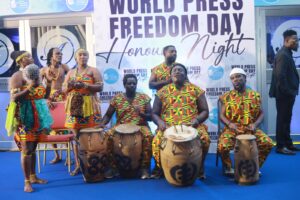
Looking ahead, Dwumfour said the next frontier is digital and economic survival. Without digital security skills, sustainable business models, and technological capacity, journalism may win legal battles but lose the information war.
He pledged the GJA would keep defending press freedom, promoting ethics, and protecting journalist welfare. He thanked sponsors including KGL Group, GoldBod, NPRA, NPA, the Police Service, and GBC, and urged all to renew their commitment to truth, professionalism, and democratic progress.
“May tonight inspire us to continue standing for truth, professionalism, courage, and democratic progress,” he closed.