
In the quiet wards of Kpando, where uncertainty once clouded the lives of many, a remarkable story of compassion, partnership, and transformation has unfolded—one that now stands as a powerful testament to what global collaboration can achieve.
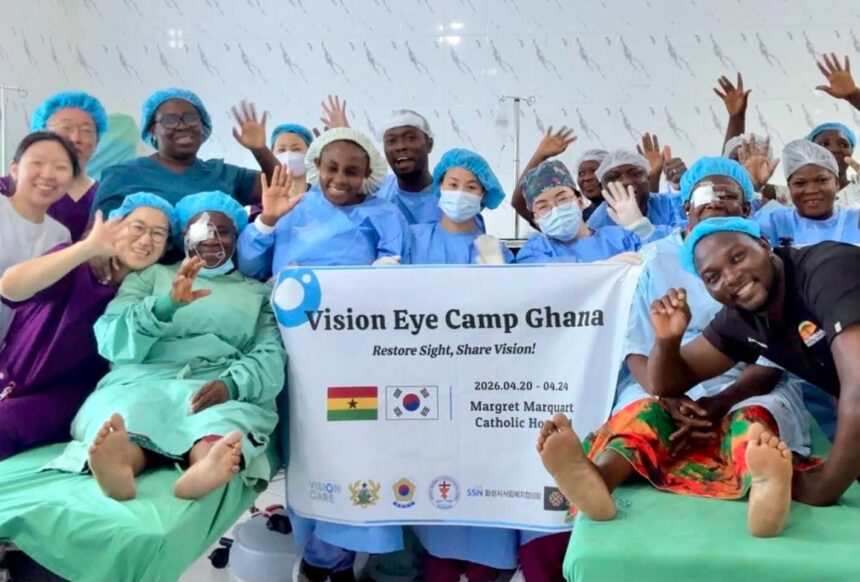
Between April 20 and April 24, 2026, at the Margaret Marquart Catholic Hospital, a dedicated medical mission by Vision Care Korea restored sight to 143 Ghanaians through life-changing cataract surgeries. For many of the patients, this was not merely a medical intervention—it was the end of darkness.
“Many of the patients had lost vision in both eyes,” a coordinator of the initiative reflected. “For them, this was not just surgery; it was the restoration of light, dignity, and hope.”, writes Ambassador Kojo Choi of South Korea.
What makes this achievement even more compelling is the story behind it—a journey that began with a simple idea and evolved into a powerful demonstration of medical diplomacy.
Earlier this year, a pivotal connection was established with Jung Myung-geun and Kwon Chil-seung in Hwaseong, South Korea. That meeting opened the door to further collaboration with Choi Young-tae, whose leadership would prove instrumental in turning vision into reality.
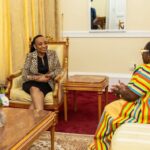
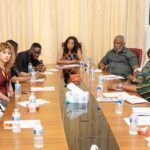
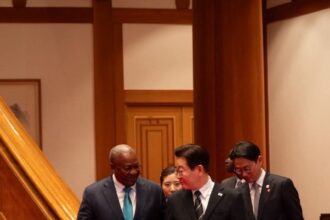
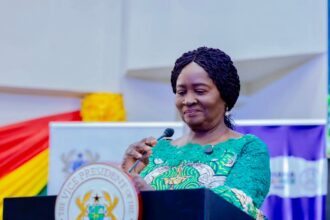
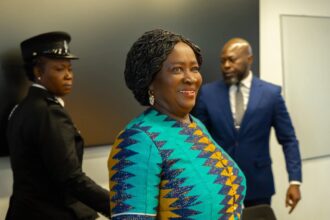
By February, a business delegation from Hwaseong had arrived in Ghana, strengthening ties and paying a courtesy call on Jane Naana Opoku-Agyemang. Momentum continued to build when engagements during visits to Korea by John Dramani Mahama and Samuel Okudzeto Ablakwa helped position the initiative as a tangible collaboration with far-reaching impact.
At a crucial moment, support from the Hwaseong business community ensured that the operational costs of the surgeries were fully covered—an act described by organizers as one of “generosity and vision.”, Ambassador Choi stataed.
Yet, this was equally a Ghanaian story.
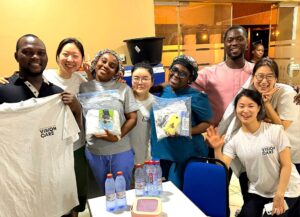 Korea Partnership Restores Sight and Rekindles Hope in Kpando.
Ensuring the success of the mission required extensive local coordination. Transportation, accommodation, and logistical support for patients—many of whom were completely blind—were vital. Joyce Bawah Mogtari played a key facilitative role, engaging Kwame Governs Agbodza, whose intervention made critical arrangements possible. On the ground, Kwesi Amissah-Arthur ensured seamless execution, while the Embassy of the Republic of Korea in Ghana provided additional institutional support.
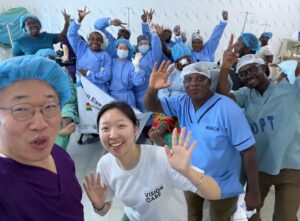
Reflecting on the journey, one of the key facilitators described the effort as “a masterpiece of connection—an art of many hands joined as one.”
Indeed, it was a convergence of purpose across borders, sectors, and individuals—each playing a role in rewriting the stories of 143 people.
“This is what true partnership looks like. This is what medical diplomacy can achieve,” the facilitator noted. “It shows what happens when hearts align across nations.”
From Hwaseong to Kpando, the impact is deeply human. Patients who once lived in darkness can now see their families again, return to work, and reclaim their independence.
And this, organizers say, is only the beginning.
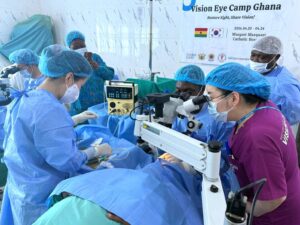 Korea Partnership Restores Sight and Rekindles Hope in Kpando.
Plans are underway to establish the Vision Care mission as an annual initiative in Ghana, creating a sustained pathway for restoring sight and strengthening ties between Ghana and South Korea.
“We are committed to building not just projects, but lasting impact and shared futures,” the team affirmed.
In a world often defined by its divisions, the story of Kpando offers a different narrative—one of unity, compassion, and possibility.
From blindness to sight.
From partnership to purpose.
From hope imagined—to hope restored.