
By Rebecca Ekpe
Ghana’s mining, oil and gas industries remain critical to the country’s economic development, generating revenue, employment and investment. But behind the production figures, royalties and corporate investments are communities whose lives are deeply affected by extractive activities.
For women in particular, the impact of mining and petroleum operations can be different from that experienced by men.
Related Stories

This makes gender mainstreaming in extractive journalism increasingly important.
Gender mainstreaming in journalism does not mean reporting only on women or treating gender as a separate subject. Rather, it means deliberately examining how policies, projects and activities in the extractive sector affect women and men differently, while ensuring that both perspectives are reflected in news coverage.
Beyond Production Figures
Extractive industry reporting often focuses on gold production, crude oil output, government revenues, investments, concessions and employment figures.
While these issues are important, they do not always tell the complete story.
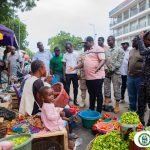
When mining operations take over farmland, for instance, the immediate economic loss may affect men and women differently. Women who depend on farming, petty trading, food processing or other informal activities may lose sources of income without receiving adequate compensation or alternative livelihoods.
Similarly, environmental degradation and reduced access to clean water can increase the burden on women and girls, who in many communities carry significant responsibilities for fetching water, preparing food and caring for children and other family members.
These experiences can easily disappear from mainstream reporting if journalists do not deliberately ask who is affected, how they are affected and whose voice is missing.

Women Must Be Part of the Conversation
Another important concern is the limited representation of women in decision-making within extractive communities and the industry itself.
Women remain underrepresented in some technical, managerial and leadership positions in mining, oil and gas. At the community level, they may also have limited representation in negotiations over land, compensation, resettlement and community development projects.
The media therefore has an important role to play.
Journalists can broaden their sources by seeking out women engineers, geologists, environmental experts, economists, lawyers, entrepreneurs, community leaders and researchers.
Women should not appear in news stories only as victims of displacement, environmental degradation or poverty. They should also be recognised as experts, business owners, workers, innovators and leaders contributing to Ghana’s extractive sector.
Journalism as an Accountability Tool
Gender-sensitive reporting can also strengthen accountability.
Instead of simply reporting that a mining company has paid compensation to an affected community, journalists can ask: Who received the compensation? Were women included? Were women-owned businesses affected? Did the compensation adequately address the loss of livelihoods?
Similarly, when companies announce corporate social responsibility projects, journalists can examine whether those interventions benefit women and girls as well as men and boys.
Questions about employment are equally important.
How many women are employed by the company? What positions do they occupy? Are women benefiting from procurement opportunities? Are there opportunities for young women to acquire technical skills and enter traditionally male-dominated areas of the industry?
These questions can transform routine extractive industry reporting into journalism that promotes transparency and accountability.
The Importance of Data
Journalists should also make greater use of sex-disaggregated data.
Where information is available, reporting should distinguish between the number of women and men employed, trained, compensated or benefiting from community development programmes.
Such data can reveal inequalities that may otherwise remain hidden.
For example, a company may report that hundreds of people have benefited from a skills-training programme. But without knowing how many beneficiaries are women and how many are men, it may be difficult to determine whether the programme is genuinely inclusive.
Avoiding Stereotypes
Gender-sensitive journalism also requires journalists to avoid stereotypes.
Women should not automatically be portrayed as helpless victims, while men are presented as decision-makers and providers.
A balanced story can examine the challenges women face while also highlighting their agency, leadership and contribution.
This is particularly important in communities where women are successfully operating businesses, participating in environmental protection, advocating for responsible mining or creating alternative livelihoods for families affected by extractive activities.
A Wider Development Story
The extractive sector is not only about minerals, oil and gas. It is also about people, livelihoods, communities, the environment and Ghana’s future.
Gender mainstreaming therefore enables journalists to connect extractive activities with broader issues such as economic empowerment, community health, environmental justice, youth employment, human rights, climate resilience and social development.
It also supports Ghana’s broader commitments to equality and inclusive development, including the principles contained in the 1992 Constitution, the National Gender Policy and the Sustainable Development Goals, particularly SDG 5 on Gender Equality, SDG 8 on Decent Work, SDG 10 on Reduced Inequalities and SDG 16 on Peace, Justice and Strong Institutions.
The Journalist’s Responsibility
For journalists covering mining, oil and gas, mainstreaming gender should begin with simple questions:
Whose voice is missing from this story?
How are women and men affected differently?
Who benefits from the project?
Who bears the environmental and economic costs?
Are women participating in decision-making?
Are promised benefits reaching vulnerable groups?
These questions can help journalists uncover stories that might otherwise remain untold.
Ultimately, gender mainstreaming in extractive journalism is about telling the whole story.
Ghana’s natural resources belong to the nation, but the benefits and costs of extracting those resources are not always experienced equally.
By deliberately including women’s voices, examining gender-disaggregated data and investigating how extractive activities affect different groups, journalists can produce reporting that is more accurate, inclusive and accountable.
For a country seeking sustainable development from its natural resources, gender-sensitive extractive journalism is not simply about giving women a voice. It is about ensuring that the full human story behind Ghana’s natural resources is heard.