
The state has intensified efforts to address recurring flooding challenges, with authorities undertaking an assessment of critical drainage infrastructure as part of ongoing post-flood mitigation measures.
Government Intensifies Efforts to Prevent Future Flooding Through Improved Drainage Management
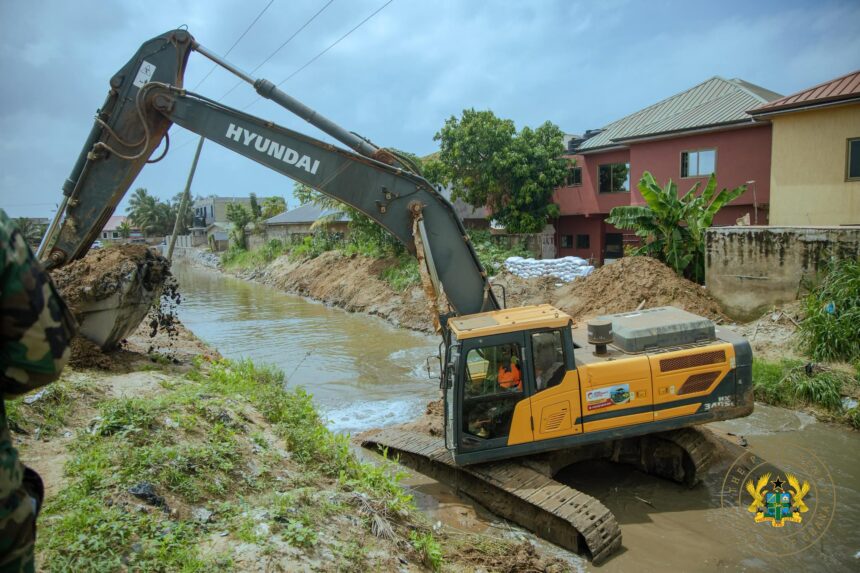
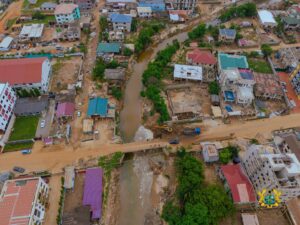
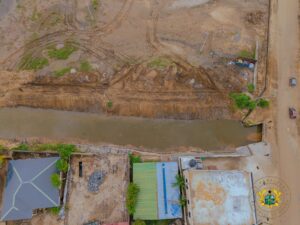
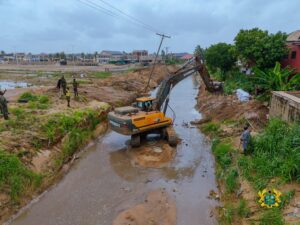
A recent inspection focused on a major storm drain along the Teshie Bush Road near ICGC Temple East, where officials evaluated the condition and capacity of the drainage system to determine interventions required to improve stormwater flow and reduce flood risks.
The exercise forms part of a broader government strategy to identify vulnerable areas, address drainage bottlenecks, and implement sustainable measures aimed at protecting lives, property, and public infrastructure.
Officials noted that effective flood management requires a combination of improved drainage infrastructure, regular maintenance, proper urban planning, and community cooperation.
The assessment team examined key challenges affecting the drainage system, including possible obstructions, inadequate capacity, and other factors that contribute to flooding during periods of heavy rainfall.
Speaking during the exercise, officials emphasised that the government’s approach is shifting from emergency response to proactive flood prevention through early identification of risks and targeted interventions.
“Our priority is to ensure that communities are protected before disasters occur. Assessing critical drainage systems allows us to identify challenges early and implement solutions that safeguard lives and property.”
The inspection also highlighted the importance of strengthening stormwater management systems in rapidly developing urban areas, where increased construction and changing weather patterns have placed additional pressure on existing drainage networks.
Residents in flood-prone communities have often called for lasting solutions to recurring flooding, including the expansion and maintenance of drains, improved waste management, and stricter enforcement of planning regulations.
Authorities reaffirmed their commitment to working with local government institutions, engineers, community leaders, and residents to develop sustainable solutions that will reduce the impact of floods.
The Teshie Bush Road assessment is part of wider national efforts to build climate-resilient communities and improve preparedness against extreme weather events.
As Ghana continues to experience the effects of changing rainfall patterns, stakeholders say long-term investment in drainage infrastructure and disaster prevention remains essential to protecting communities and supporting sustainable development.