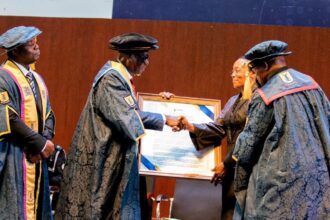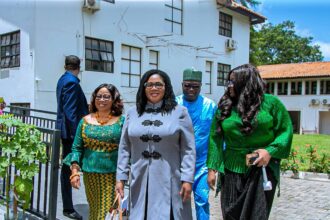


The Vice President of the Ghana Journalists Association (GJA), Rebecca Ekpe has called for renewed commitment to professionalism and the protection of journalists, warning that Ghana’s democratic gains depend heavily on a free, ethical, and secure media landscape.
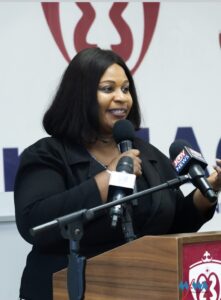
Delivering a stakeholder address at the 2026 World Press Freedom Day celebration held at the University of Media Arts and Communication, the GJA Vice President underscored the critical role of journalism in building a peaceful society.
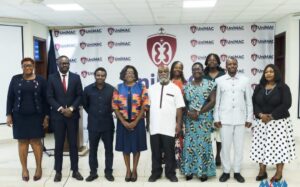
The event, organized under the global theme “Shaping a Future at Peace: Safeguarding Journalism in Ghana,” brought together academia, media practitioners, and students from the School of Journalism and Media Studies.
Conveying greetings from the leadership of the Association, the Vice President noted that the GJA President was leading a delegation to France to participate in the centenary congress of the International Federation of Journalists.
Addressing participants, the GJA Vice President stressed that peace in any society is anchored on truth and accountability—not silence.
“A peaceful society is not built on silence; it is built on truth, accountability, and responsible journalism,” the address emphasized.
The speech highlighted two pillars essential to sustaining Ghana’s media credibility: professionalism and protection.
On professionalism, the Association continues to promote ethical standards, capacity-building, and responsible reporting, particularly in an era marked by misinformation and rapid digital transformation.
“Professionalism is no longer optional—it is the credibility currency of journalism,” the Vice President stated.
Equally, the GJA reaffirmed its commitment to protecting journalists against intimidation, harassment, and violence, calling for stronger safeguards and accountability mechanisms.
“No journalist should face threats for doing their work. Protecting journalists is fundamental to preserving press freedom and public trust,” the address noted.
The Vice President also acknowledged Ghana’s improved performance on the World Press Freedom Index by Reporters Without Borders, where the country now ranks 4th in Africa and 39th globally in 2026, up from 52nd position.
While describing the progress as encouraging, the GJA cautioned against complacency.
“Progress is not permanence. It must be protected, deepened, and institutionalized,” the Vice President warned.
In a direct message to aspiring journalists, the address challenged students to uphold integrity and ethical standards as they prepare to enter the profession.
“The future of a peaceful Ghana depends, in part, on the quality of journalism you will practice.”
The GJA concluded by calling for collective action among government, institutions, civil society, and the media to safeguard journalism and strengthen Ghana’s democratic foundations.
“Let us work together to promote professionalism, protect journalists, and build a media landscape that strengthens peace, democracy, and national development.”
The event reaffirmed the central role of the media in shaping national discourse and sustaining democratic governance in Ghana.