
Ghana has officially commenced the sixth review of its economic programme with the International Monetary Fund (IMF), marking a critical milestone in the country’s ongoing efforts to stabilize and rebuild its economy following the 2022 fiscal crisis.
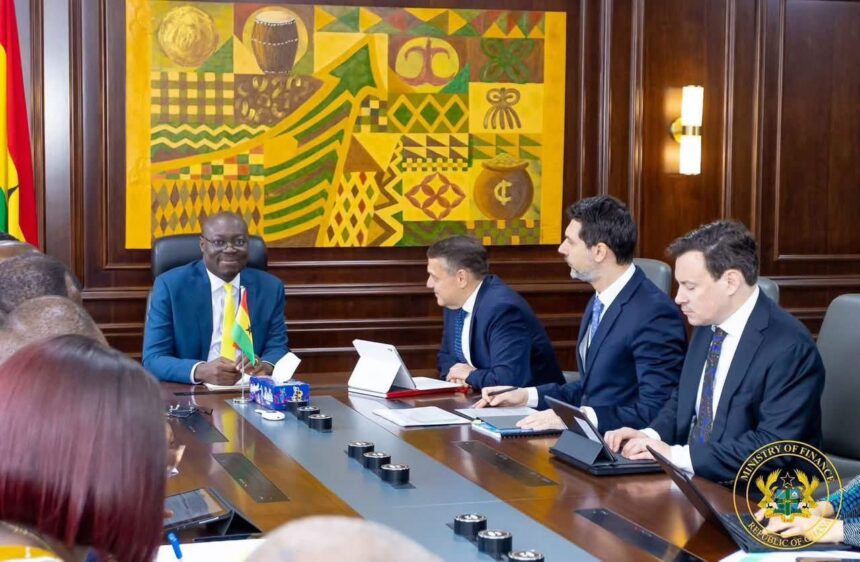
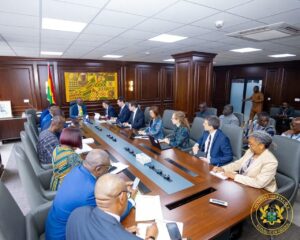 Dr. Ato Forson with team of IMF Officials.
The review process began in Accra with a high-level meeting between the Minister for Finance, Cassiel Ato Forson, and an IMF mission team led by Ruben Atoyan.
Welcoming the delegation, Dr. Forson expressed strong confidence in the progress made under the programme, describing Ghana’s economic reform journey as both impactful and far-reaching.
“Ghana’s reform journey since the 2022 crisis has been transformative,” he stated. “It represents a clear success in restoring macroeconomic stability and rebuilding confidence in the economy.”
The sixth review is a key component of Ghana’s engagement with the IMF under its Extended Credit Facility programme, which was secured to support fiscal consolidation, debt restructuring, and structural reforms aimed at long-term economic resilience.
Officials say the review will assess Ghana’s performance against agreed targets, including fiscal discipline, inflation control, revenue mobilization, and progress on debt restructuring—areas that have been central to the country’s recovery strategy.
The IMF team is expected to engage a broad range of stakeholders, including government agencies, financial institutions, and development partners, as part of its evaluation.
Dr. Ruben Atoyan, leading the IMF delegation, reaffirmed the Fund’s commitment to supporting Ghana through the reform process, emphasizing the importance of sustained policy implementation.
While acknowledging the challenges that remain, he noted that continued discipline and adherence to programme targets would be critical to consolidating gains achieved so far.
Economic analysts view the sixth review as a significant test of Ghana’s reform credibility, particularly at a time when the country is seeking to restore investor confidence and strengthen its fiscal position.
The outcome of the review could pave the way for the next tranche of IMF support, providing much-needed financial backing to sustain ongoing reforms and stabilize the economy.
For the government, the message remains clear: the reform agenda is not only on track but delivering results.
“We are committed to staying the course,” Dr. Forson emphasized. “Our focus is to ensure that the gains made translate into long-term stability, growth, and improved livelihoods for the Ghanaian people.”
As the review progresses, attention will remain firmly on how Ghana balances fiscal discipline with inclusive growth—an equation that will ultimately determine the success of its economic recovery journey.