
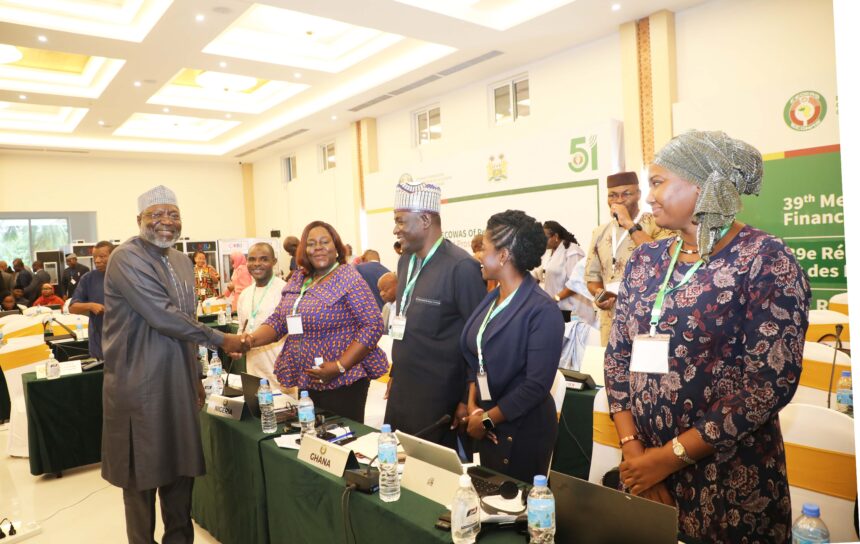
The Economic Community of West African States (ECOWAS) has reaffirmed its commitment to stronger institutions, sound financial management and sustainable regional integration following the conclusion of the 39th Meeting of the Administration and Finance Committee (AFC) in Freetown.
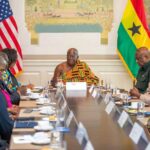
 39th Meeting of the ECOWAS Administration and Finance Committee.
The three-day statutory meeting, held from 12 to 14 July 2026, brought together senior ECOWAS officials, commissioners, heads of institutions, resident representatives and delegates from Member States to review the Community’s administrative, financial and institutional performance at a critical period for the regional bloc.
The meeting comes as ECOWAS prepares for a transition to a new management team while implementing its long-term Vision 2050, which seeks to build a peaceful, prosperous and people-centred West Africa.
A Farewell Marked by Reflection and Gratitude
In an emotional farewell address, the President of the ECOWAS Commission, Dr. Omar Alieu Touray, reflected on his four-year tenure, describing it as one of the most challenging periods in the Community’s history.
He thanked the Administration and Finance Committee for its unwavering support, particularly during moments of political and security uncertainty that tested regional solidarity.
“We assumed office at a very difficult and challenging moment for our Community. Our mandate was demanding, but it gave us the privilege of serving more than 400 million ECOWAS citizens. Although I am leaving office as President of the ECOWAS Commission, I will always remain a citizen of ECOWAS,” Dr. Touray said.
His remarks underscored the importance of continuity and institutional resilience as the Commission prepares for a new chapter in its leadership.
Sustainable Financing Takes Centre Stage
A major focus of the meeting was the financial sustainability of ECOWAS institutions.
Opening the meeting, Vice-President of the ECOWAS Commission, Mrs. Damtien L. Tchintchibidja, highlighted the need to strengthen the ECOWAS Community Levy, the organisation’s principal source of funding.
She acknowledged that the withdrawal of Burkina Faso, Mali and Niger has significantly reduced the Community’s financial resources, making it imperative for Member States to improve contributions and recover outstanding arrears.
According to her, a stronger and more reliable financing mechanism is essential to ensuring that ECOWAS can continue implementing development programmes, peace initiatives and regional integration projects without interruption.
Building Stronger Institutions
Chairman of the Administration and Finance Committee, Mr. Komba Momoh, described the AFC as a cornerstone of ECOWAS governance, stressing that effective oversight of finance, planning and institutional management is fundamental to the credibility and effectiveness of the regional organisation.
He noted that as ECOWAS marks its 51st anniversary, the Community has an opportunity not only to celebrate its achievements but also to strengthen the systems that will shape its future.
The Commissioner for Internal Services, Dr. Habibu Yaya Bappah, also highlighted the significant reforms implemented over the past four years.
These include the operationalisation of the Commission’s new organisational structure, implementation of Vision 2050, modernisation of financial and human resource regulations and the deployment of new institutional management systems designed to improve efficiency, accountability and transparency.
Looking Ahead
At the close of the meeting, members considered reports on budget execution, financial management, human resources and institutional performance, adopting recommendations aimed at enhancing the effectiveness and long-term sustainability of ECOWAS institutions.
The recommendations will now be forwarded to the ECOWAS Council of Ministers for consideration before subsequent decisions by the Authority of Heads of State and Government.
As West Africa continues to confront evolving security, economic and governance challenges, the outcomes of the Freetown meeting signal ECOWAS’ determination to reinforce its institutions, strengthen financial resilience and build a regional community that is better equipped to serve more than 400 million citizens.
The deliberations also reinforce a broader message: strong institutions remain the foundation upon which lasting peace, regional integration and sustainable development are built.