
GenCED Gender Democracy Watch is a periodic commentary series that examines emerging issues at the intersection of gender equality, democratic governance, political participation and electoral integrity in Ghana. Drawing on research, evidence and lived experiences from political processes, the series seeks to contribute to public dialogue on building more inclusive, accountable and representative democratic institutions.
As political parties prepare for internal elections, public attention naturally shifts to campaign tours, endorsements, constituency visits and engagements with delegates. Across the country, radio discussions, television interviews and digital platforms have become central arenas where aspirants introduce themselves, present their visions and compete for support.
These activities are an important feature of democratic competition. However, they also raise a critical question: Who gets access to these platforms, and whose voices remain missing from the political conversation?
Internal party elections are often the most decisive stage of political competition. They determine who eventually appears on the national ballot and who has the opportunity to seek public office. If access to public platforms during this stage is concentrated among a few established or well-resourced aspirants, the democratic playing field becomes uneven long before citizens participate in general elections.
One of the less visible barriers to women’s political leadership is unequal access to media platforms. During internal party elections, established male politicians often dominate radio discussions, television interviews and online political conversations. Their visibility is frequently strengthened by years of political experience, stronger campaign structures, greater financial resources and established relationships within political and media networks.
This does not necessarily mean that media organisations intentionally exclude women. Newsrooms often rely on familiar political figures who are already recognised by audiences and considered influential. However, the outcome can still reinforce existing inequalities. Women aspirants, particularly those seeking to build political recognition, may receive fewer opportunities to communicate their ideas, demonstrate their leadership capacity and engage directly with delegates and citizens.
Media visibility is not simply about publicity. In modern political competition, visibility shapes credibility, public perception, fundraising opportunities, supporter mobilisation and assessments of electoral viability. Candidates who are consistently heard and seen are more likely to be viewed as serious contenders, while those with limited exposure face additional barriers regardless of their qualifications and policy positions.
This challenge is closely connected to the broader issue of the monetisation of politics. GenCED’s research, The Price to Participate: How Money in Politics Undermines Women and Youth Political Participation in Ghana, highlights how financial barriers increasingly influence who can enter and compete effectively in political spaces.
Money and media access often reinforce each other. Candidates with greater financial resources are better positioned to invest in communication strategies, publicity, campaign teams and media engagement. Those with fewer resources, particularly many women and young aspirants, may struggle to achieve the visibility required to compete on an equal footing.
A democratic media environment should do more than amplify voices that are already powerful or familiar. It should create opportunities for diverse perspectives, including qualified women and emerging leaders, to participate meaningfully in political conversations. Fair media access does not mean compromising editorial independence or guaranteeing equal coverage regardless of news value. Rather, it means recognising that inclusive democracy requires a broader range of voices to be heard.
As Ghana’s political parties continue their internal electoral processes, political parties, media organisations, civil society and citizens all have a role to play in strengthening democratic inclusion. The quality of democracy is measured not only by whether individuals are allowed to contest, but also by whether they have a fair opportunity to be visible, heard and evaluated based on their ideas and leadership.
At GenCED, we believe that advancing democratic inclusion requires addressing structural barriers throughout the political process. This includes examining how money, media access and political networks influence participation and representation.
A democracy that gives visibility only to those with existing power and resources risks limiting the diversity of leadership needed to build responsive and accountable institutions.
GenCED Gender Democracy Watch will continue to provide evidence-based analysis on issues shaping women’s political participation, democratic governance and inclusive leadership in Ghana. Through research, dialogue and public engagement, the series seeks to contribute to a democracy where every qualified voice has the opportunity to be heard.
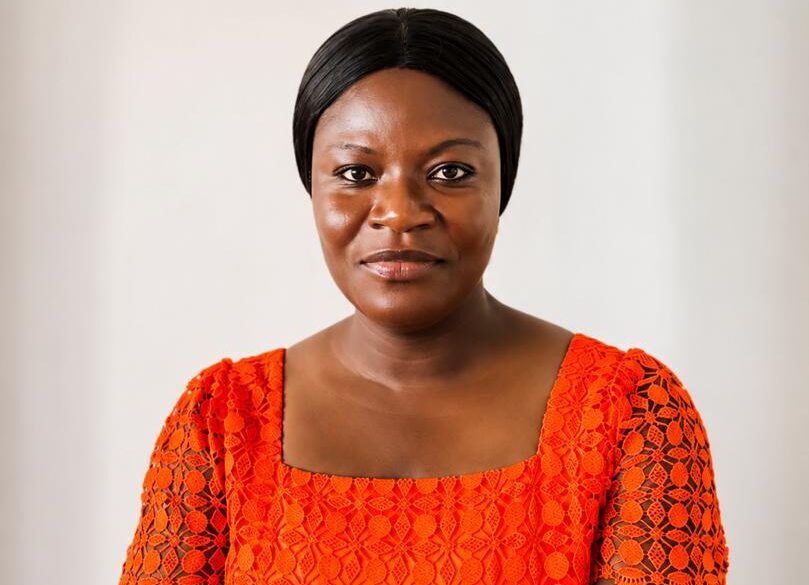
By Esther Tawiah,
Executive Director, Gender Center for Empowering Development.