
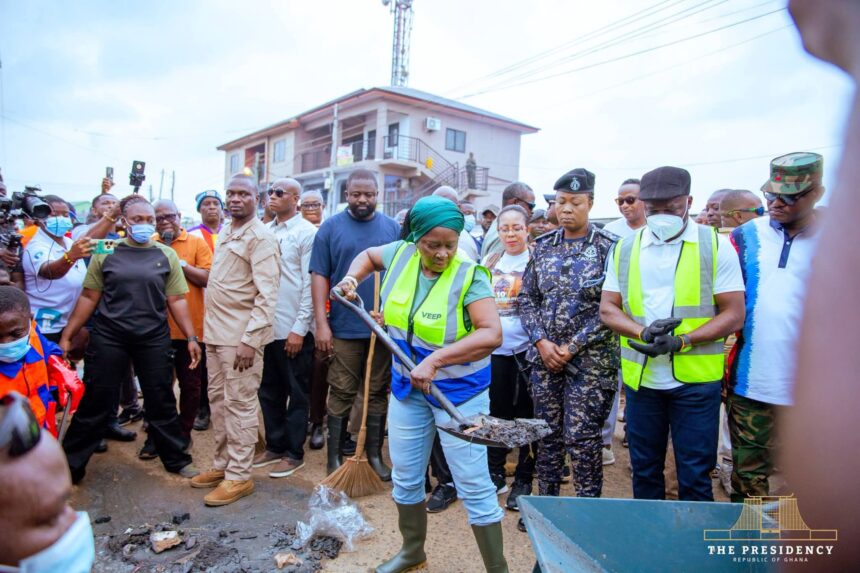
Thousands of Ghanaians have taken part in a two-day nationwide clean-up exercise initiated by President John Dramani Mahama as the country responds to the devastating impact of the July 29, 2026 floods that affected seven regions, claimed 34 lives and displaced more than 90,000 people.
The exercise, which brought together government officials, traditional leaders, security agencies, civil society organisations, traders, residents and community groups, is aimed at restoring affected communities, clearing blocked drains and promoting responsible environmental practices to reduce the risk of future disasters.
The initiative follows widespread destruction caused by the floods, which damaged homes, roads, businesses and public infrastructure, leaving thousands of families struggling to recover.
Vice President Naana Jane Opoku-Agyemang joined residents and volunteers in the clean-up exercise, describing environmental sanitation as a shared national responsibility rather than a duty reserved for government alone.
She stressed that maintaining a clean environment is critical to protecting communities from recurring flooding.
“The environment belongs to all of us. Government can provide the policies and resources, but every citizen has a role to play in keeping our surroundings clean and ensuring that our drainage systems are not blocked,” the Vice President said.
She urged citizens to move beyond emergency responses and adopt consistent sanitation habits that would help prevent future disasters.
“We must not wait until disaster strikes before we act. The lessons from these floods should guide us to change our attitudes towards waste disposal and environmental protection,” she added.
Clearing the Way for Safer Communities
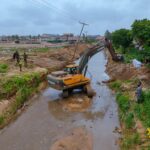
During the exercise, participants focused on removing refuse from streets, waterways and drainage channels, particularly in flood-prone communities where choked gutters and improper waste disposal have contributed to rising flood risks.
Government officials explained that the clean-up forms part of a broader post-flood recovery and resilience strategy, including improved drainage management, community awareness and stronger enforcement of sanitation regulations.
Residents welcomed the intervention, saying the exercise had renewed community commitment to keeping their neighbourhoods clean.
A resident who participated in the exercise said:
“The floods showed us that we cannot ignore our environment. When drains are blocked, the consequences affect everyone. We must all take responsibility.”
Another volunteer noted:
“This is not only about cleaning today. It is about changing our behaviour so that our children can live in safer communities.”
A National Call for Behavioural Change
The floods have renewed national discussions about climate change, urban planning, waste management and preparedness for extreme weather events.
Experts have repeatedly warned that rapid urbanisation, inadequate drainage systems and poor waste disposal practices increase vulnerability to flooding, especially during periods of intense rainfall.
Government representatives participating in the exercise emphasised that the clean-up should mark the beginning of sustained environmental action rather than a one-time campaign.
President Mahama’s directive is expected to encourage stronger collaboration between state institutions, local authorities and citizens in addressing sanitation challenges across the country.
As communities continue the clean-up, the message from government and residents remains clear: preventing future flooding requires collective action, responsible environmental behaviour and long-term investment in climate resilience.
The exercise has become a symbol of national solidarity, with Ghanaians turning the aftermath of tragedy into an opportunity to rebuild cleaner, safer and more resilient communities.
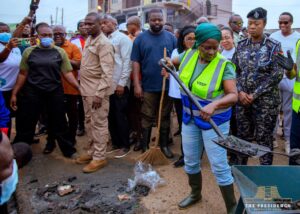 Vice President, Naana Jane Opoku Agyemang joins in the National clean-up.