
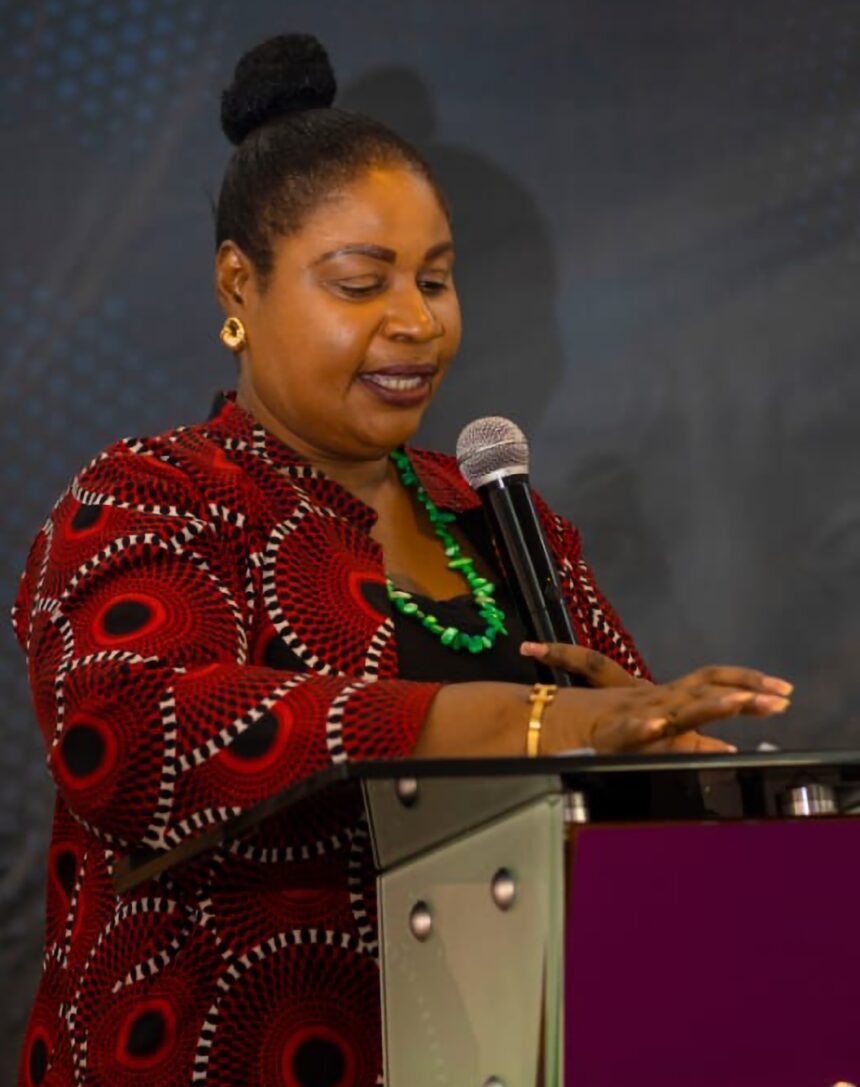
Vice President of the Ghana Journalists Association, Rebecca Ekpe, has called on journalists and media practitioners across Ghana to take a more proactive role in advancing safety, justice, and healing for victims of domestic violence.
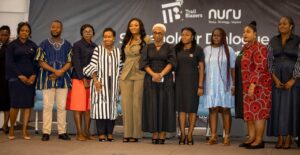
Delivering the keynote address at a stakeholder dialogue on domestic violence organised by Trailblzers and Nuru on April 22, 2026, Rebecca Ekpe described domestic violence as “a silent crisis” affecting thousands of families across the country and stressed that the media must move beyond routine reporting to become a catalyst for national change.
“This is not merely a professional obligation. It is a moral responsibility,” she stated.
Addressing participants made up of journalists, civil society organisations, law enforcement officials, and development partners, Madam Ekpe said domestic violence continues to thrive behind closed doors due to fear, stigma, and harmful cultural norms.
Quoting statistics from the Domestic Violence and Victims Support Unit (DOVVSU), she noted that more than 15,700 cases of domestic violence were reported nationwide in 2015, with women forming the majority of victims, while thousands of men were also affected.
“In just one region, Tema, over 1,400 cases were recorded within six months, with assault dominating the statistics,” she revealed.
According to her, the figures only represent a fraction of the actual problem because many victims remain silent due to societal pressure and fear of discrimination.
“Nearly three in ten women in Ghana have experienced domestic violence. These are not just numbers. They represent broken homes, interrupted futures, and lives in need of justice and healing,” she emphasized.
Madam Ekpe challenged the media to shift from simply raising awareness to sustained public education on domestic violence laws, rights, and support systems available to victims.
“The media must clearly explain Ghana’s Domestic Violence Act and reinforce that abuse—whether physical, emotional, or economic—is a crime and not a private matter,” she said.
She further urged journalists to adopt survivor-centred reporting approaches that protect victims from further trauma.
“How we tell stories matters as much as the stories we tell. We must avoid sensationalism and victim-blaming while protecting the dignity and identity of survivors,” she stressed.
The GJA Vice President also underscored the importance of investigative journalism in exposing institutional weaknesses and delays in the justice delivery system.
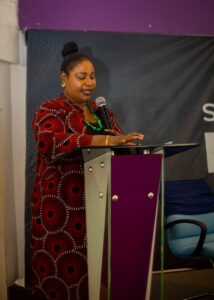
“Justice must not only be done—it must be seen to be done,” she declared. “The media must investigate delays in prosecution, track enforcement of protection orders, and expose gaps in resourcing for institutions like DOVVSU.”
Madam Ekpe described domestic violence as a national development issue with far-reaching implications for public health, economic productivity, national security, and social cohesion.
“Domestic violence is not a ‘soft issue.’ It affects every aspect of national development and must remain at the centre of national discourse,” she said.
She also called for stronger collaboration between the media, law enforcement agencies, social welfare institutions, and advocacy groups to provide coordinated support for victims from reporting through recovery.
Highlighting the importance of solutions journalism, she encouraged the media to tell stories of hope and resilience.
“Let us highlight survivors who have rebuilt their lives, communities that have reduced violence, and interventions that are making a difference,” she noted. “Because healing is not only possible—it is powerful.”
In a passionate call to action, Madam Ekpe urged journalists to use the power of storytelling responsibly to influence positive social change.
“The power of the media lies not only in its reach, but in its influence. We shape narratives. We influence attitudes. We can drive action,” she said.
She concluded by urging journalists to “report with integrity, advocate with purpose, and act with courage,” adding that the true impact of journalism should be measured by the lives protected, the justice secured, and the healing restored.