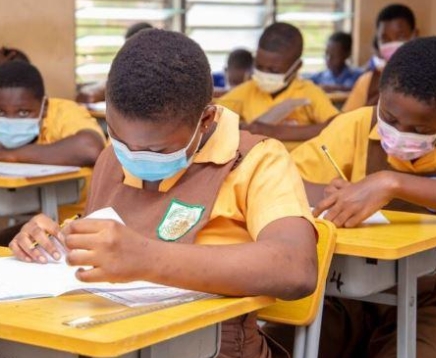

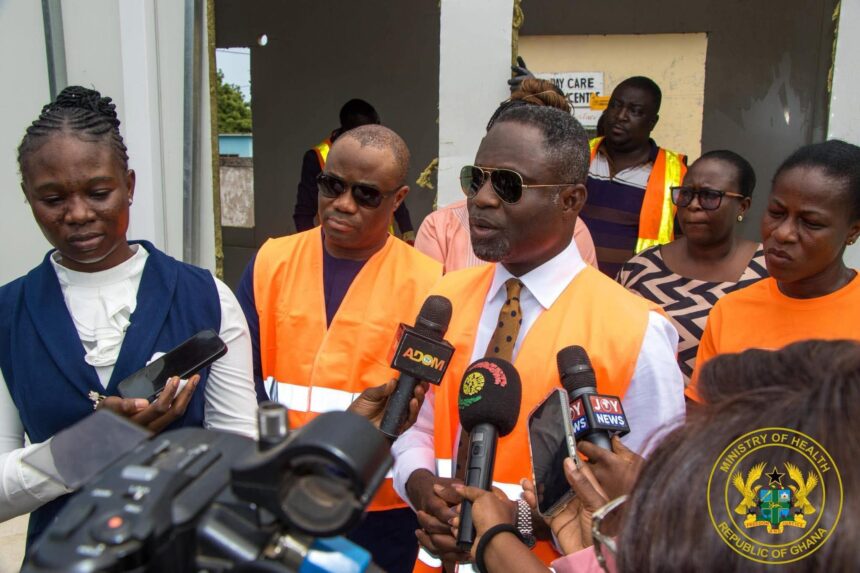
Ghana is on the verge of a major health sector transformation with the rollout of the Free Primary Healthcare Programme—a flagship policy aimed at ensuring that every citizen can access essential health services without financial barriers. The initiative, expected to be implemented nationwide from April 2026, is widely seen as a critical step toward universal health coverage.
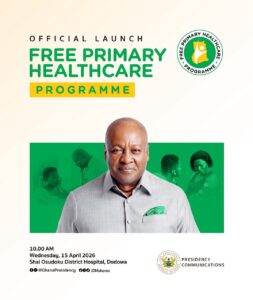
The Government of Ghana, under President John Dramani Mahama, is introducing free primary healthcare to guarantee that basic health services are accessible to all—regardless of income, location, or insurance status.
The programme covers services delivered at the first level of care—CHPS compounds, health centres, and polyclinics—and includes:
- Preventive care (screening, health education)
- Basic treatment of common illnesses
- Maternal and child health services
- Mental health support
- Essential medicines and diagnostics
- Emergency stabilisation services
Unlike the National Health Insurance Scheme (NHIS), access to these services will be free at the point of use, even without insurance.
Why the programme is important
1. Removing financial barriers
One of the biggest challenges in Ghana’s healthcare system has been cost. Even with NHIS, many citizens—especially the poor—still pay out-of-pocket for basic services.
The new policy directly addresses this by making primary care free, ensuring:
- No delays in seeking treatment
- Reduced financial hardship for families
- Greater equity in access to healthcare
2. Strengthening preventive healthcare
The programme focuses heavily on early detection and prevention, which is currently a weak point in Ghana’s system.
Through community outreach, health workers will:
- Visit homes to check blood pressure and blood sugar
- Identify diseases early before complications arise
This is crucial as Ghana faces a rising burden of non-communicable diseases (NCDs) like hypertension, diabetes, and stroke.
3. Bringing healthcare closer to communities
A key feature is decentralization of healthcare delivery:
- Expansion of CHPS compounds
- Use of community health coordinators
- Conversion of school sick bays into clinics
This ensures that even remote and underserved communities receive care without traveling long distances.
Expected impact
1. Improved public health outcomes
The programme is expected to:
- Increase healthcare utilisation
- Detect diseases earlier
- Reduce maternal and infant mortality
- Lower complications from chronic diseases
2. Economic benefits
Healthier citizens mean:
- Higher productivity
- Reduced absenteeism at work
- Lower long-term healthcare costs
Preventive care is significantly cheaper than treating advanced diseases, making this policy economically strategic.
3. Reduced pressure on hospitals
By strengthening primary care:
- Fewer cases will escalate to emergency or specialist levels
- Tertiary hospitals will be less congested
- Resources can be better allocated
How viable is the programme?
Strengths supporting viability
1. Strong political commitment
- Backed by government with significant funding (over GH¢1.5 billion allocation)
- Positioned as a core national policy
2. Existing health infrastructure
- Builds on CHPS and NHIS systems rather than creating a new structure
3. Stakeholder engagement
- Collaboration with health professionals, private sector, and community leaders
4. Phased implementation
- Starting with 100 deprived districts before nationwide expansion by 2028
Challenges to watch
1. Funding sustainability
- Long-term financing remains uncertain
- Ghana’s history with free healthcare shows risks of fiscal strain
2. Infrastructure and equipment gaps
- Shortages of diagnostic tools and medical equipment persist
3. Human resource constraints
- Need for more trained health workers, especially in rural areas
4. Public awareness and utilization
- Success depends on whether citizens actively use preventive services
Ghana’s Free Primary Health Care as Transformational Policy
Ghana’s Free Primary Healthcare Programme represents a transformational policy that shifts the country from reactive to preventive healthcare. By removing cost barriers, strengthening community-level services, and focusing on early detection, it has the potential to significantly improve national health outcomes and economic productivity.
However, its long-term success will depend on sustained funding, efficient management, and strong community participation. If these are addressed, the programme could become one of Ghana’s most impactful social interventions—similar in scale to landmark policies like Free SHS, but in the health sector.