


By Rebecca Ekpe
Every year, Ghana experiences disasters that claim lives, destroy homes, disrupt businesses, and place enormous pressure on the country’s emergency response systems. From devastating floods in Accra to bushfires in the northern regions and coastal erosion along the eastern shoreline, these disasters are becoming more frequent and severe due to climate change, rapid urbanization, and poor environmental practices.
Artificial Intelligence (AI) can help Ghana move from reacting to disasters to preventing them through early warning systems and faster emergency response. A practical example is the June–July 2026 floods in Accra, where torrential rains caused widespread flooding in communities such as Tse Addo, Weija, Kaneshie, Circle, Adabraka, and Odawna, displacing thousands of people and damaging homes and businesses.
Related Stories

Statistics from recent flooding disaster:
Rainfall Impact: Accra recorded 169.2mm of rainfall on June 29, 2026, with June rainfall reaching 593.2mm, surpassing the previous record of 420.6mm in 2002.
Human Impact: More than 90,000 people across seven regions were affected, including 7,761 displaced households in Greater Accra.
Loss of Lives: 34 people died, with some persons reported missing during the initial assessment.
Government Intervention: A total of GH¢300 million was deployed –50% for immediate relief and 50% for long-term flood mitigation.
(Source: National Disaster Management Organization -NADMO and Partners)
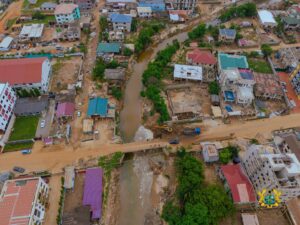
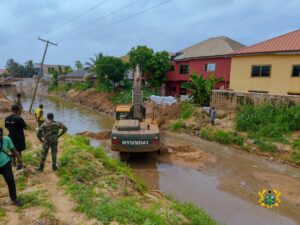
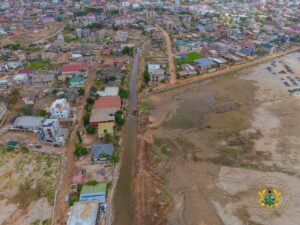 Surveillance and Assessment Images after June 29, 2026 Flooding Disaster in Ghana. (Image credit: Presidency).
AI as powerful tool for predicting disasters:
While no technology can stop a natural disaster from occurring, Artificial Intelligence (AI) is emerging as one of the most powerful tools for predicting disasters, improving emergency response, and helping communities recover faster.
Artificial Intelligence refers to computer systems that can analyse large volumes of information, recognise patterns, and make predictions much faster than humans. By processing data from satellites, weather stations, drones, sensors, mobile phones, and historical records, AI can provide early warnings that allow authorities to act before disasters strike.
Flooding remains one of Ghana’s most serious environmental challenges. Communities such as Circle, Kaneshie, Odaw, Weija, Adenta, and parts of Tema experience severe flooding during heavy rains. AI can analyse rainfall patterns, river levels, drainage conditions, land use, and weather forecasts simultaneously to identify areas that are likely to flood. Instead of waiting until roads are submerged and homes are destroyed, emergency agencies can receive warnings hours or even days in advance.
This means residents can evacuate safely, emergency services can pre-position rescue teams, and local authorities can clear blocked drains before the situation worsens.
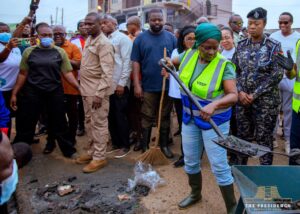
Recent national clean-up exercises have highlighted the importance of keeping drains free of waste. AI can make these efforts even more effective. Drones equipped with cameras and AI software can inspect thousands of kilometres of drainage systems, identify blocked gutters, detect illegal structures built on waterways, and pinpoint locations where refuse is likely to cause flooding. Rather than relying solely on manual inspections, city authorities can use AI-generated maps to prioritise the areas that need immediate attention.
Artificial Intelligence can also strengthen the work of the National Disaster Management Organisation (NADMO):
During emergencies, responders often struggle to determine where help is needed most urgently. AI can analyse satellite images, drone footage, emergency calls, and social media reports in real time to identify the hardest-hit communities, estimate the number of affected people, and recommend the fastest routes for rescue teams while avoiding flooded or blocked roads.
Such technology enables faster deployment of ambulances, firefighters, police officers, and relief supplies, ensuring that assistance reaches vulnerable communities as quickly as possible.
Another area where AI can make a significant impact is the management of the Weija Dam:
Heavy rainfall sometimes requires controlled spillage from the dam, affecting downstream communities. AI can continuously monitor water levels, rainfall forecasts, and river flow to predict when water levels are likely to become critical. Authorities can then issue early warnings to residents, allowing families to move to safer areas before floodwaters arrive.
Beyond flooding, Ghana also experiences bushfires, particularly in the Savannah, Northern, Upper East, and Upper West Regions during the dry season. AI-powered satellite systems can detect unusual heat patterns and smoke before fires spread widely. By predicting the direction and speed of a fire, emergency responders can deploy resources more effectively, protecting farms, forests, wildlife, and communities.
Disasters are often followed by disease outbreaks:
Floods frequently increase the spread of cholera, malaria, typhoid, and other waterborne diseases. AI can combine weather data, sanitation information, population movement, and health records to predict where disease outbreaks are most likely to occur. This allows health authorities to position medicines, vaccines, and medical personnel in vulnerable communities before infections spread.
Coastal communities such as Keta, Ada, and Anloga continue to battle coastal erosion and rising sea levels. AI can analyse satellite images collected over many years to measure shoreline changes, identify erosion hotspots, and help engineers design more effective sea defence systems. These insights can support long-term planning and protect lives, homes, and livelihoods.
Agriculture can also benefit significantly from AI:
Farmers in northern Ghana often struggle with unpredictable rainfall and prolonged droughts. AI can forecast rainfall patterns, recommend the best planting periods, advise farmers on suitable crop varieties, and improve irrigation planning. These predictions can increase food production, reduce crop losses, and strengthen food security.
However, technology alone is not enough. For AI to deliver these benefits, Ghana must invest in modern weather-monitoring equipment, expand digital infrastructure, improve data collection, and train professionals who can develop and manage AI systems. Strong collaboration between government agencies, universities, research institutions, the private sector, and international partners will also be essential.
Equally important is ensuring that AI is used responsibly. The technology should support human decision-making rather than replace it. Data privacy, transparency, and fairness must remain central to every AI system deployed in disaster management.
The future of disaster management lies not only in responding to emergencies but in anticipating them. Artificial Intelligence offers Ghana an opportunity to move from reactive disaster response to proactive disaster prevention. With better predictions, faster emergency response, smarter planning, and improved coordination, AI can save lives, protect property, strengthen communities, and build a more resilient nation.
As climate change continues to increase the frequency of extreme weather events, embracing Artificial Intelligence is no longer a luxury. AI is indeed a technology of the future, and obviously, a practical tool that can help Ghana save lives, reduce property damage, improve disaster preparedness, and strengthen resilience against the increasing impacts of climate change. Certainly, AI is becoming a necessity for safeguarding Ghana’s future.