
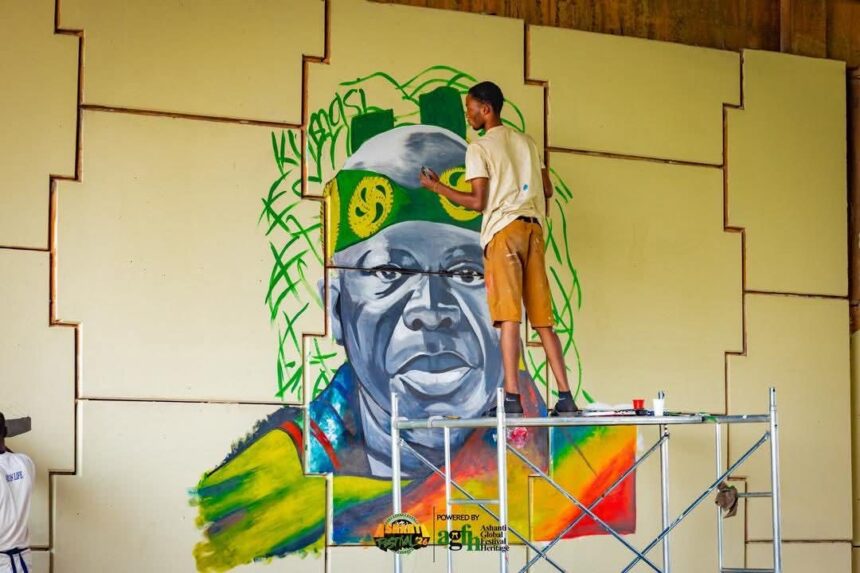
In recent weeks, Dr Frank Amoakohene has ignited a powerful cultural movement in Kumasi through the AshantiFest initiative—bringing art out of classrooms and into the public space. By encouraging Senior High School Visual Arts students to showcase their creativity through murals and paintings, the festival has transformed ordinary spaces into vibrant storytelling canvases while redefining how young people engage with art and community.
A Canvas of Culture and Identity
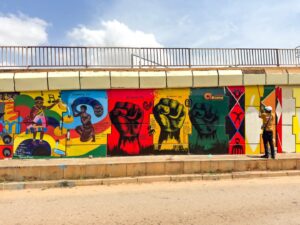
At the heart of this initiative is a deep connection to Ashanti heritage. Students have painted murals depicting cultural symbols such as the Asantehene, traditional motifs, and national identity markers—turning places like the Asokwa Interchange into open-air galleries.
This is not just art for decoration—it is art as identity. Kumasi has long been a hub of Ghanaian craftsmanship, from the wood carvings of Ahwiaa to the exhibitions at the Centre for National Culture. The AshantiFest builds on this legacy, ensuring that young people become active custodians of culture rather than passive observers.
Empowering Young People Through Creativity
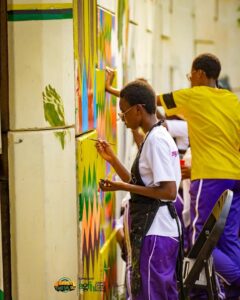
For many students, this initiative is transformative. It gives them visibility, confidence, and a sense of purpose. Instead of limiting their skills to classroom assignments, they are now contributing to real-world projects that attract public attention and appreciation.
Art education, particularly in communities like Kumasi, plays a critical role in:
- Building self-expression: Students communicate ideas, emotions, and cultural narratives through visual storytelling.
- Creating career pathways: Exposure to public art opens doors to careers in design, architecture, animation, and the creative economy.
- Boosting confidence: Seeing their work displayed publicly validates their talent and effort.
Importantly, this initiative challenges long-standing perceptions that Visual Arts is a “lesser” academic path. The quality of the murals has sparked admiration nationwide, proving that creative disciplines are just as impactful as traditional academic routes.
Transforming Communities Positively
The impact goes beyond the students—it reshapes entire communities.
1. Beautification of Public Spaces
Murals turn dull infrastructure into inspiring landmarks, fostering pride among residents and making cities more attractive to visitors.
2. Youth Engagement and Social Cohesion
When young people are engaged in meaningful creative work, they are less likely to drift into negative activities. Art becomes a tool for social inclusion and unity.
3. Tourism and Local Economy Boost
Art festivals like AshantiFest position Kumasi as a cultural tourism destination, attracting visitors and creating opportunities for local artisans and businesses.
4. Cost-Effective Development
Interestingly, many of these projects have been executed with minimal cost, relying on student talent rather than expensive contracts—demonstrating how investing in youth creativity can yield high-impact, low-cost results.
A Model for National Development
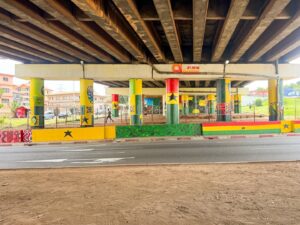
What is happening in Kumasi is more than a festival—it is a blueprint. By integrating art, education, and community development, the AshantiFest initiative shows how Ghana can harness its youthful population for cultural and economic growth.
It reminds us that development is not only about infrastructure and policy, but also about nurturing imagination, identity, and talent.
Conclusion
The paintings emerging from Kumasi today are more than colours on walls—they are voices of a new generation. Through initiatives like AshantiFest, young people are not only discovering their creative potential but also shaping the cultural and social landscape of their communities.
In the long term, this investment in art is an investment in people—confident, skilled, and culturally grounded citizens who will carry Ghana’s story forward.