
By Rebecca Ekpe, a journalist
“You may be the last batch of MMDCEs appointed.”
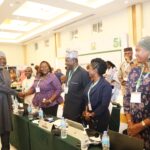
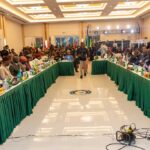
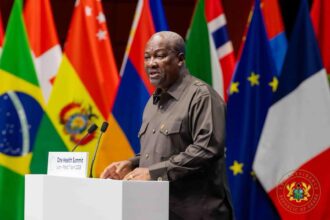
Ghana’s President John Dramani Mahama told newly appointed Metropolitan, Municipal and District Chief Executives. He had consistently expressed support for the election of Metropolitan, Municipal and District Chief Executives (MMDCEs) rather than by appointment by the President. The most recent and clearest statement came on 18 June 2025 during the opening of the 2025 Orientation and Training Programme for MMDCEs at the Institute of Local Government Studies in Accra. There, President Mahama indicated that the current batch of MMDCEs could be the last to be appointed.
Related Stories
One would ask, what exactly did President Mahama propose?
The President is of the view that Election of MMDCE’s would yield these direct results, by giving direct election of MMDCEs by residents of their districts, provide greater decentralization and accountability in local governance., and above all give more financial autonomy for Metropolitan, Municipal and District Assemblies. These are attempts by the government to ensure that local governance is more democratic, participatory and accountable.
Cabinet approves Election of MMDCEs.
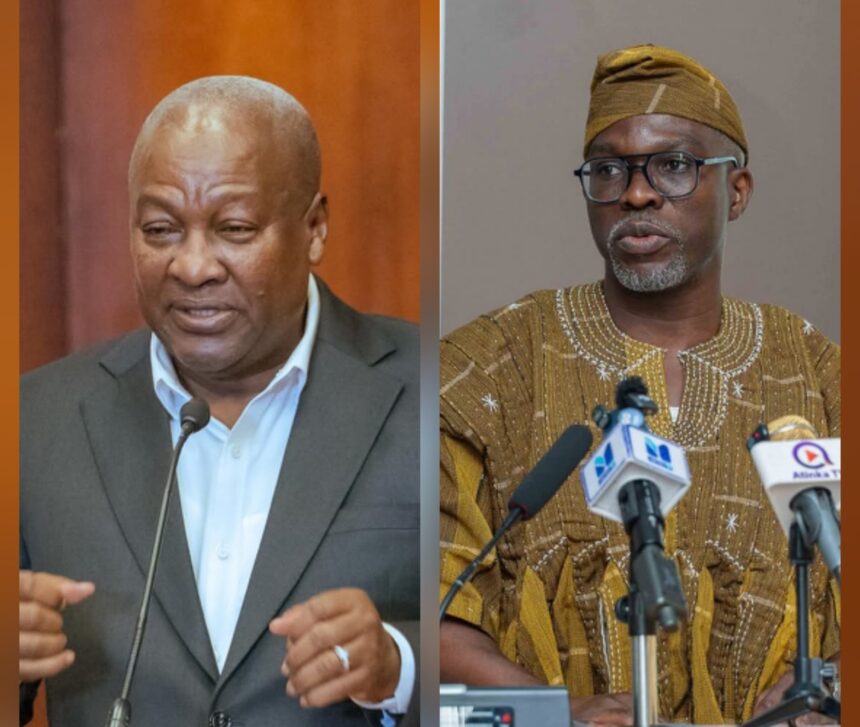
Ghana’s Cabinet has approved reforms that will allow MMDCEs to be elected by the people rather than appointed by the President. Dr. Gameli Kewuribe Hoedoafia, Executive Secretary of the Inter-Ministerial Coordinating Committee on Decentralisation (IMCCoD), who recently disclosed this said the proposed reforms seek to amend Article 243(1) of the 1992 Constitution to transfer the power of selecting MMDCEs from the President to the electorate. He said under the new arrangement, “there shall be a district chief executive for every district who shall be elected by the people.” According to Dr. Hoedofia, the government prefers a non-partisan election system because consultations nationwide showed that many Ghanaians want local government elections to remain free from partisan politics. He also disclosed that in line with the constitutional amendments; a referendum and related reforms are expected to take place between 2027 and 2029 to pave the way for the election of MMDCEs. Head of the He Inter-Ministerial Coordinating Committee on Decentralization (IMCCoD), also noted that findings from public consultations and Afrobarometer surveys show broad public support for electing MMDCEs, provided the process remains non-partisan.
Furthermore, it is on record that at the launch of the National Decentralization Policy and Strategic Framework (2026–2030), Dr. Hoedoafia said the policy reflects Ghana’s renewed commitment to deepening democratic decentralization, strengthening accountability and accelerating local development, emphasizing that ‘’governance should be brought closer to the people’’.
Could Election of MMDCEs be an antidote to Strengthening Ghana’s Decentralization and Local Governance?
Some Schools of thought believe that the election of Metropolitan, Municipal and District Chief Executives (MMDCEs) should be considered as a major step in strengthening Ghana’s decentralization and local governance architecture, by citing these important key points.
First of all, election of MMDCE’s is important in enhancing the local democracy, because citizens will have the direct power to choose their district leaders rather than having them appointed by the President. When the people choose their leader, they can appoint as well as disappoint them as well, at the level from where they were first elected, for the matter received mandate and derived power from the people.
Dovetailing into enhancing local democracy is accountability, Election of MMDCE’s can improve accountability a great deal. This is so because the elected MMDCEs will be accountable to the people who vote for them, making them more responsive to local needs and concerns. Besides accountability, the election of MMDCE’s also promotes citizen participation. After all democracy is about citizens participation, because power is derived from the people. It also encourages greater public involvement in local governance and decision-making processes, that should be the ultimate goal in governance.
What do we mean when we talk about strengthening decentralization? It simply means that decision-making authority is moved closer to the people, which is a core objective of decentralization, when you take the decision to the people and they decide on the building of schools, hospital, water facilities etc., it empowers them, they get the buy in and it goes along way to improves service delivery. How so? because the people at the local level would elect local leaders who are likely to focus more on development projects and services that directly affect their constituents. What then would happen is that eventually, we would experience a reduction in what is often known as political patronage. Really, the process minimizes the perception that MMDCE appointments are based on political loyalty rather than competence.
Boosting Development at the Grassroots
Fundamentally, local government and decentralization is about devolving power from the canter to the people at the local level. The dividends may be long term of electing leaders at the local level instead of having a President appoint them means that local leaders with a direct mandate from the people may be better positioned to champion community development initiatives, and that is the kind of decentralized development Ghana should prioritize.
“Decentralization was anchored on the principle of bringing governance closer to the people.” Dr. Gameli Kewuribe Hoedoafia.