
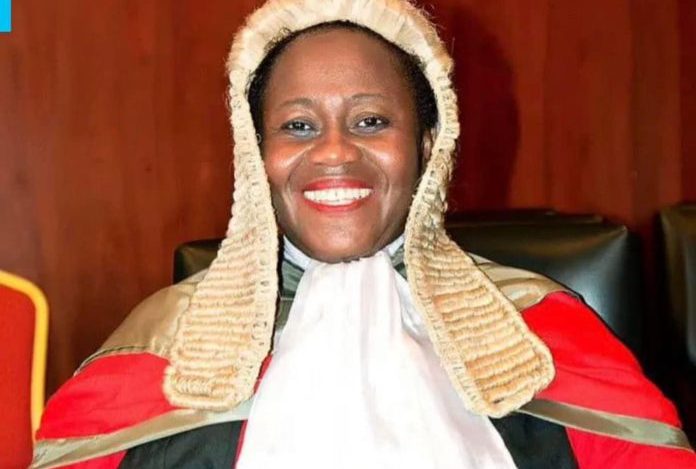
The ECOWAS Community Court of Justice has dismissed all seven claims brought by former Chief Justice of Ghana, Gertrude Torkornoo, against the Republic of Ghana, marking a significant legal victory for the state.
In its decision, the regional court rejected every allegation advanced by the former Chief Justice and declined to award the US$10 million in damages she had sought from the Republic.
Addressing the claim for compensation, the Court stated that since it had found no violation of the applicant’s rights under the African Charter on Human and Peoples’ Rights, there was no basis for considering reparations.
“In light of the Court’s conclusions that Ghana has not violated any of the Applicant’s rights under the African Charter as alleged, the Court makes no decision on reparations,” the judgment noted.
The ruling effectively brings to a close the case filed by Justice Torkornoo before the regional tribunal and reinforces Ghana’s defence of its actions in the matter.
Government officials and legal observers have described the judgment as a major endorsement of the country’s legal position. The outcome has also been attributed to the extensive efforts of Ghana’s legal team, particularly the State Attorneys who worked on the case through months of legal research, preparation and advocacy.
The decision is expected to generate significant discussion within legal and governance circles, given the prominence of the former Chief Justice and the broader constitutional and institutional issues that surrounded the case.
For Ghana, the judgment represents not only a courtroom victory but also a moment of confidence in the country’s capacity to defend its legal and constitutional processes before international judicial bodies. As reactions continue to emerge, attention is likely to focus on the implications of the ruling for judicial accountability, governance and the relationship between national institutions and regional courts.