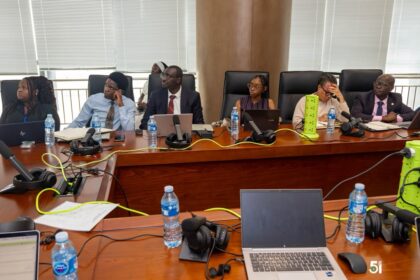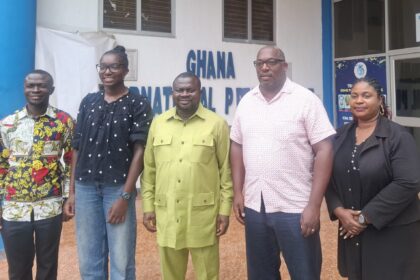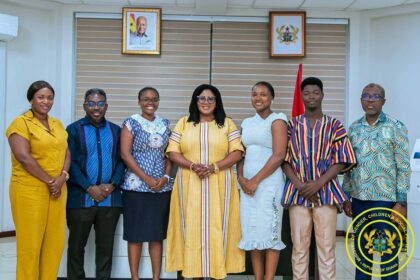
Executives of the Graduate Students’ Association of Ghana meet Gender Minister on social protection for students
The Executives of the Graduate Students' Association of Ghana (GRASAG), led by…
Safe Spaces, Brighter Futures: New Girls’ Dormitory Boosts Female Participation in TVET
A new girls' dormitory has been commissioned at St. Paul Technical Institute…
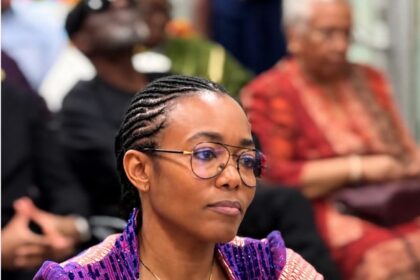
From the Newsroom to Parliament: Kate Addo Earns PhD, Inspiring a New Generation of Leaders
By Rebecca Ekpe The Chief Information Officer of the Parliament of Ghana,…
Africa’s infrastructure opportunity depends on closing the execution gap
The paradox of African infrastructure today is stark. While the “funding gap” continues to dominate policy discourse, it is the “execution gap”, or more precisely, the challenge of translating capital into delivery, that is increasingly shaping development outcomes in Africa. Across the continent, governments are becoming increasingly sophisticated at raising capital. Investment conferences are attracting global attention, new financing vehicles are emerging, and ambitious infrastructure programmes are being announced with growing frequency. While this progress reflects growing ambition across the continent, it should not obscure the scale of Africa’s remaining infrastructure gap. The African Development Bank estimates the continent’s infrastructure financing needs at approximately US$400 billion per year. The challenge is no longer solely about raising capital but also about ensuring that investment commitments translate into well-prepared, execution-ready, and bankable projects. Recent data illustrates this disconnect clearly. South Africa, the continent’s most industrialized economy, has secured over $91 billion (R1.5 trillion) in investment pledges through the South Africa Investment Conferences since 2018. However, only $38.6 billion (R634 billion), just under 42%, had flowed into the economy by March 2026. While investment announcements rarely translate fully into projects, South Africa’s conversion rates remain below global norms, highlighting persistent delivery challenges. McKinsey estimates that 60–80% of announced FDI is typically realised worldwide. This reveals a critical constraint, a limited pipeline of bankable projects. Many infrastructure projects strugg le not because financing is unavailable, but because they fail to progress through the complex preparation and development processes required to attract investment and move toward implementation. As Tidjane Thiam, the former Swiss Credit CEO, recently argued, global investors are actively seeking greater exposure to Africa, drawn by its long-term growth potential. The real bottleneck lies in connecting that capital with bankable opportunities through stronger project preparation, advisory support, and financial intermediation. These upstream stages involve far more than feasibility studies. They require technical and engineering assessments, environmental, social, and judicial reviews, financial and commercial structuring, regulatory alignment, stakeholder coordination, risk allocation, permitting, and implementation planning. In many cases, infrastructure projects lose momentum at these early stages, long before construction begins or financing is fully deployed. As a McKinsey report highlights, fewer than 10% of Africa’s infrastructure projects reach financial close, with nearly 80% failing at the feasibility or business-planning stage. The implication is significant: the success of infrastructure projects is often determined long before capital is spent on the ground. Strengthening upstream project capability is therefore critical to Africa’s ability to deliver infrastructure at scale. Too many projects fall into the “lack-of-project-management-capacity trap”, where weak preparation and execution undermine otherwise promising initiatives. This challenge is already visible across major continental infrastructure initiatives. The first phase of the Programme for Infrastructure Development in Africa (PIDA) delivered significant gains, including over 16,000 kilometres of roads and expanded digital and energy connectivity across Africa. Yet one of the most persistent constraints identified was limited capacity for early-stage project preparation, from feasibility studies to structuring investable proposals. The lesson is clear: without stronger upstream capacity, even well-funded infrastructure ambitions struggle to move from commitment to implementation.…
African Union Health Summit calls for Greater Domestic Health Financing
The Minister of Health, Kwabena Mintah Akandoh, has called on African countries…
Why AU Extraordinary Summit on Universal Health Coverage Critical to accelerating growth in Africa
The AU Extraordinary Summit on Universal Health Coverage (UHC) is not only…
Health Lessons from the Floods and the Black Stars’ World Cup Exit
The recent floods in parts of Ghana and Togo, coupled with the…
AU Extraordinary Health Summit opens in Accra
Ghana is hosting the first African Union (AU) Extraordinary Health Summit from Tuesday, July 21, with African…
Rebecca Ekpe Calls for Greater Representation of Women in Ghanaian Television at SJMCC 2026
The Vice President of the Ghana Journalists Association (GJA) and Editor-in-Chief of…
Red Card to Child Labour: A Protected Childhood, Decent Work for Adults
Every child deserves a childhood filled with learning, laughter, safety, and dreams—not…