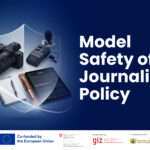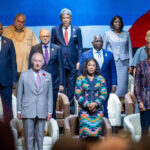

The Media Foundation for West Africa (MFWA) has launched a Journalist Safety Manual aimed at strengthening the protection of journalists and promoting safer working environments in newsrooms across Ghana.
The manual, launched on November 2, 2026, provides news organizations with a practical framework for protecting journalists before, during and after assignments, with particular emphasis on physical, digital, legal and psychological safety.


Related Stories

It is designed to equip editors, newsroom managers and journalists with practical tools to identify risks, prevent attacks and respond effectively to threats against media practitioners.
The Model Safety of Journalists Policy outlines several measures, including:
-
Risk assessment checklists for assignment editors before deploying journalists.
-
Safety protocols for high-risk assignments, including elections, illegal mining (galamsey) and investigative reporting.
-
Digital security measures to address hacking, surveillance, online harassment and coordinated attacks.
-
Procedures for reporting attacks and responding to safety incidents.
-
Legal protection and psychological support for journalists.
-
Specific safeguards for female journalists and journalists with disabilities.
Research exposes gaps in newsroom safety
Findings from research conducted to inform the policy highlighted significant gaps in the safety arrangements of Ghanaian media organisations.
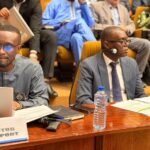
Presenting the findings, Dr Martin Thompson Ntem, a lecturer at the University of Media, Arts and Communication, Institute of Journalism (UniMAC-IJ), disclosed that approximately 81 per cent of respondents had experienced some form of attack.
These included verbal abuse, physical assaults, online harassment, legal threats and the seizure of journalistic equipment.
He further revealed that although some media organisations claimed to have safety policies, an assessment of the documents showed that none of the media houses examined had a comprehensive, formal journalist safety policy.
He stressed that journalists’ safety had largely depended on individual judgement and the discretion of editors rather than institutional systems for prevention, protection and response.
The guiding principle of the policy, he noted, was “Safety First, News Second.”
Government pledges accountability for attacks
The Minister for Communication, Digital Technology and Innovations, Samuel Nartey George, who addressed the forum, pledged that government would pursue the prosecution of anyone found responsible for attacking journalists, irrespective of political affiliation, public office or position.
He emphasised that announcing investigations into attacks was not enough, insisting that justice must be delivered through impartial investigations, preservation of evidence, regular updates to victims and appropriate prosecution or disciplinary action.
He also called on media organisations to strengthen professional self-regulation, enforce ethical standards, establish effective complaints mechanisms and correct errors openly.
The Minister cautioned that professional shortcomings in journalism should not be used to justify physical attacks, intimidation or attempts to suppress legitimate criticism.
He further raised concerns about emerging digital threats, including impersonation, online harassment and artificial intelligence-generated deepfakes, which he said posed particular challenges for women journalists.
GBC Director-General calls for improved journalists’ welfare
The Director-General of the Ghana Broadcasting Corporation (GBC), Professor Amin Alhassan, also drew attention to the economic conditions of journalists, arguing that their welfare and job security must form an integral part of discussions on media safety.
He called for measures to ensure that media organisations fulfil their social security obligations to workers, warning that poor employment conditions could leave journalists financially vulnerable, particularly after retirement.
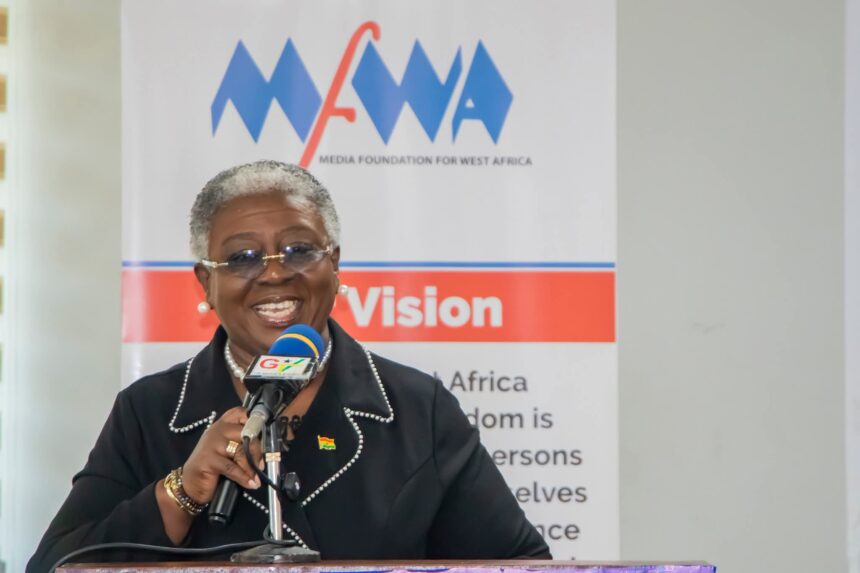
Former President of the Ghana Journalists Association (GJA), Mrs Gifty Afenyi-Dadzie, Esq., also underscored the importance of journalist safety to democracy.
She noted that attacks on journalists undermine not only press freedom but also the public’s right to information and accountability.
She called for a shared commitment from government, law enforcement agencies, media owners and civil society organisations to protect journalists.
Call for newsroom adoption
The MFWA has urged media organisations across the country to adopt and implement the Model Safety of Journalists Policy, designate officers responsible for safety, train newsroom personnel and regularly monitor compliance.
The launch, held on November 2, 2026, in Accra, coincided with the International Day to End Impunity for Crimes Against Journalists.
The policy was developed under the Action Strengthening the Rule of Law and the Fight Against Corruption in Ghana, within the Participation, Accountability and Integrity for a Resilient Democracy (PAIReD) initiative.
Stakeholders say the success of the initiative will ultimately depend on the willingness of media owners and newsroom managers to translate the recommendations into practical institutional commitments.
For journalists, particularly those covering elections, corruption, illegal mining and other sensitive assignments, the policy represents an important step towards ensuring that the pursuit of public-interest journalism does not come at the expense of their safety, dignity and well-being.