
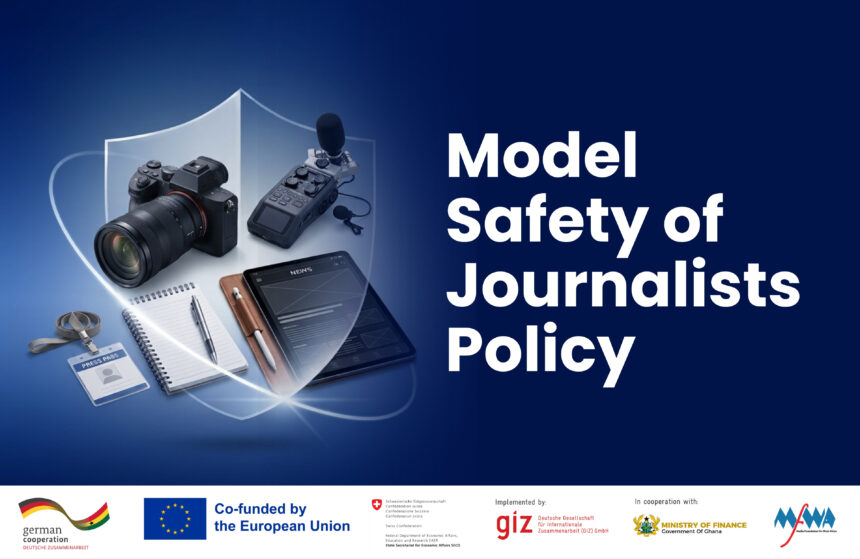
The Media Foundation for West Africa (MFWA) has launched a Journalist Safety Policy to provide newsrooms across Ghana with a practical framework for protecting journalists against physical, digital, legal and psychological threats before, during and after assignments.
The policy is designed to strengthen the safety and security of media practitioners, particularly those covering high-risk assignments, while promoting a culture of responsibility and preparedness within media organisations.
Developed from a national study on journalist safety in Ghana and informed by international standards, the document provides practical measures that media houses can adopt to identify, prevent and respond to threats against journalists.
Among the key provisions is a risk assessment checklist for assignment editors to help identify potential dangers before deploying reporters. It also outlines safety protocols for journalists covering high-risk beats, including elections, illegal small-scale mining, popularly known as galamsey, and investigative reporting.
The policy further establishes a step-by-step procedure for reporting attacks against journalists, ensuring that incidents are properly documented and appropriate responses initiated.
Particular attention is also given to the protection of female journalists and journalists with disabilities, recognising the unique vulnerabilities and additional risks they may face in the discharge of their professional duties.
The MFWA expects media organisations to adopt and adapt the policy to suit their newsroom operations and establish mechanisms to monitor its implementation.
The launch comes amid growing concerns about threats to press freedom and the safety of journalists in Ghana, including physical assaults, intimidation, online harassment, legal threats and psychological trauma associated with reporting on sensitive issues.
Beyond providing safety guidelines, the policy underscores the responsibility of media owners, editors and assignment desks to make journalist protection an integral part of newsroom management rather than leaving individual reporters to navigate dangerous assignments on their own.
It also reinforces the need for media organisations to provide adequate preparation, institutional support and appropriate responses when journalists experience attacks or threats in the line of duty.
The MFWA emphasised the importance of protecting journalists as a fundamental requirement for democratic accountability and the free flow of information.
“An attack on a journalist is an attack on our democracy,” the Foundation stated, reiterating the connection between journalist safety, press freedom and the health of democratic governance.
The successful implementation of the policy will, however, depend on the commitment of media organisations to translate its recommendations into everyday newsroom practices.
For Ghana’s media industry, the policy represents an important step towards building safer newsrooms, strengthening professional standards and ensuring that journalists can carry out their constitutional responsibility without fear, intimidation or threats to their lives.
Ultimately, protecting journalists is not just a media industry concern; it is a collective responsibility and an investment in Ghana’s democracy.