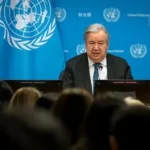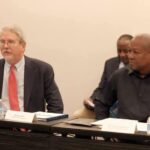

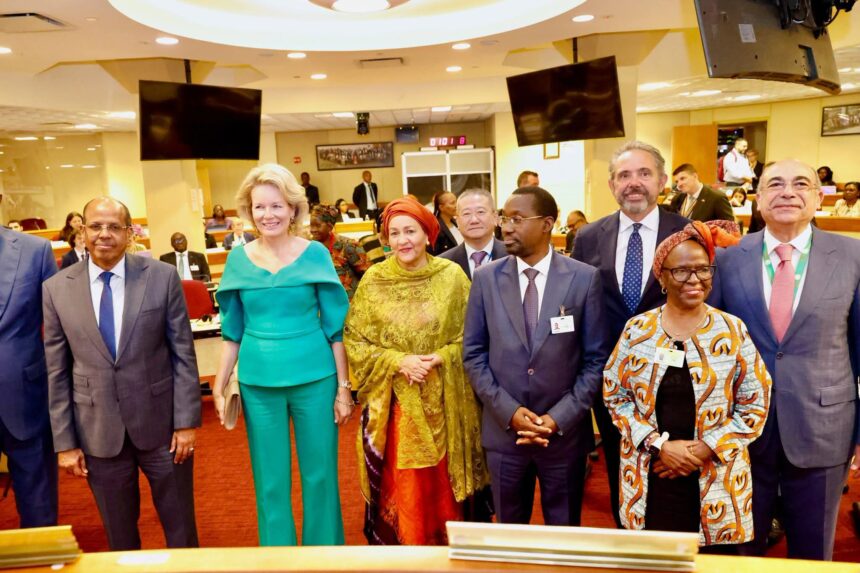
On the margins of #UNGA81, the African Union (AU) convened a high-level meeting on Women, Peace and Security (WPS), bringing together Her Majesty Queen Mathilde of the Belgians, H.E. Mahmoud Ali Youssouf, Chairperson of the African Union Commission, H.E. Prof. François Havyarimana, the Minister of National Education & Scientific Research of Burundi representing H.E. Évariste Ndayishimiye the President of Burundi and the Chairperson of the AU, & H.E. Amina J. Mohammed, UN Deputy Secretary-General to reaffirm the imperative of ensuring the full, equal and meaningful participation of women in efforts to advance a political solution to the crisis in eastern Democratic Republic of the Congo (DRC).
Her Majesty Queen Mathilde underscored the indispensable role of women as agents of peace, community leaders and builders of trust. While women and girls are disproportionately affected by conflict, they are also at the forefront of efforts to prevent violence, support communities and rebuild social cohesion. Their voices and leadership must therefore be reflected throughout peace processes.
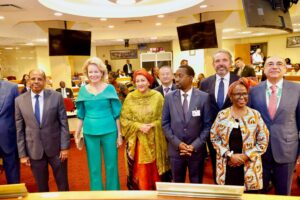
Chairperson Youssouf reaffirmed the AU’s commitment to the WPS agenda, in line with Agenda 2063, UN Security Council Resolution 1325, the Maputo Protocol and the Continental Plan of Action. He stressed that women’s participation must be substantive & transversal; not peripheral or symbolic, & that African women’s knowledge, leadership & mediation capacities must translate into real & sustained influence.
He emphasised the need to move from political commitments to concrete action, including ensuring women’s representation in mediation & negotiations, ceasefire monitoring & verification mechanisms, & institutions responsible for implementing peace agreements. He also highlighted the importance of addressing structural drivers of conflict, including exclusion, inequality & the exploitation of natural resources.
Chairperson Youssouf called for stronger support to women mediators and civil society organisations, dedicated resources for women’s effective participation, and their inclusion in the implementation, monitoring and verification of peace processes, including the Luanda – Nairobi processes.
He further welcomed the launch of the Strategic Plan 2026–2028 of the Office of the AU Special Envoy on Women, Peace and Security as an important step towards translating political commitments into measurable action & strengthening women’s influence across peace & security processes.
UN Deputy Secretary-General Amina J. Mohammed reaffirmed the United Nations’ commitment to working with the AU, the EU & other partners to strengthen women’s meaningful participation in peace & security processes. She underscored the importance of translating commitments into measurable results and ensuring that women are not only present at the table, but are able to shape decisions and outcomes.
Representing H.E. Évariste Ndayishimiye, President of the Republic of Burundi and Chairperson of the African Union, the representative reaffirmed Burundi’s commitment to advancing women’s leadership in peacebuilding and conflict prevention. The contribution also highlighted the importance of linking the WPS and Youth, Peace and Security agendas, recognising women and young people as indispensable actors in building sustainable peace.
The meeting also recognised the leadership of H.E. Angeline Ndayishimiye, First Lady of Burundi, in advancing the WPS agenda and the empowerment of women.
The message was clear: sustainable peace in the Great Lakes region requires women to be meaningfully and structurally part of the process—from mediation and negotiation to implementation, monitoring and verification.
The event brought together women mediators, diplomats, ministers of foreign affairs and special envoys & was moderated by H.E. Ambassador Liberata Mulamula, AU Special Envoy on Women, Peace and Security.