
By Vivian Amoah
The World Bank has called on the Ghanaian government to strengthen fiscal reforms, improve domestic revenue mobilisation and address structural challenges to ensure that economic growth translates into jobs and improved living standards.
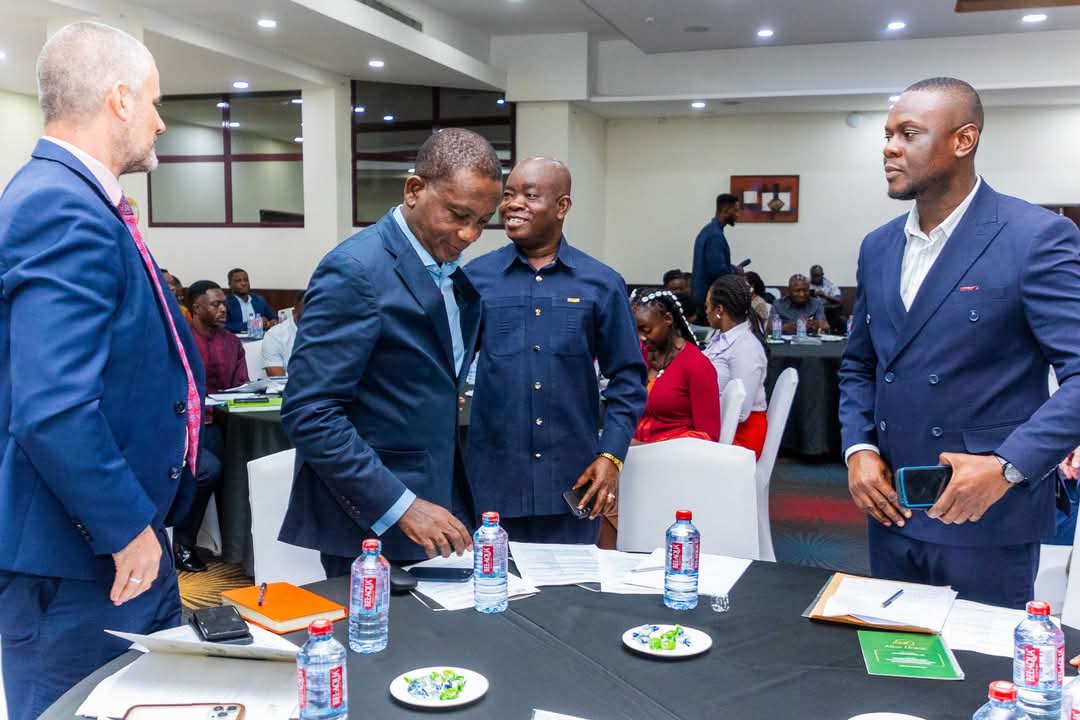
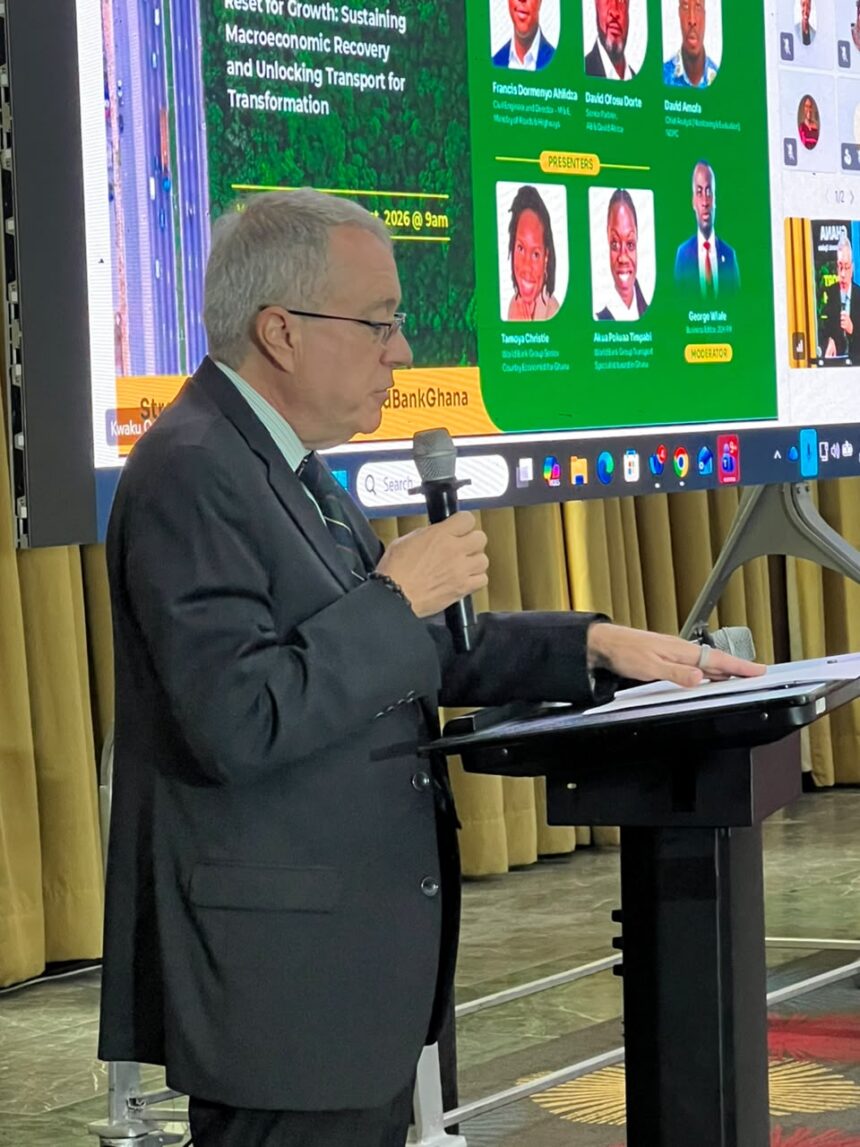
 World Bank Division Director Robert Taliercio O’Brien speaking at World Bank Event in Accra.
Speaking at the launch of the 10th Ghana Economic Update at the Alisa Hotel in Accra on August 26, 2026, World Bank Division Director Robert Taliercio O’Brien said 56.4 percent of Ghanaians remain in poverty, despite economic growth, with widening regional disparities further highlighting inequalities.
He said Ghana’s growth is concentrated in sectors with limited capacity to create jobs for the country’s growing young population. Growth is projected at 4.8 percent in 2026 and around 5 percent over the medium term, subject to continued fiscal discipline and completion of external debt restructuring.
Mr. O’Brien cautioned that Ghana faces risks from the prolonged Middle East conflict, rising energy costs, dependence on gold and cocoa exports, pressures on state-owned enterprises, climate shocks and challenges in the business environment.
He said delays in the energy sector recovery programme cost the country about US$1 billion annually, while inefficiencies in the cocoa sector continue to place pressure on farmers and public finances.
On transport infrastructure, he noted that only 27 percent of Ghana’s 94,200-kilometre road network is paved, while more than half is in fair-to-poor condition. The operational railway network has also declined from 947 kilometres in 1960 to 160 kilometres in 2020.
Road safety incidents, he added, cost Ghana an estimated 2.1 percent of GDP, equivalent to US$4.55 billion, annually.
The World Bank is investing US$500 million through the Ghana Market Access and Connectivity Project to rehabilitate about 1,050 kilometres of feeder roads, while supporting reforms to improve transport maintenance, coordination and governance.