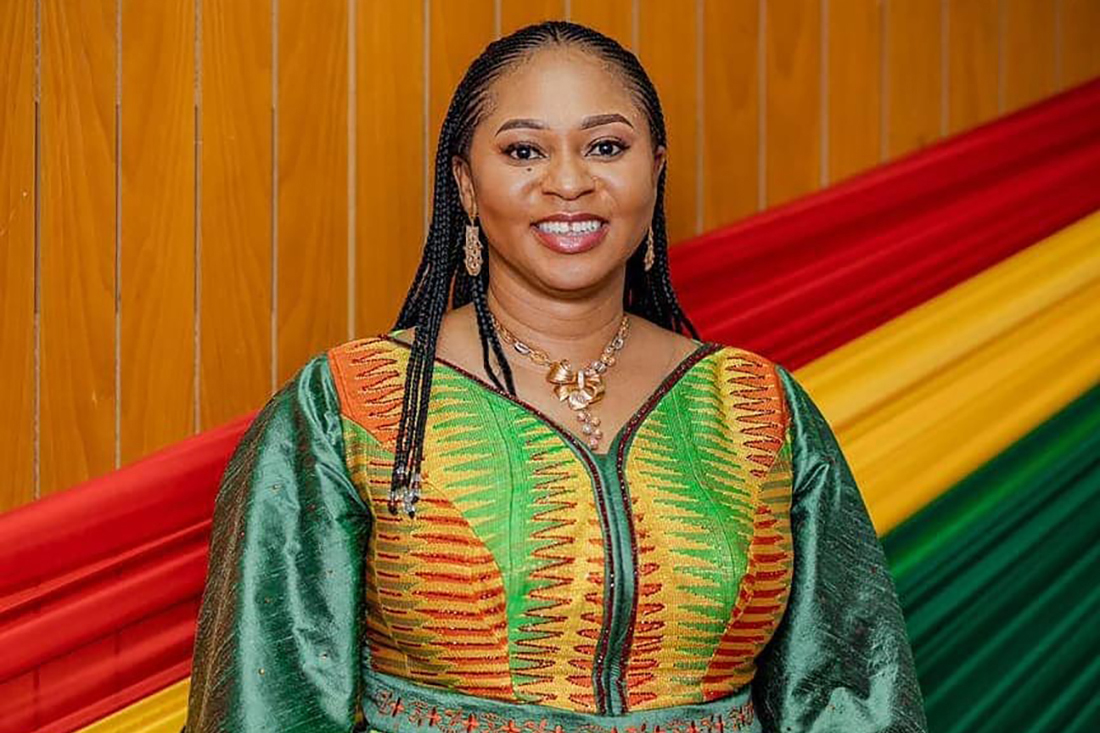
Rebecca Ekpe, Editor in Chief, Ghana Broadcasting Corporation, GBC.
SHARE
By Rebecca Ekpe
Ghana has brought government administratively closer to citizens, but the real question is whether it has brought power, resources and decision-making authority closer to them.
This angle gives you a sharper, more analytical article. It can explore the gap between proximity and power.
A district assembly may be only a few streets away from a community, yet meaningful decision-making can still feel a world away.
This is perhaps the paradox at the heart of Ghana’s decentralisation experiment.
Government structures have been established across the country. Metropolitan, Municipal and District Assemblies operate in communities, local officials engage residents, development plans are prepared and public resources are allocated. Yet for many citizens, the experience of government remains one of waiting—waiting for roads, waiting for sanitation solutions, waiting for jobs, waiting for water, waiting for development projects.
The question, therefore, is no longer simply whether government has been brought closer to the people.
The more important question is: has power been brought closer to the people?
Decentralisation becomes meaningful only when local institutions have the authority, resources, information and capacity to make decisions that respond to local needs.
Without these, decentralisation risks becoming a geographical relocation of administration rather than a genuine redistribution of power.
The questions to ask are;
1. Who actually controls the money? Local authorities may know what communities need, but how much freedom do they have to finance those priorities? This opens the fiscal decentralisation debate.
2. Who decides what development looks like? Are communities genuinely involved in determining priorities, or are they mainly consulted after decisions have already been made?
3. Can a district be accountable without adequate authority? Citizens often hold local officials responsible for poor roads, sanitation or infrastructure, but accountability must correspond with actual decision-making power and resources.
4. Is decentralisation empowering citizens or simply creating another layer of administration? This is an interesting democratic question. More institutions do not automatically mean more participation.
5. What would a citizen-centred decentralisation system look like? Moving from criticism to solutions, participatory budgeting, stronger local revenue systems, digital citizen feedback, open district budgets, community monitoring of projects and stronger local accountability.
In conclusion;
Ghana’s decentralisation debate must therefore move from “Where is government located?” to “Where is power exercised?”
The success of decentralisation should not be measured by the number of assemblies established or development plans produced. It should be measured by whether a citizen in a rural community, an urban settlement or a rapidly growing municipality can influence decisions, access public information, demand accountability and see local priorities translated into tangible development.
The real decentralisation test is not proximity. It is power.
If citizens can participate but cannot influence; if assemblies have responsibilities but insufficient resources; and if local officials are accountable for outcomes they lack the authority to deliver, then decentralisation remains incomplete.
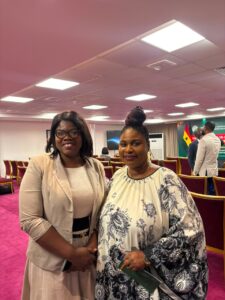
Rebecca Ekpe interacting with colleague media – Vice President’s Reporter, Miss Rachael Quartey at the 2026 National Dialogue on Decentralization in Accra.
Ghana therefore needs a decentralisation system that does more than bring government closer. It must bring decision-making, resources and democratic power closer to the people.
That is when decentralisation will cease to be merely a governance structure and become what democracy ultimately promises: a system in which ordinary citizens have a meaningful voice in shaping the places they call home.