
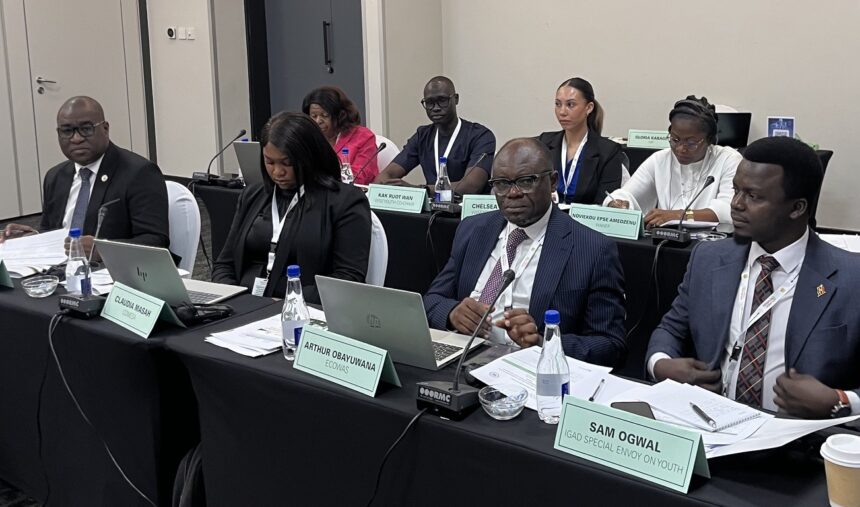
The Economic Community of West African States (ECOWAS) Commission has joined the African Union (AU) and other Regional Economic Communities (RECs) and Regional Mechanisms (RMs) to strengthen continental strategies for advancing Youth, Peace and Security (YPS) across Africa.
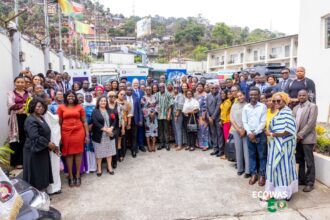
The two-day high-level coordination meeting, held in Gaborone, Botswana, concluded on 31 July 2026, bringing together representatives of the AU, RECs and RMs to assess the evolving peace and security landscape and examine the role of young people in developing effective responses to the continent’s challenges.
The meeting provided an opportunity for participants to take stock of progress made by the African Union Commission in implementing the Continental Framework on Youth, Peace and Security (CFYPS) and its 10-Year Implementation Plan.
The review was particularly significant as it followed the previous AU–RECs/RMs Coordination Meeting held in 2023, allowing participants to assess developments and identify areas requiring stronger regional and continental action.
Youth at the Centre of Peace and Security
Discussions focused on the growing importance of young people as partners in preventing conflict, building peace and strengthening social cohesion.
Across Africa, young people constitute a significant proportion of the continent’s population and are increasingly affected by challenges including violent extremism, armed conflict, political instability, unemployment, displacement and the effects of climate change.
Participants therefore emphasised the need to move beyond viewing youth primarily as beneficiaries of peace and security initiatives and instead recognise them as active partners, peacebuilders and decision-makers.
The meeting also examined ways to strengthen youth participation in peace and security processes at national, regional and continental levels.
Strengthening AU–REC Collaboration
A key focus of the meeting was the need for closer coordination between the AU, Regional Economic Communities and Regional Mechanisms in implementing the continental Youth, Peace and Security agenda.
For ECOWAS, the discussions are particularly relevant given the West African region’s experience with political transitions, violent extremism, organised crime, displacement and other emerging security challenges.
Enhanced coordination among regional institutions could help ensure that youth-focused peacebuilding initiatives are better aligned, avoid duplication and produce measurable results at community level.
Participants also considered the importance of strengthening institutional mechanisms for youth engagement, improving coordination and sharing experiences and good practices among the various regional bodies.
Building a More Inclusive Peace Agenda
The Gaborone meeting reaffirmed the principle that sustainable peace cannot be achieved without meaningful participation by young people.
It also highlighted the importance of creating opportunities for young people to contribute to conflict prevention, mediation, dialogue, reconciliation and peacebuilding.
As Africa confronts increasingly complex security challenges, the implementation of the Continental Framework on Youth, Peace and Security provides an important platform for ensuring that the continent’s youthful population is not only protected from conflict but is empowered to help shape Africa’s peace and security future.
The outcome of the meeting is expected to contribute to stronger collaboration between the AU, ECOWAS and other regional bodies in translating continental commitments on Youth, Peace and Security into practical initiatives across member states.