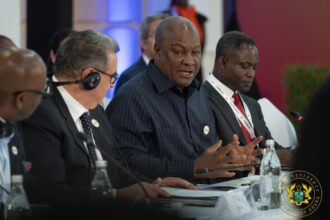

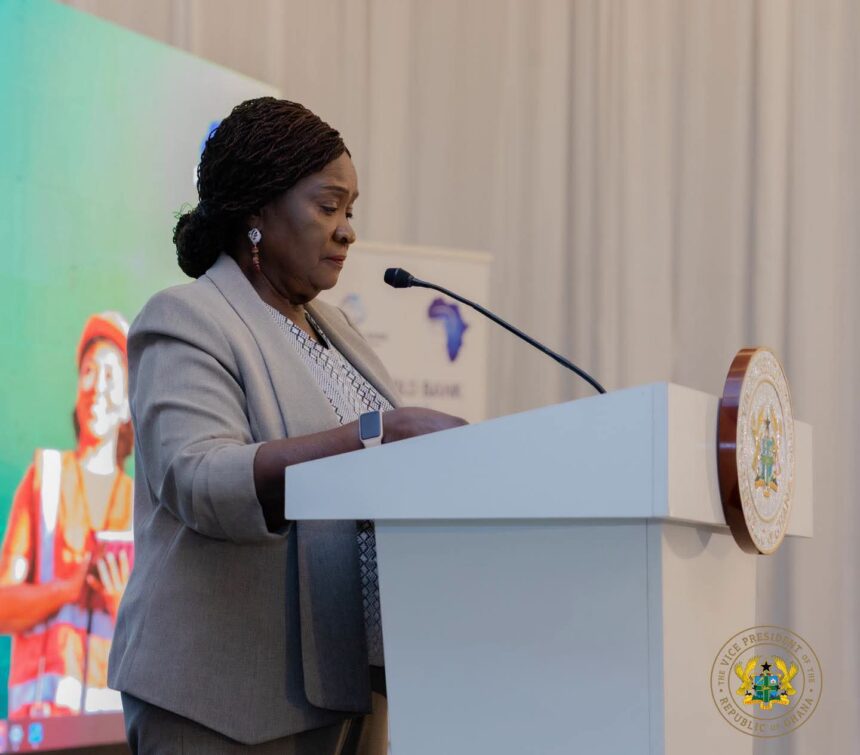
Vice President Prof. Naana Jane Opoku-Agyemang has called for a stronger connection between education, skills development and economic opportunity, stressing that Africa’s growing working-age population requires economies capable of creating meaningful jobs and livelihoods.
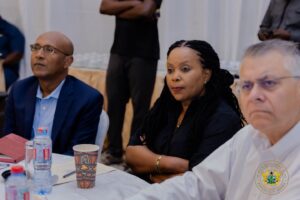
The Vice President made the call when she addressed the World Bank Western and Central Africa Senior Leadership Team Retreat in Accra, where she spoke on strategies for creating opportunities for citizens to contribute productively to national development.
She noted that with the working-age population expanding rapidly, government alone could not employ everyone, making it necessary to create an enabling environment for businesses to start, grow, compete and employ more people.
She said Ghana’s efforts must therefore focus on building a stable economy, stronger institutions and an education system aligned with both current and emerging economic opportunities.
Finance for businesses, women entrepreneurs
Prof. Opoku-Agyemang also highlighted access to affordable capital as a major constraint facing businesses, particularly women-owned enterprises.
She said many Ghanaian businesses with the potential to grow are unable to secure the financing required to expand, create jobs and become more sustainable.
In this regard, she pointed to the Women’s Development Bank as an intervention designed to support women-owned businesses to move beyond small-scale operations and become stronger enterprises capable of generating employment.
Skills for the digital economy
The Vice President also stressed the importance of connecting education and skills training directly to economic opportunities.
She said initiatives such as the One Million Coders Programme, alongside stronger technical and vocational education and training, must ultimately be assessed by their impact on people’s lives.
“What they enable people to do” should be the measure of success, she indicated—whether that is finding decent work, building businesses, solving problems or creating value.
She further observed that Ghana’s expanding digital economy provides an opportunity to connect the country’s young talent to global demand without necessarily requiring them to leave the country.
Producing, processing and competing
Prof. Opoku-Agyemang called for greater emphasis on productive capacity and domestic value addition.
She said Ghana and other African countries must process more of what they produce, strengthen local industries and build African businesses capable of competing both within the continent and internationally.
In agriculture, she stressed the need for farmers, processors, transporters and other local businesses to capture a greater share of the value generated from agricultural production.
She described the African Continental Free Trade Area (AfCFTA) as a major opportunity, but cautioned that access to a continental market of about 1.4 billion people would only be meaningful if African businesses possessed the finance, infrastructure, skills and productive capacity required to compete.
Learning from history, preparing the next generation
The Vice President also underscored the importance of understanding Africa’s history in shaping its economic future.
She said an appreciation of the circumstances that brought countries to their current position could help policymakers and citizens make better choices about the future.
However, she cautioned against allowing the difficulties of the past to limit the imagination and confidence of the next generation.
Prof. Opoku-Agyemang ultimately argued that education must go beyond getting young people into schools and training institutions.
The real measure, she said, should be where they end up, what they are able to produce, the opportunities they create and the value they add to society.
Her message to the World Bank leadership team was therefore clear: Africa’s development challenge is not simply about educating more people, but about building economies in which educated, skilled and enterprising people can find opportunities to contribute, create and prosper.