
The Public Interest and Accountability Committee (PIAC) has raised concerns over stalled, non-operational and poorly maintained petroleum revenue-funded projects in the Eastern, Volta and Oti Regions following a recent inspection exercise.
The Committee said while several projects funded through the Annual Budget Funding Amount (ABFA) are benefiting communities, others are facing significant challenges that are undermining the intended impact of public investments.
The inspections, conducted between May 24 and May 29, 2026, formed part of PIAC’s mandate under the Petroleum Revenue Management Act to monitor and evaluate the use of petroleum revenues across the country.
Speaking on the outcome of the exercise, PIAC noted that the inspection “revealed a mixed picture of progress and challenges in the implementation of petroleum revenue-funded projects.”
In the Eastern Region, the Committee inspected projects in the Kwahu Afram Plains North and South Districts. At Kamalo D/A Junior High School, PIAC found that a newly completed three-unit classroom block was lying idle because it had been invaded by bats.
The Committee also discovered an acute shortage of teachers at the school.
“The facility was not in use due to an invasion of bats,” PIAC stated, adding that only two teachers were serving pupils from the primary to junior high school levels, forcing the school to operate combined classes.
The inspection team, however, commended the successful completion of boreholes with hand pumps at Kubease and Bodua, which are providing reliable water to residents.
At Maame Krobo, PIAC found that a completed community-based mechanised solar-powered water system had broken down and was not operational.
The Committee also observed deterioration on portions of the Maame Krobo Regional Boundary Road despite the completion of pothole patching works.
At Tease, inspectors expressed concern over the stalled Agenda 111 hospital project, where construction activities have completely halted.
In the Oti Region, PIAC visited completed 40-seater open market stalls in the Biakoye Constituency but found them largely unoccupied.
According to the Committee, traders attributed their reluctance to use the facility to the small size of the stalls.
The Committee also inspected improvement works on the Nkonya–Tepe–Toklosu Road, which was about 90 per cent complete and already enhancing transportation for residents.
At Jasikan, PIAC observed delays in the completion of a two-storey administration block, forcing workers to operate from a partially completed staff bungalow converted into temporary office space.
The Committee further inspected the Agenda 111 hospital project in Jasikan and found that construction remained at the foundation stage.
In the Volta Region, PIAC inspected the 1,000-metric tonne warehouse at Dzodze, which became operational in November 2025 and is currently being used by the National Buffer Stock Company.
While acknowledging the usefulness of the facility, the Committee noted that “additional logistical support and maintenance works” were needed to improve operational efficiency.
A major discrepancy was discovered during the inspection of the Ehi-Dzodze Road project. Although official records indicated that ABFA funds had been used for bitumen surfacing, PIAC found no evidence of the surfacing works.
“Community members indicated that only drainage works were undertaken, prompting the need for further clarification from relevant authorities,” the Committee said.
At the Gakli CHPS Compound in Ketu South, PIAC praised the facility’s contribution to healthcare delivery, noting that it handles about 200 maternity-related cases every month.
However, the Committee identified inadequate infrastructure, staffing shortages and poor road access as major constraints affecting service delivery.
The Committee also observed that a mechanised borehole serving the nurses’ quarters was not functioning.
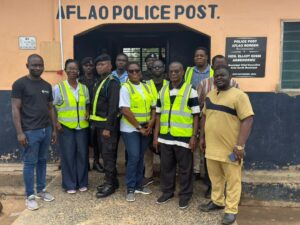
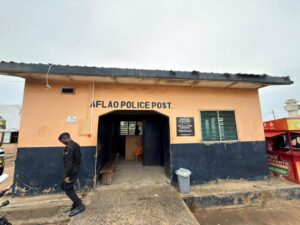
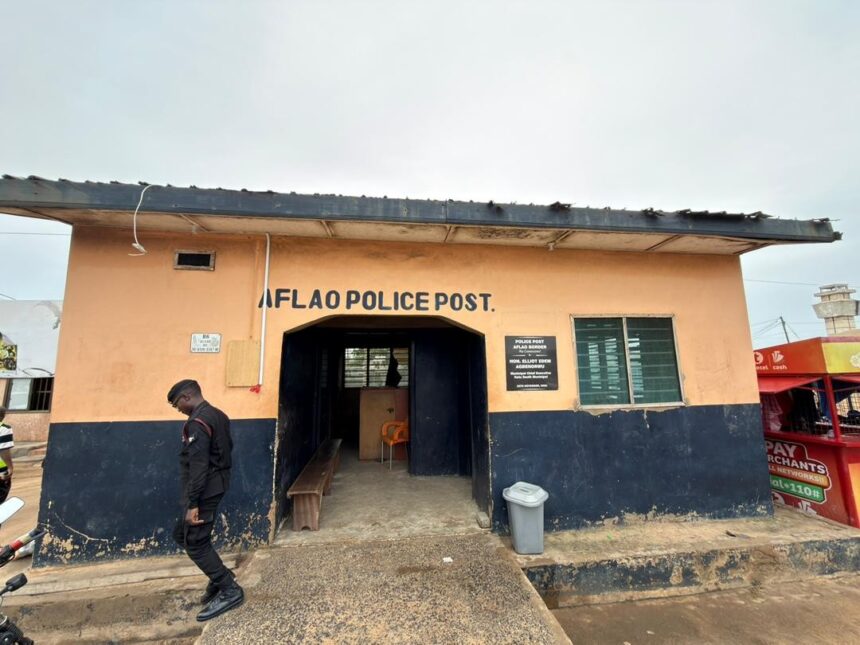
At the Aflao Border, PIAC inspected a police post funded through the ABFA and found that despite becoming operational in late 2025, the facility lacked basic amenities.
“The facility currently lacks electricity, water supply, ventilation and adequate office equipment,” PIAC stated.
It added that the absence of electricity had restricted operations to daytime hours, raising concerns about security and economic activity in the area.
Summarising its findings, PIAC stressed that several completed projects require urgent operational support, maintenance and staffing to achieve their intended objectives.
The Committee therefore urged implementing agencies, contractors, local authorities and beneficiary institutions to ensure that completed projects are fully functional and adequately maintained.
“PIAC reiterates the need for implementing agencies, contractors, local authorities and beneficiary institutions to ensure that completed projects are fully operational, adequately maintained, and supported with the necessary human resources to maximise the benefits of petroleum revenue investments,” the Committee stated.
It further reaffirmed its commitment to promoting transparency, accountability and value for money in the management and utilisation of Ghana’s petroleum revenues.