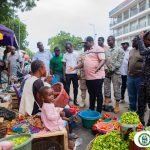

The exercise, conducted from May 24 to May 29, 2026, forms part of PIAC’s statutory mandate under the Petroleum Revenue Management Act (PRMA), 2011 (Act 815), as amended, to independently monitor and evaluate the management and utilization of petroleum revenues. The projects inspected were funded through the Annual Budget Funding Amount (ABFA) and were selected from data provided by the Ministry of Finance.
Three separate PIAC teams simultaneously inspected projects in the Kwahu Afram Plains North and South Districts in the Eastern Region, Ketu North and Ketu South Districts in the Volta Region, and Biakoye and Jasikan Districts in the Oti Region. Officials from the respective Metropolitan, Municipal and District Assemblies accompanied the teams during the inspections.
Eastern Region
In the Eastern Region, PIAC inspected several education, water, road and health projects. At Kamalo D/A Junior High School in the Kwahu Afram Plains area, the Committee found that a newly completed three-unit classroom block with ancillary facilities was not being used because the building had been invaded by bats. The Committee also observed a critical shortage of teachers, with only two teachers handling pupils from the primary to junior high school levels, resulting in combined classes.
The inspection team noted that boreholes fitted with hand pumps at Kubease and Bodua had been successfully completed and were providing reliable water to residents.
However, concerns were raised at Maame Krobo, where a completed community-based mechanized solar-powered water system had broken down and was not functioning at the time of inspection.
PIAC also inspected pothole patching works on the Maame Krobo Regional Boundary Road. Although the rehabilitation project had been completed, sections of the repaired road had already begun deteriorating. The Committee was informed that plans were underway for additional rehabilitation works.
At the Afram Plains Agricultural Zone, specifically the Konadu Enclaves irrigation project, construction was ongoing. Project managers indicated that remaining works, staff training and final handover are expected to be completed by October 2026. The irrigation facility is expected to support large-scale agricultural production when leased to commercial farmers.
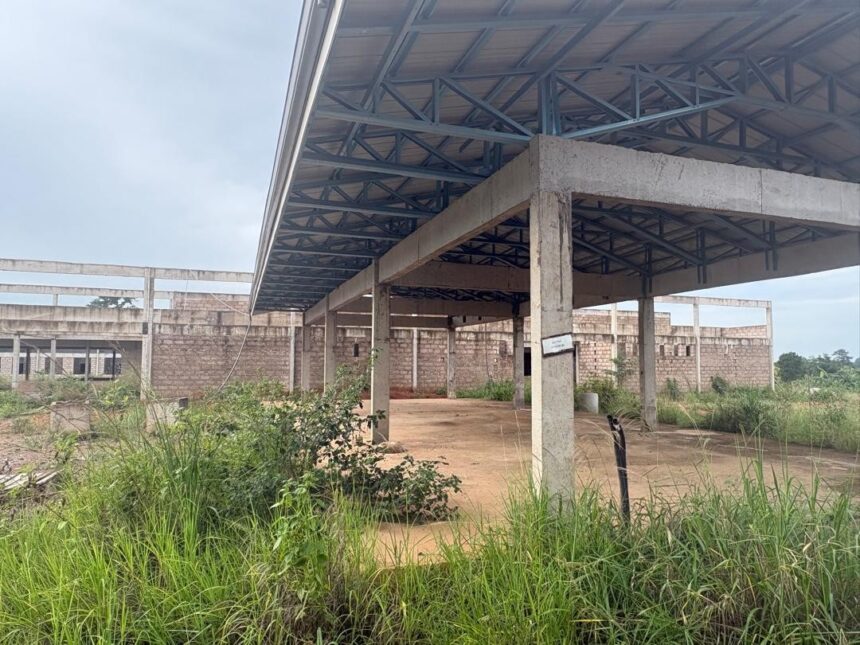
The Committee further expressed concern about the stalled Agenda 111 hospital project at Tease, where construction activities have ceased and the project has effectively been abandoned.
Oti Region
In the Oti Region, PIAC inspected market, road, administrative and health infrastructure projects.
- Construction of 40-seater open market stalls – Biakoye District
The Committee visited newly constructed 40-seater open market stalls in the Biakoye Constituency and found that despite their completion, traders were not using the facility. Market women attributed the situation to the relatively small size of the stalls.
PIAC also inspected improvement works on the Nkonya–Tepe–Toklosu Road, which was approximately 90 percent complete at the time of the visit. The project was already improving transportation and accessibility for residents and motorists.
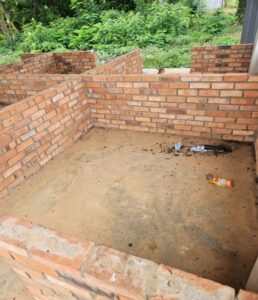
At Jasikan, the Committee observed that work on a two-storey administration block was about 60 percent complete. Delays in completion have forced staff to operate from a partially completed senior staff bungalow that has been temporarily converted into office accommodation.
The construction of two senior staff bungalows in Jasikan was found to be nearly complete, with one of the buildings already partially occupied by the Ghana Education Service as office space. However, PIAC identified a number of defects that require attention before final completion and handover.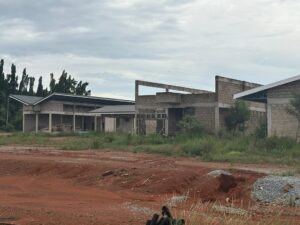
The Committee also inspected the Agenda 111 hospital project in Jasikan and found that construction remained at the foundation stage.
Volta Region
In the Volta Region, PIAC inspected projects in the Ketu North District and Ketu South Municipality.
At Dzodze, the Committee visited a 1,000-metric tonne warehouse that became operational in November 2025 and is currently being utilized by the National Buffer Stock Company. While the facility is serving its intended purpose, PIAC identified the need for improved maintenance and additional logistical support to enhance efficiency.
A major concern emerged during the inspection of the Ehi–Dzodze Road project. Although official records indicated that ABFA funds had been used for bitumen surfacing of the road, PIAC observed that the road had not been surfaced. Community members informed the Committee that only drainage works had been carried out, prompting calls for further clarification from the relevant authorities.
At the Gakli Community-based Health Planning and Services (CHPS) Compound in Ketu South, PIAC noted that the facility was providing critical healthcare services, including handling approximately 200 maternity-related cases each month. Despite its importance, the facility faces significant challenges including inadequate infrastructure, insufficient staff and poor road access.
The Committee also found that a mechanized borehole installed to provide water to the nurses’ quarters was not functioning, although the accommodation facility remains occupied.
At the Aflao Border, PIAC inspected a police post funded through petroleum revenues. Although the facility became operational in late 2025 following interventions by the Municipal Assembly, it lacks essential amenities including electricity, water supply, ventilation and adequate office equipment. The absence of electricity has restricted operations to daytime hours, raising concerns among local authorities about security and economic activities within the border enclave.
Key Observations
PIAC concluded that while several petroleum-funded projects are providing tangible benefits to communities, many others face challenges including maintenance deficiencies, operational failures, staffing shortages, low patronage and delayed completion.
The Committee emphasized the need for implementing agencies, contractors, local authorities and beneficiary institutions to ensure that completed projects are fully operational, adequately maintained and supported with the necessary human resources.
PIAC also reiterated concerns about the continued exclusion of Metropolitan, Municipal and District Assemblies from project selection, implementation and maintenance processes, stressing that greater local involvement is necessary to ensure sustainability.
The Committee reaffirmed its commitment to promoting transparency, accountability and value for money in the management and use of petroleum revenues, pledging to continue monitoring projects nationwide to ensure that Ghana’s petroleum resources translate into meaningful development outcomes for citizens.