
How much does it really cost to build a road, a hospital or a school in West Africa? And how many persons with disabilities remain invisible in national statistics, limiting governments’ ability to plan inclusive policies?
 Construction Costs and Disability Data Take Centre Stage as ECOWAS Pushes for Better Statistics to Drive Development.
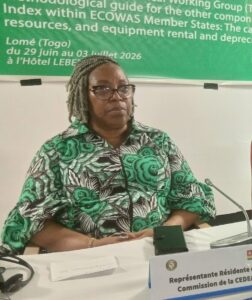
These critical questions are at the heart of two regional workshops currently underway in Lomé, where statisticians, economists and policymakers from across the ECOWAS region are working to strengthen the quality of data that informs development decisions.
Related Stories

Opening the joint workshops on Construction Cost Index (CCI) and Disability Statistics, Dr. Sandra Ablamba Johnson, Minister-Secretary General of the Presidency of the Council of Ministers of Togo, stressed that statistics remain one of the most powerful tools for national and regional development.
Represented by Béguédouwè Paneto, Secretary General of the Ministry of Development Planning, Dr. Johnson said governments cannot make informed decisions without credible and reliable data.
“Reliable, objective statistical data constitute an indispensable instrument for planning, monitoring and evaluating development policies and programmes,” she stated.
According to her, every major public investment—from roads and bridges to housing projects—depends on accurate data to ensure value for money and efficient allocation of resources.
Building Smarter Infrastructure
One of the workshops focuses on developing a harmonized Construction Cost Index across ECOWAS member states.
Experts say the index will provide governments with a standardized way of measuring changes in construction costs over time, allowing policymakers to better estimate project budgets, monitor inflation within the construction sector and improve public procurement.
The initiative comes at a time when many West African countries are investing heavily in infrastructure while grappling with fluctuating prices of cement, steel, fuel and imported construction materials.
Without reliable cost indices, governments risk budget overruns, delayed projects and inefficient spending.
Participants believe the regional index will also make comparisons across ECOWAS countries easier and improve the credibility of official construction statistics.
Giving Visibility to Persons with Disabilities
Running alongside the construction workshop is specialized training on disability statistics—an area many experts describe as long neglected across Africa.
The programme seeks to improve the way countries collect, analyse and report data relating to persons with disabilities.
Officials say many people with disabilities remain statistically invisible because existing surveys and censuses often fail to capture their lived realities.
This lack of data makes it difficult for governments to design effective education, healthcare, employment and social protection programmes.
Dr. Johnson emphasized that no country can achieve inclusive development if sections of its population remain absent from official statistics.
“Quality statistics enable governments to understand the real needs of their populations and ensure that no one is left behind.”
The training introduces participants to internationally recognized methodologies for measuring disability, improving comparability of data across the region.
Statistics at the Heart of Development
Organizers say the two workshops reflect ECOWAS’ broader ambition to strengthen national statistical systems and improve evidence-based policymaking.
As governments pursue the Sustainable Development Goals and regional integration agendas, demand for timely and reliable statistics continues to grow.
Development experts argue that better statistics not only improve public planning but also strengthen accountability, attract investment and support more effective use of public resources.
For Togo, hosting the workshops also reinforces its commitment to becoming a regional hub for statistical capacity building.
Regional Cooperation
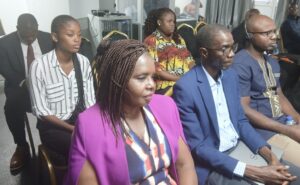
Participants drawn from national statistical offices and relevant institutions across ECOWAS member states are expected to exchange experiences, share best practices and develop common approaches to producing high-quality official statistics.
The workshops also seek to deepen collaboration among countries, recognizing that comparable regional data are essential for measuring economic performance and tracking progress toward shared development goals.
Key Quotes
“Reliable, objective statistical data constitute an indispensable instrument for planning, monitoring and evaluating development policies and programmes.” — Dr. Sandra Ablamba Johnson, Minister-Secretary General of the Presidency of the Council of Ministers of Togo.
“Statistics are not merely numbers; they provide governments with the evidence needed to make rational development decisions and allocate resources efficiently.”
“Quality data are essential for understanding the needs of all citizens, including persons with disabilities, and ensuring that development policies leave no one behind.”
“Strengthening construction cost statistics and disability data will improve planning, transparency and inclusive development across the ECOWAS region.”
The twin workshops underscore a growing recognition across West Africa that sound statistics are more than technical exercises—they are the foundation upon which governments build roads, schools, hospitals and inclusive societies. By improving both construction cost measurement and disability statistics, ECOWAS is positioning its member states to make smarter investments, strengthen accountability and ensure that development reaches every segment of the population.