
Stakeholders push for consensus, inclusive participation and accountability as Ghana begins the next chapter of constitutional reform
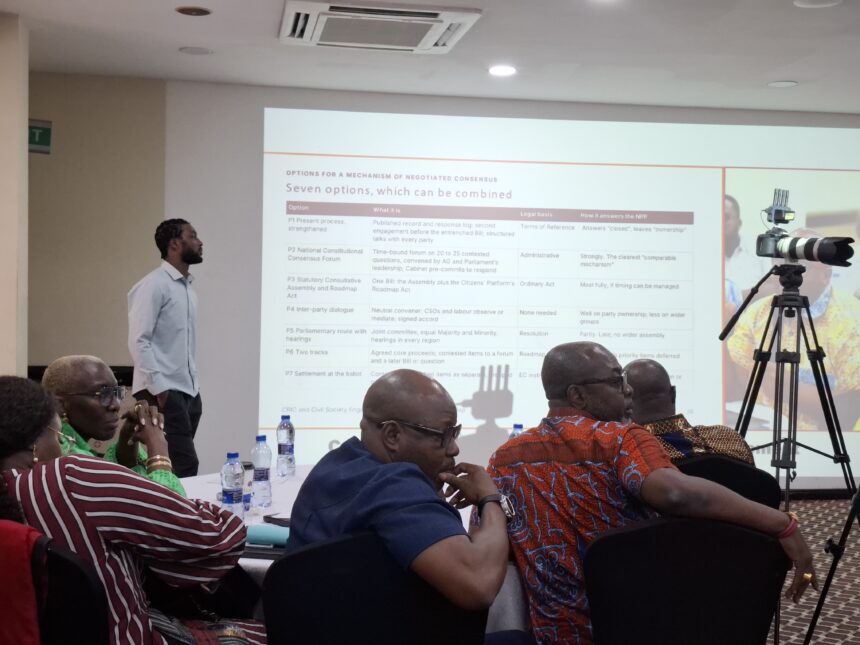
Ghana’s constitutional reform process is entering a critical phase, with the Constitution Review Implementation Committee (CRIC) bringing together civil society organisations, policy think tanks, organised labour, media organisations and other stakeholders to build consensus on the implementation of proposed constitutional reforms.
The engagement marks an important step towards translating recommendations from the Constitution Review Committee (CRC) and the Government’s Position Paper into practical reforms capable of strengthening Ghana’s constitutional democracy.
Related Stories

At the heart of the discussions is the need to establish a common understanding of the reforms the government has accepted, identify areas of agreement and disagreement, and determine how outstanding issues can be addressed without undermining the broader national reform agenda.
The consultation is particularly significant because constitutional reform is not simply a government exercise. Its legitimacy and long-term success depend on public participation, institutional accountability and the willingness of different stakeholders to reach consensus on the future governance of the country.

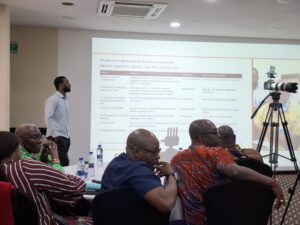
CRIC seeks common ground on constitutional reforms
The maiden engagement, which began on Thursday, November 26, 2026, is being chaired by the CRIC Chairperson, Marietta Brew, with the Committee’s Executive Secretary, Oliver Barker-Vormawor, outlining the importance of sustained stakeholder participation.
Among the organisations participating are the Ghana Centre for Democratic Development (CDD-Ghana), Institute for Democratic Governance (IDEG), Ghana Anti-Corruption Coalition, Christian Council of Ghana, Trades Union Congress (TUC), Transparency International Ghana, Institute of Economic Affairs (IEA) and NETRIGHT.
The discussions are expected to provide an opportunity for stakeholders to scrutinise the Government’s Position Paper, explain their respective positions and propose adjustments where differences exist.
Speaking at the engagement, Ms Brew emphasised the importance of stakeholder participation beyond the consultation process. She indicated that bills emerging from the CRIC process would be submitted to Parliament and the Council of State, and encouraged civil society organisations to participate in parliamentary debates and mobilise public support for the proposed referendum.
She also cautioned that failure to secure the required voter turnout at the referendum would amount to a collective setback for the country.
The Executive Secretary, Oliver Barker-Vormawor, stressed that constitutional reform could not be undertaken in isolation. He explained that the Committee was seeking to narrow disagreements, identify contentious issues and build consensus around proposals that would reflect the aspirations of Ghanaians.
He further indicated that the Committee would submit its findings to the Attorney-General for onward consideration by Cabinet.
What is at stake?
The engagement comes against the background of the Government’s decision to accept some recommendations of the Constitution Review Committee, reject others and modify certain proposals.
The challenge before CRIC is therefore not simply to prepare amendment bills. It must navigate the delicate balance between the original recommendations, the Government’s policy position and the concerns of stakeholders who believe constitutional reform must be broad-based, transparent and nationally owned.
Earlier calls by civil society organisations for a wider implementation process have underscored the importance of inclusion. In October, stakeholders urged government to expand CRIC’s membership to accommodate broader participation, arguing that constitutional reform should not be confined to a narrow group of political and institutional actors.
There have also been calls for a legally backed implementation roadmap with clear timelines, responsibilities and safeguards to prevent the reform process from losing momentum.
The referendum question
One of the most consequential aspects of the reform process concerns amendments to entrenched provisions of the 1992 Constitution.
Under the constitutional framework, amendments to non-entrenched provisions follow Article 291, while changes to entrenched provisions must satisfy the more demanding requirements of Article 290, including a national referendum.
President John Dramani Mahama has indicated government’s intention to organise the referendum alongside the 2027 District Assembly elections, potentially allowing citizens to vote on constitutional amendments at the same time as they elect their local representatives.
This makes civic education, public awareness and effective communication central to the success of the exercise.
Ghanaians must understand not only what is being proposed but also why the changes matter, what they mean for governance and how they affect the relationship between citizens and the state.
Media organisations expected to contribute to the debate
The media’s participation is particularly important because constitutional reform requires more than legal and political negotiations. It requires a sustained national conversation that enables citizens to understand, interrogate and participate in decisions about the country’s future.
The Ghana Journalists Association (GJA) and the Ghana Independent Broadcasters Association (GIBA) are scheduled to present a joint position on the Government’s Position Paper during the afternoon session.
Their contribution presents an opportunity to highlight the media’s responsibility in promoting constitutional literacy, facilitating inclusive public debate and holding institutions accountable throughout the implementation process.
For the GJA, the consultation also raises important questions about the constitutional guarantees of freedom of expression, media independence, access to information, the protection of journalists and the media’s role in democratic accountability.
The media must not merely report the referendum when the time comes. It must help citizens understand the issues long before they enter the voting booth.
This also means ensuring that women, young people, persons with disabilities, rural communities and other traditionally underrepresented groups have their voices reflected in the national conversation.
Key issues that must not be lost in the implementation process
As the consultations progress, several critical considerations deserve attention:
1. National ownership: Constitutional reform must be owned by Ghanaians and not perceived as the agenda of an incumbent government or political party.
2. Institutional independence: Proposed reforms must strengthen the independence, effectiveness and accountability of state institutions.
3. Separation of powers: The relationship between the Executive, Legislature and Judiciary must be examined to strengthen checks and balances.
4. Gender equality and inclusion: Women’s representation and participation in decision-making, youth involvement and disability inclusion must be deliberately protected.
5. Media freedom: The constitutional environment must continue to protect freedom of expression, independent journalism and citizens’ right to information.
6. Public education: Civic education must be accessible, sustained and delivered in languages and formats that ordinary citizens understand.
7. Transparency and accountability: The Committee must communicate its decisions, explain how stakeholder submissions are treated and provide opportunities for public scrutiny.
What happens after the consultations?
The Committee’s two-day engagement is expected to produce three important outcomes: a record of stakeholder positions on the Government’s Position Paper, feedback on the implementation roadmap, and an agreed framework for addressing areas of consensus and outstanding disagreements.
Where significant differences remain, CRIC is expected to report the respective positions, areas of agreement and unresolved matters to Cabinet.
The process will subsequently require the preparation of appropriate legislative proposals, parliamentary consideration and, where constitutionally required, a national referendum.
The stakes are considerable. The Government has previously indicated that the first set of constitutional amendment bills would be prepared within its November 2026 timeline.
The bigger question: Can Ghana build a constitution that serves future generations?
Ultimately, the success of Ghana’s constitutional reform will not be measured by the number of recommendations adopted or bills presented to Parliament.
It will be measured by whether the reforms strengthen democratic institutions, improve governance, protect fundamental rights, deepen accountability and give citizens a stronger voice in determining how they are governed.
The CRIC consultation therefore presents an important test of Ghana’s democratic maturity: whether political institutions, civil society, organised labour, professional associations and the media can put national interest above partisan considerations.
Ghana has an opportunity to renew its constitutional foundations. That opportunity must not be reduced to a hurried legislative exercise or a political contest.
A constitution belongs to the people. Its reform must therefore be shaped by the people, understood by the people and ultimately serve the people