
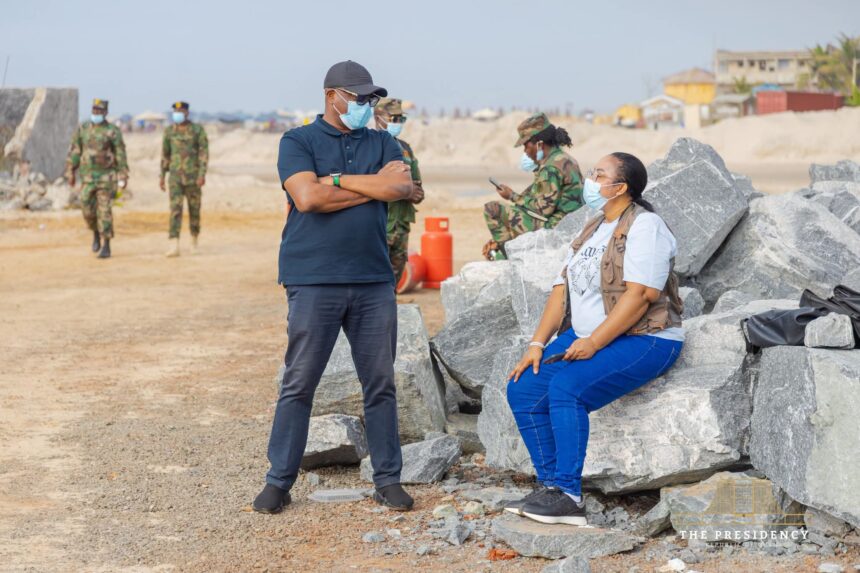
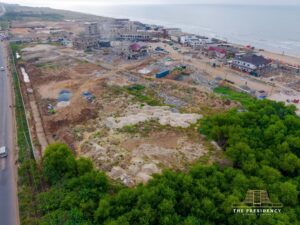
The Chairman of the Post Flood Mitigation Taskforce and Deputy Chief of Staff in charge of Operations, Stan Dogbe, has directed the Greater Accra Regional Coordinating Council to begin the ecological restoration of areas along the Kpeshie Lagoon where illegal structures have been demolished.
He said the restoration should be undertaken in collaboration with the Forestry Commission and the Environmental Protection Authority, EPA, through the planting of coconut and other suitable trees.
Related Stories

Mr Dogbe said the EPA would provide the necessary environmental guidance to restore the fragile wetland ecosystem.
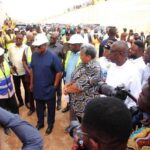
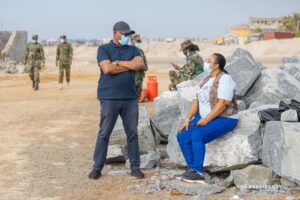
He was speaking at Laboma after the Post Flood Mitigation Task Force demolished illegal structures within the protected buffer zone as part of measures to prevent flooding in the Greater Accra Region.
Mr Dogbe clarified that the exercise was not aimed at demolishing the entire Laboma area, but rather reclaiming the former water retention basin along the Kpeshie Lagoon, which has been affected by vegetation clearance, siltation and construction.
He said the debris from the demolition would be cleared, after which the Regional Security Council and the EPA would begin planting trees in the secured area.
According to him, the long-term objective is to restore the area to its natural state, protect it from future encroachment and improve its capacity to retain floodwaters.
The Kpeshie Lagoon has been identified as a key flood intervention point in Accra after years of illegal reclamation, sand filling and development reduced its water-holding capacity and obstructed the natural flow of water to and from the sea.
The Post Flood Mitigation Taskforce has also carried out dredging, demolition and retention basin restoration works at other flood-prone areas, including Tesa Dam and the Lafa Water Retention Basin.