
The Ministry of Gender, Children and Social Protection (MoGCSP) has commenced its 2026 Mid-Year Performance Review and 2027 Strategic Planning and Budget Prioritisation Workshop, with a focus on strengthening implementation, improving service delivery and ensuring that government commitments translate into measurable results.
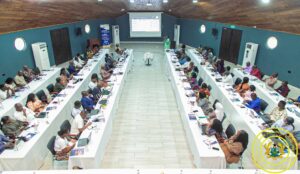
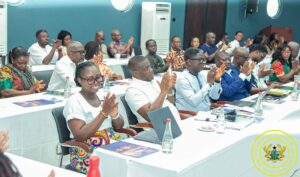 Gender Ministry Begins 2026 Mid-Year Performance Review, Sets Priorities for 2027.
The workshop brings together Management, Regional Directors from the Departments of Children and Gender, members of the Ministry’s Advisory Board and other key officials to assess progress made during the first half of 2026 and identify strategic priorities for the remainder of the year and 2027.
The first day was devoted to reviewing planned activities against achievements and identifying critical implementation bottlenecks. Participants worked in groups to develop practical solutions to challenges including human-resource capacity, financing for service delivery and procurement, among others.
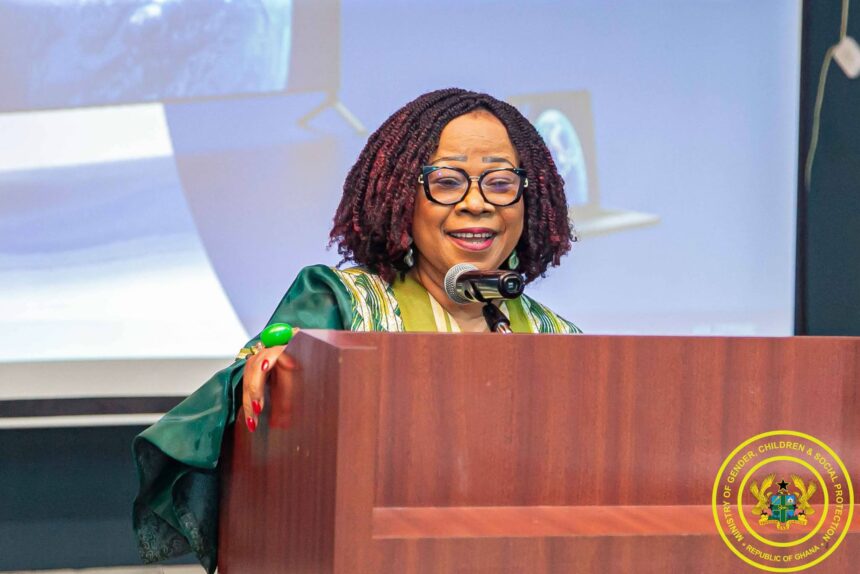
Addressing participants at the opening of the workshop, the Minister for Gender, Children and Social Protection, Dr. Agnes Naa Momo Lartey, stressed the importance of the exercise, noting that the Ministry’s mandate directly affects people during some of the most vulnerable moments of their lives.
She said the ultimate measure of the Ministry’s policies and programmes should be the difference they make in the lives of beneficiaries.
“Our task as a ministry is to build the systems, institutions, programmes and partnerships necessary to convert these commitments into measurable results,” Dr. Lartey said.
The Minister noted that government had made significant commitments towards advancing gender equality, protecting children, strengthening social protection, improving social welfare services and ensuring that vulnerable persons are not left behind.
She, however, cautioned that policy commitments would only have meaning when effectively implemented.
Dr. Lartey further urged participants to adopt a broader, integrated approach to the Ministry’s work rather than assessing programmes in isolation.
According to her, the interconnected nature of vulnerability means that a person benefiting from one intervention may require assistance from another area within the Ministry’s mandate.
She therefore called for stronger coordination across programmes and institutions to create a more effective protection and inclusion system.
Recovery Plan for 2026
The Day One discussions culminated in work towards the development of a 2026 Recovery Plan, supported by an Action Matrix identifying key actions, responsible institutions and officers, timelines, collaborators and expected results.
The plan is expected to guide the Ministry’s interventions during the remaining months of 2026, while lessons from the performance review will feed directly into the development of the Ministry’s 2027 strategic priorities and budget proposals.
The workshop therefore provides an opportunity for the Ministry to take stock of progress, address implementation gaps and strengthen institutional systems to deliver more effectively for women, children and vulnerable groups.
The outcomes are expected to shape both the Ministry’s recovery actions for the remainder of 2026 and its strategic direction for 2027, in line with the broader objective of leaving no one behind.