
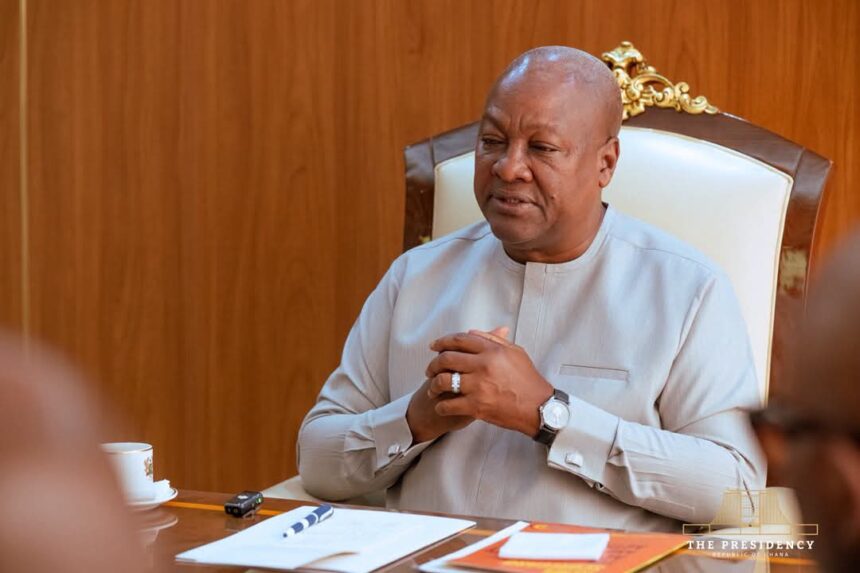
The AU Extraordinary Summit on Universal Health Coverage (UHC) is not only a diplomatic gathering, it is a strategic platform where African leaders make commitments that can shape health policies, financing, and healthcare delivery across the continent for years to come. By hosting the summit, Ghana is positioned at the centre of Africa’s conversation on building stronger, more resilient and more equitable health systems.
The summit seeks to accelerate progress towards Universal Health Coverage, ensuring that every person has access to quality health services without suffering financial hardship. It also prioritizes ending AIDS and tuberculosis (TB), improving maternal and child health, tackling neglected tropical diseases, and strengthening health systems to respond to future pandemics and emergencies.
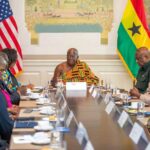
 President John Mahama meets with African Health Ministers at Presidency.
Why the Summit Matters for Ghana
For Ghana, the summit presents an opportunity to:
- Showcase its leadership in advancing health reforms in Africa.
- Attract partnerships and investments to strengthen the country’s healthcare infrastructure.
- Promote regional collaboration on disease surveillance, vaccine production and emergency preparedness.
- Influence continental policies that support affordable, accessible and quality healthcare.
- Reinforce Ghana’s commitment to achieving the Sustainable Development Goal (SDG) 3: Good Health and Well-being.
The outcomes of the summit could support Ghana’s efforts to improve primary healthcare, expand health insurance coverage, strengthen community health services and reduce inequalities in access to healthcare.
What the Summit Means for Women
Women stand to benefit significantly from the commitments expected at the summit because they are often the primary users of health services and the backbone of family and community health.
1. Better Maternal Healthcare
One of the summit’s key priorities is reducing maternal mortality and improving access to quality maternal healthcare.
For women in Ghana, this could translate into:
- Improved antenatal and postnatal care.
- More skilled birth attendants.
- Better-equipped maternity facilities.
- Increased access to emergency obstetric care.
- Reduced deaths during pregnancy and childbirth.
2. Improved Sexual and Reproductive Health Services
Universal Health Coverage emphasizes access to essential reproductive health services, including:
- Family planning.
- Cervical and breast cancer screening.
- Safe pregnancy care.
- Adolescent reproductive health education.
- Treatment for reproductive health conditions.
These services empower women to make informed decisions about their health and future.
3. Greater Protection Against HIV/AIDS and TB
Women and girls remain disproportionately affected by HIV in many parts of Africa.
Renewed commitments to ending AIDS and TB will help:
- Expand HIV testing and treatment.
- Prevent mother-to-child transmission of HIV.
- Increase access to life-saving medicines.
- Reduce stigma and discrimination.
4. Reduced Financial Burden
Universal Health Coverage seeks to ensure that people do not become poor because they need healthcare.
For Ghanaian women—especially those in rural communities or the informal sector—this means:
- Lower out-of-pocket medical expenses.
- Better financial protection through health insurance.
- Greater access to essential medicines and healthcare services.
5. Healthier Families
Women are often the primary caregivers within households.
When women have access to quality healthcare, entire families benefit through:
- Healthier pregnancies.
- Better child nutrition.
- Higher childhood immunization rates.
- Early diagnosis and treatment of illnesses.
- Improved overall family well-being.
6. Empowerment Through Inclusive Health Policies
The summit also presents an opportunity for African leaders to adopt gender-responsive health policies that recognize the unique health needs of women and girls.
This includes:
- Addressing gender inequalities in healthcare access.
- Increasing women’s participation in health leadership and decision-making.
- Strengthening services for survivors of gender-based violence.
- Investing in community health workers, many of whom are women.
The Bigger Picture
Health is a foundation for economic growth and sustainable development. Healthy women are more likely to participate in education, the workforce, entrepreneurship and community leadership.
By prioritizing Universal Health Coverage, African leaders are investing not only in stronger health systems but also in the social and economic empowerment of women. For Ghanaian women, the summit represents hope for more accessible healthcare, safer motherhood, improved reproductive health services, and greater financial protection against the costs of illness.
As host nation, Ghana has an opportunity to champion policies that place women and girls at the heart of Africa’s health agenda, recognizing that achieving universal health coverage is impossible without ensuring equitable access to quality healthcare for every woman, regardless of her income, age or location.