
Ghana’s broadcasting industry must move beyond simply adopting technologies developed elsewhere and begin playing a more active role in designing, adapting and shaping technologies that respond to Africa’s realities.
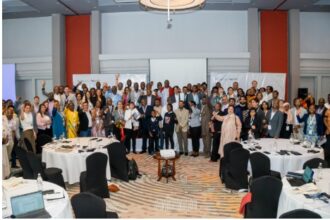
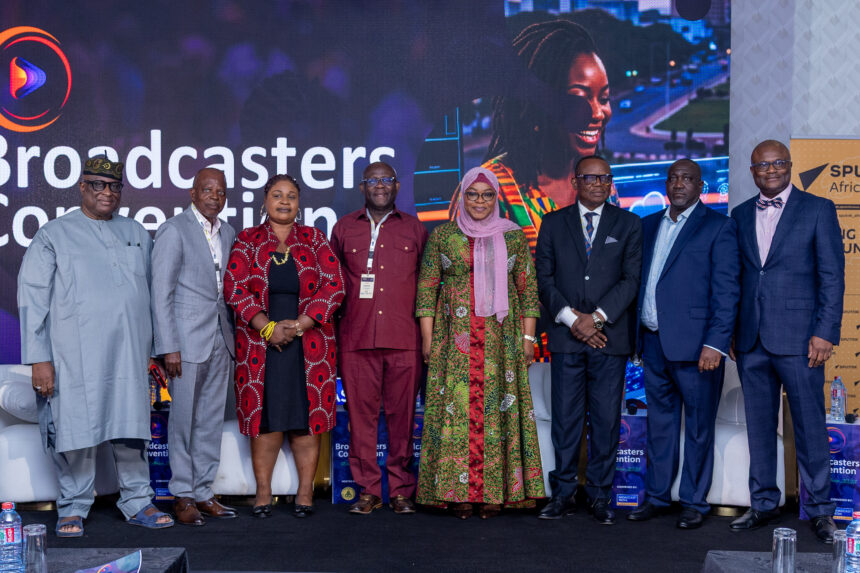
This was one of the key issues to emerge from the 2026 Broadcasters Convention – West Africa, held from 22–23 September at the Labadi Beach Hotel in Accra, bringing together broadcasters, media executives, regulators, technology companies, content creators and other stakeholders.
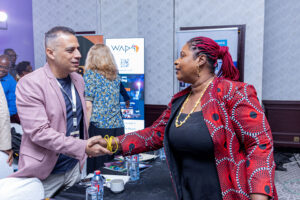

The convention examined the future of broadcasting at a time when artificial intelligence, streaming, cloud technologies, social media and changing audience behaviour are rapidly transforming the media landscape.
AI reshaping the newsroom
Artificial intelligence emerged as one of the major issues confronting broadcasters.
From news gathering and content production to audience analytics, metadata and advertising, AI is already changing how media organisations operate.
However, participants also highlighted questions around accuracy, verification, copyright, data protection, algorithmic bias, deepfakes, misinformation and the future of media jobs.
The discussions point to the need for media organisations to develop institutional AI policies and ethical guidelines, ensuring that technological innovation does not undermine editorial responsibility.
The newsroom is becoming platform-neutral
Another major issue was the changing nature of the newsroom.
The traditional separation between television, radio, websites and social media is increasingly becoming difficult to sustain as audiences consume content across multiple platforms.
The newsroom of the future will therefore have to be digital-first, multimedia and audience-driven, with journalists and producers creating content that can be distributed intelligently across different platforms while maintaining professional and ethical standards.
Audiences are moving—and broadcasters must follow
The convention also drew attention to changing audience behaviour.
Younger audiences in particular are consuming more content through YouTube, social media, podcasts, streaming platforms and mobile devices, alongside traditional radio and television.
This makes audience research and analytics increasingly important.
Broadcasters can no longer rely solely on traditional ratings or assumptions about what audiences want. They need to understand where audiences are, what they are watching, why they are engaging and how they want to receive information.
Africa has the stories—but who owns the value?
The convention also raised important questions about African content.
Africa has a wealth of stories, talent and creative capacity, but producing content is only part of the challenge.
The industry must also address questions of ownership, distribution, intellectual property, financing and monetisation.
Who owns the content?
Who distributes it?
Who controls the data?
Who earns from it?
And how much of the value created by African stories remains within African economies?
These questions are becoming increasingly important as African content reaches global audiences through digital platforms.
Keeping African identity in global storytelling
Participants also stressed the importance of ensuring that African stories retain their authenticity as they reach international audiences.
The answer is not necessarily to abandon African perspectives, but to invest in better storytelling, production quality, marketing, distribution and commercialisation.
This requires sustained investment in writers, producers, editors, cinematographers, journalists and digital storytellers.
What does public service broadcasting mean in the digital age?
For public broadcasters such as GBC, the discussions raise an even bigger question: What should public service broadcasting look like in an era of streaming, social media and artificial intelligence?
The future of public broadcasting will require fresh thinking around digital platforms, public-interest programming, archives, youth engagement, regional content, audience measurement, innovation and sustainable revenue models.
The challenge is no longer simply preserving traditional broadcasting structures, but ensuring that public broadcasters remain relevant to audiences whose media habits are changing rapidly.
Regulation must keep pace
The rapid development of AI, streaming, over-the-top platforms, digital advertising and cloud broadcasting is also creating new regulatory questions.
Traditional broadcasting regulations may not adequately address emerging issues relating to AI governance, data protection, copyright, competition, platform accountability and digital content.
There is therefore a need for continuous engagement among regulators, broadcasters, technology companies and policymakers.
Cybersecurity is now a broadcasting issue
As broadcasting becomes increasingly dependent on digital systems, cybersecurity can no longer be regarded as the sole responsibility of IT departments.
Newsroom systems, archives, transmission infrastructure, intellectual property and audience data all require protection.
A serious cyberattack can disrupt not only technology but also editorial operations, revenue and business continuity.
The financing challenge
Technology transformation also requires money.
Many African broadcasters are already operating under financial constraints, while digital transformation demands investment in infrastructure, software, training, cybersecurity and content.
This makes partnerships with telecommunications companies, technology firms, development finance institutions, investors and other stakeholders increasingly important.
Blended financing and strategic partnerships could provide avenues for media organisations to modernise without placing the entire financial burden on broadcasters.
Skills will determine the success of transformation
Ultimately, technology alone will not transform broadcasting.
The people operating the technology must have the necessary skills.
Continuous professional development will therefore be critical in areas including AI, data journalism, digital production, cybersecurity, cloud technologies, multimedia storytelling, audience analytics, digital marketing and intellectual property.
From convention to action
Perhaps the most important matter arising from the 2026 Broadcasters Convention is the need to translate conversations into concrete industry action.
For Ghana, one possible step is the establishment of a permanent Broadcasting and Digital Media Industry Forum, bringing together broadcasters, regulators, telecommunications companies, technology providers, content creators, academia, investors and policymakers.
Such a platform could provide an ongoing space to address emerging challenges rather than waiting for an annual convention.
The 2026 convention therefore leaves the broadcasting industry with a fundamental question:
Will African broadcasters remain consumers of technologies created elsewhere, or will they become active shapers of the technologies, platforms and content ecosystems that will define the continent’s media future?
The answer will depend not only on technology, but on leadership, investment, skills, regulation, collaboration and the willingness of the industry to rethink what broadcasting means in the digital age.